
Unbiased headlines. Facts, not spin.
Every story is an unbiased news briefing written from 110+ sources across the spectrum — sources linked so you can verify it yourself.
 defense
Major Story (7/10)
May 26, 2026 at 02:22 AM
defense
Major Story (7/10)
May 26, 2026 at 02:22 AM
CENTCOM Strikes Iranian Mine-Layers Again as Uranium Disposal Terms Harden and 60-Day Framework Draws Fire from All Sides
The Guns Fired While the Diplomats Talked
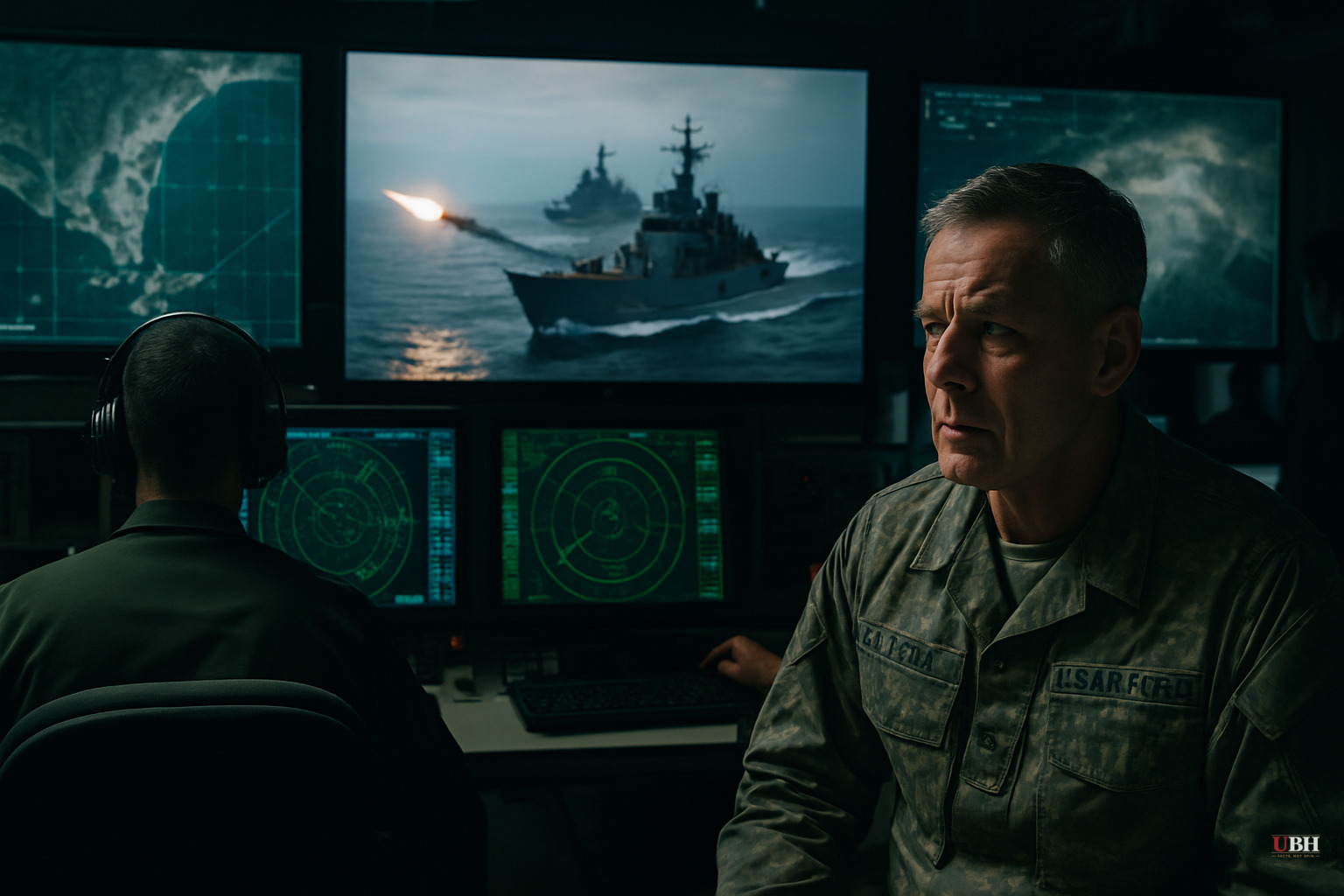
Monday was a study in contradiction. Iranian Foreign Minister Abbas Araghchi and Parliament Speaker Mohammad Baqer Qalibaf were in Doha meeting with Qatari officials. At the same time, CENTCOM spokesperson Captain Tim Hawkins announced that U.S. forces had just destroyed two Islamic Revolutionary Guard Corps boats caught laying mines in the Strait of Hormuz — and took out a surface-to-air missile site at Bandar Abbas, Iran's primary naval station, after it locked onto American warplanes.
Hawkins called them "self-defense strikes" conducted "to protect our troops from threats posed by Iranian forces." The IRGC was still mining the strait. The U.S. was still shooting. The ceasefire, technically, was still in place.
Trump Puts the Uranium Question in Writing
The biggest development Monday wasn't the strikes. It was Trump going on Truth Social and publicly defining, for the first time, exactly what he expects to happen to Iran's near-weapons-grade uranium stockpile.
His words: "The Enriched Uranium (Nuclear Dust!) will either be immediately turned over to the United States to be brought home and destroyed or, preferably, in conjunction and coordination with the Islamic Republic of Iran, destroyed in place or, at another acceptable location, with the Atomic Energy Commission, or its equivalent, being witness to this process and event."
Two options. Both end with Iran having ZERO enriched uranium. No third option.
This was a direct response to a fault line that nearly blew up talks last week. According to Reuters, a senior Iranian source said Supreme Leader Ali Khamenei had issued a directive: the uranium stockpile does NOT leave Iran. Then the New York Times cited two U.S. officials on Saturday saying Iran had committed "in broad terms" to surrendering it. Those two positions are incompatible. Trump's Truth Social post essentially says the gap doesn't matter — the outcome is the same either way.
What the Framework Actually Contains
According to Axios, the tentative deal brokered by Pakistan involves a 60-day ceasefire extension, Iran clearing its mines and reopening the Strait of Hormuz without tolls, and a short window to negotiate the nuclear program. In return, the U.S. would lift its blockade on Iranian ports and waive some sanctions — allowing Tehran to sell oil again.
The Wall Street Journal editorial board published a blistering Sunday piece calling this an "economic bailout" for the Iranian regime before any nuclear deal is signed. Their argument: you're handing Iran sanctions relief and oil revenue for a 60-day promise, with the hard part — the nuclear program — still unresolved and kicking down the road.
That criticism is substantively valid, regardless of who's making it.
Bolton Says Blow It Up. Most Republicans Say Give It Space.
Former National Security Adviser John Bolton went on CNN's The Lead Monday and said flatly: "I hope the negotiations break down." His reasoning — every day of ceasefire is a day Iran uses to reconstitute its government and military capacity. Bolton accused Trump of not analyzing America's strategic interests and instead watching the gas pump price.
Most Senate and House Republicans are telling Bolton to sit down. Senator Rand Paul told critics to "give President Trump the space to find an America First solution." Senator Lindsey Graham called the potential Abraham Accords expansion — Trump is pushing Saudi Arabia, Qatar, and Pakistan to join — "brilliant" and "beyond transformative." Representative Nicole Malliotakis called out "sideline chatter" that undermines U.S. negotiating position.
Graham and Bolton represent the two poles of Republican foreign policy thinking, and right now Graham's camp is winning the volume war.
Israel Is NOT On Board
Israeli opposition leader Yair Lapid didn't mince words. According to The Hill, Lapid called the emerging framework "a disaster" on social media Monday. The concern from Jerusalem is straightforward: a 60-day pause with sanctions relief gives Iran breathing room and economic oxygen without a verified end to its nuclear program.
This isn't just opposition party noise. Israel's government has consistently argued that time is Iran's greatest asset in any negotiation. Bolton is making the same argument from Washington.
Ships Are Actually Moving
Tankers are moving through the Strait of Hormuz again. According to ship tracking services LSEG and Kpler, four vessels cleared the strait over the weekend — three LNG carriers and one crude tanker loaded with Iraqi oil for China.
The LNG tanker Fuwairit, sailing under a Bahamas flag and owned by Japan's Mitsui O.S.K. Lines, passed through Monday and is expected in Pakistan Tuesday. The Al Rayyan, operated by Qatar's state-owned QatarEnergy, went dark for three days and reappeared headed for China, arriving June 27. The Al Hamra became the first ship bound for India to clear the strait since Iran's mine campaign began — a significant milestone given that India normally sources nearly half its LNG from Qatar and the UAE, flows that had been cut to zero.
None of the ship owners would say how they secured safe passage. They all turned off their transponders. That tells you everything about how fragile this opening is.
The Sequence Problem
Most outlets are covering this as a binary — deal or no deal. The real issue is the sequence problem: the 60-day framework gives Iran economic relief NOW in exchange for nuclear talks LATER. Every analyst who's watched Iran negotiate — from Bolton to the WSJ board to Israeli opposition leadership — says Iran will use that window to delay, rebuild, and extract more concessions.
Trump's public uranium ultimatum is either a genuine redline or a negotiating position. If it's a redline, the 60-day framework is already in trouble, because Iran's supreme leader said the stockpile doesn't leave. If it's a negotiating position, then Bolton's warning about timelines deserves serious attention.
The tankers moving through the strait are real progress. The ceasefire holding, mostly, is real progress. But progress on humanitarian and commercial access is NOT the same thing as progress on Iranian nuclear capability. Those are two different problems, and conflating them is how bad deals get signed.
The next 60 days will answer the only question that matters: does Iran use this window to make a deal, or to buy time? History has a strong opinion on that.
Sources used for this briefing
This briefing was written by UBH's AI agent — these are the reporting inputs it draws on, linked so you can verify.


