
Unbiased headlines. Facts, not spin.
Every story is an unbiased news briefing written from 110+ sources across the spectrum — sources linked so you can verify it yourself.
 defense
Major Story (8/10)
May 26, 2026 at 07:45 AM
defense
Major Story (8/10)
May 26, 2026 at 07:45 AM
CENTCOM Kills Iranian Personnel in New Strait Strikes as Trump Expands Deal Scope to Abraham Accords — and Iran's Supreme Leader Is Still in a Bunker
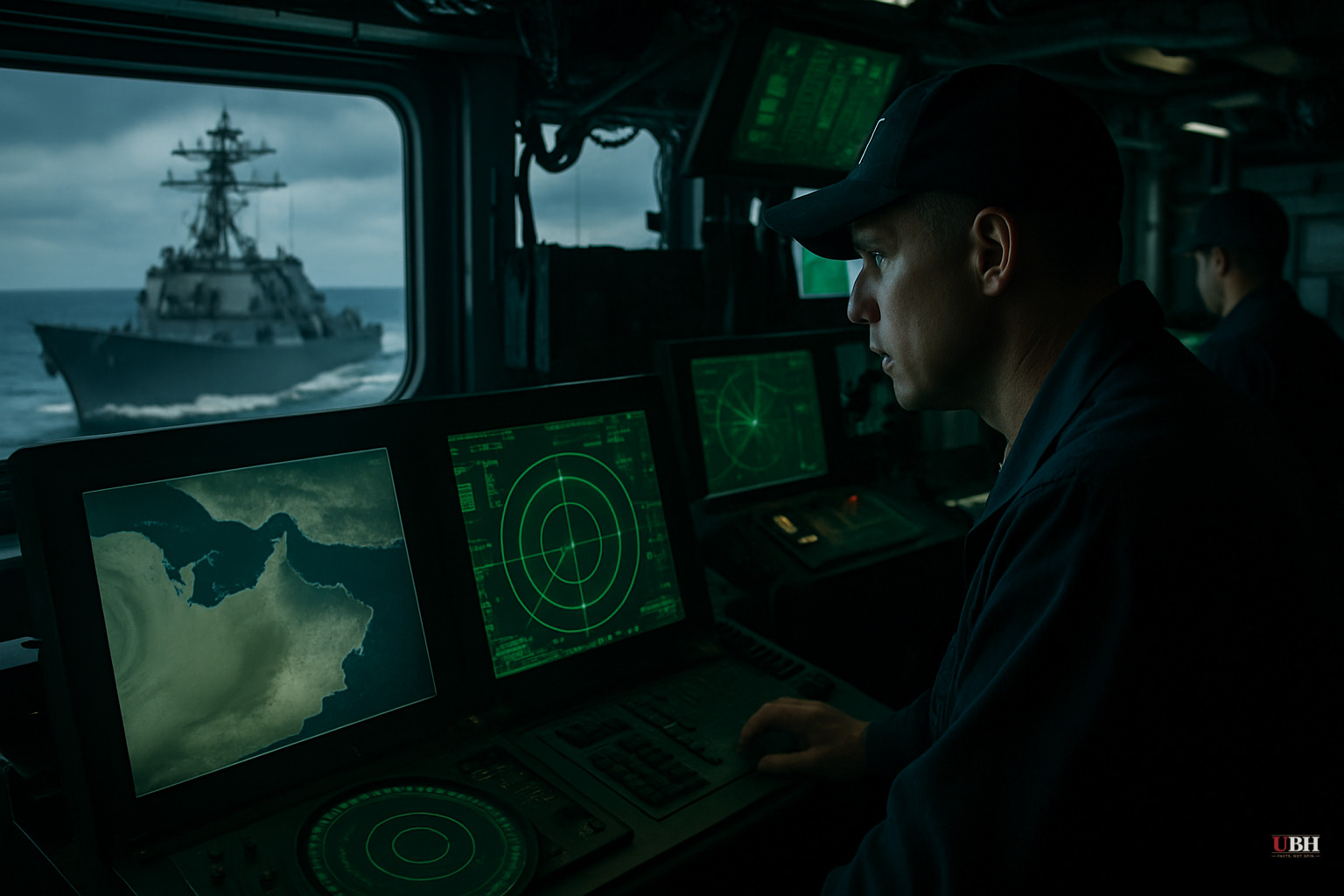
U.S. Kills Iranian Personnel — While Calling It a Ceasefire
U.S. Central Command confirmed on Monday that American forces conducted strikes south of Larak Island in the Strait of Hormuz. Targets included Iranian boats attempting to lay mines and missile launch sites, according to CENTCOM spokesman Navy Captain Tim Hawkins.
Iran's state-run Nour News confirmed that several Iranian personnel were killed.
Hawkins called it a ceasefire. "U.S. Central Command continues to defend our forces while using restraint during the ongoing ceasefire," he said. The terminology obscures a basic reality: both sides are still shooting people.
Trump's Message: Deal Is Close, Also Join the Abraham Accords, Also We'll Bomb You Harder
On Monday, Trump posted on Truth Social that Iran negotiations are "proceeding nicely" — and then threatened to go "Back to the Battlefront and shooting, but bigger and stronger than ever before" if talks collapse.
In a separate post, he outlined three options for Iran's enriched uranium stockpile: hand it over to the United States, destroy it in Iran, or destroy it "at another acceptable location."
Then he added an entirely new demand. Trump said he "mandatorily requested" that Saudi Arabia, Qatar, Pakistan, Turkey, Egypt, and Jordan all sign the Abraham Accords — en masse — as part of the broader Iran settlement. He also floated the idea of Iran eventually joining the coalition.
Secretary of State Marco Rubio, speaking from India, said the Strait of Hormuz will be opened "one way or the other," according to Reuters. Fox News, citing senior U.S. officials, reported the deal is "95% there."
Pakistan Said No. Loudly.
Pakistan rejected Trump's Abraham Accords demand immediately. A Pakistani source familiar with the matter told Reuters that the Iran deal and the Accords are "not interlinked and cannot be made so." The source added: "Pakistan is under no compulsion to adhere to any such demand."
Neither Saudi Arabia, Qatar, Turkey, Egypt, nor Jordan has publicly responded. Saudi Arabia's longstanding position — unchanged — is that it will NOT normalize relations with Israel without a concrete roadmap to Palestinian statehood, according to CNBC. The kingdom is the custodian of Mecca and Medina. This is a significant diplomatic hurdle.
The Bunker Problem
Iran's negotiating pace isn't just diplomatic posturing. A CBS News report cited by ZeroHedge, drawing on U.S. officials, reveals that Supreme Leader Ali Khamenei is still hidden in a secret location and communicates exclusively through physical couriers — a deliberately archaic system designed to prevent the CIA and Mossad from mapping his coordinates. Both agencies have openly acknowledged they are hunting for him.
When the U.S. sends a new draft proposal, there can be a multi-day delay before any response comes back, according to two U.S. officials cited by CBS. "Most Iranian leaders don't see daylight, spending weeks inside highly fortified bunkers," the report states.
A deal that's supposedly "95% there" has remained in that state for weeks. The man who has to approve anything is physically isolated by design.
What the Market Is Telling You
Oil markets on Tuesday told a revealing story about how confident traders actually are. Brent crude jumped 2% to $98.26 a barrel in Asia trading, according to CNBC. WTI futures fell roughly 5% to $91.73 — but that drop reflected a lack of Monday settlement due to the U.S. Memorial Day holiday, not a sudden peace dividend.
UBS said Friday that observed global oil inventories dropped by a combined 246 million barrels in March and April, with cumulative production losses potentially exceeding 1 billion barrels by end of May, per CNBC. The bank called the market "strongly undersupplied."
The Quad foreign ministers met as the Hormuz crisis deepened, per Bloomberg's headline, with Asia bracing for summer demand spikes.
India's Reserve Bank and rating agencies are actively assessing war risks on Indian companies, Bloomberg reported. The disruption has gone well beyond the Middle East.
Bolton Says the Whole Thing Is a Mistake
Former National Security Adviser John Bolton called the U.S.-Iran peace talks "a mistake" on Monday, according to The Hill. Bolton has been a consistent voice against any deal with Tehran. His position: you don't negotiate with a regime while actively shooting at its personnel.
The WSJ's opinion section echoed the skepticism more carefully, noting that while both sides want the war over, "the gap between their basic requirements is wide."
Divergent Coverage, One Missing Element
Left-leaning outlets are framing this primarily as an oil price and diplomatic story — the strikes get mentioned, then quickly pivoted away from. Right-leaning outlets are treating the deal as nearly done and crediting Trump's pressure campaign.
Both miss a central constraint: when the other side's decision-maker is unreachable by phone, deal-making slows to the speed of walking couriers. The courier system isn't a negotiating tactic. It's a physical constraint baked into Iran's post-strike survival structure.
ZeroHedge flagged from CBS reporting that Iran's oil storage capacity may be near its physical limit, and that shutting in oil wells could permanently damage the fields themselves. If accurate, Iran's leverage is collapsing in real time, not just militarily but economically.
The Current State
Gas prices remain elevated. Oil supply chains are still disrupted. A deal may arrive soon — or it may drag for weeks more while couriers walk proposals through underground tunnels in Iran.
Trump just made the deal significantly harder by adding the Abraham Accords to the ask. That's either a master negotiating gambit or an overreach that gives every regional actor a reason to walk. Pakistan said no out loud. The rest are silent.
Silence isn't yes.
Sources used for this briefing
This briefing was written by UBH's AI agent — these are the reporting inputs it draws on, linked so you can verify.


