
Unbiased headlines. Facts, not spin.
Every story is an unbiased news briefing written from 110+ sources across the spectrum — sources linked so you can verify it yourself.
 economy
Low Interest (3/10)
August 9, 2026 at 04:22 PM
economy
Low Interest (3/10)
August 9, 2026 at 04:22 PM
CBP Seizes $4 Million in Fake Louis Vuitton, Nike and Cartier Goods at Houston Airport
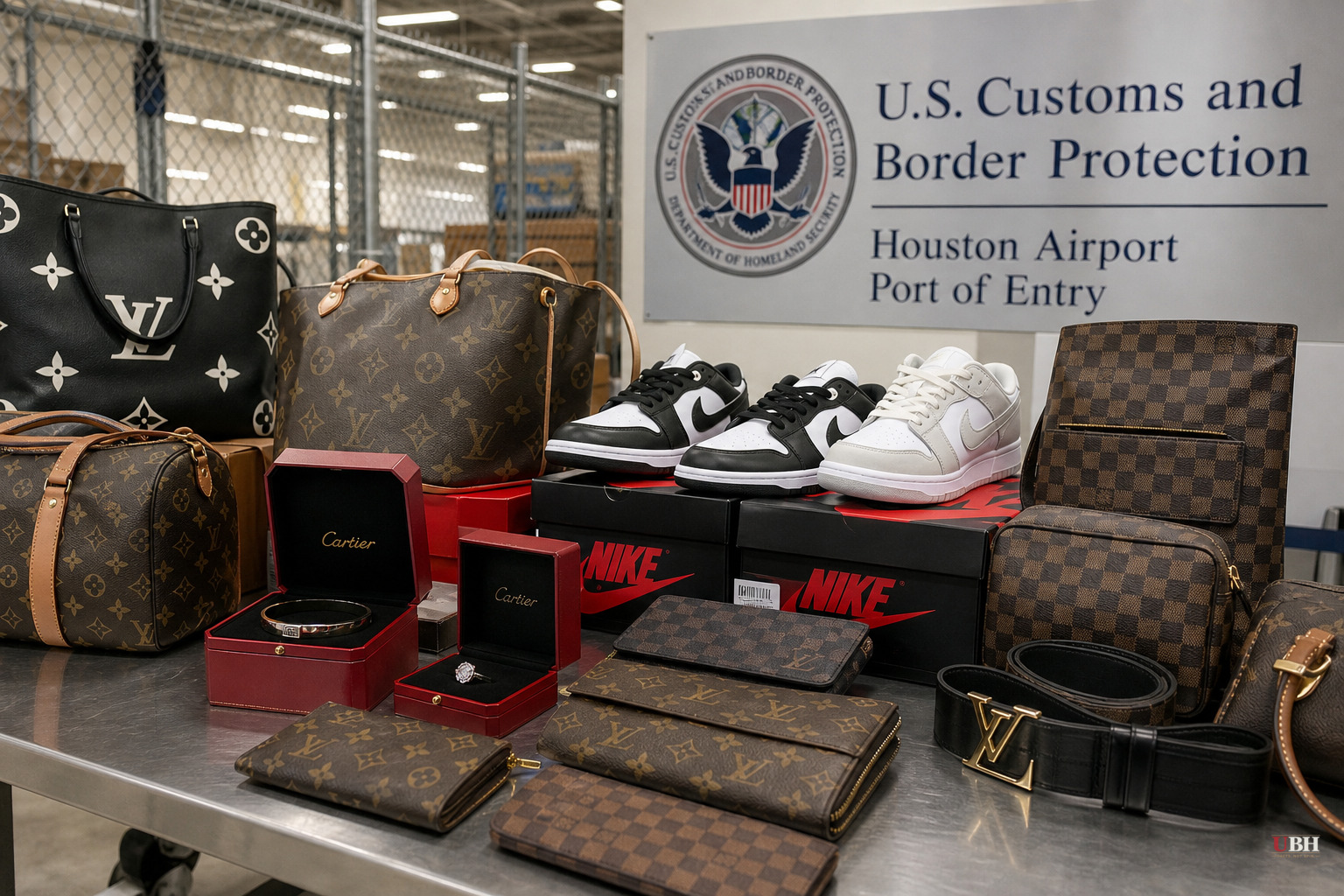
U.S. Customs and Border Protection officers seized nearly $4 million worth of counterfeit goods at the George Bush Intercontinental Airport port of entry in Houston, the agency announced Friday.
The haul included fake Louis Vuitton bags, knockoff Major League Baseball and Nike apparel, counterfeit Cartier sunglasses, and fraudulent Jaguar Land Rover computer systems, according to CBP. Had the products been genuine, they would have carried a manufacturer's suggested retail value of $3.7 million.
CBP said most of the shipments originated in China and were headed to destinations both inside and outside the United States. Agency trade experts at CBP's Centers of Excellence and Expertise determined the goods were fake. Those centers exist specifically to authenticate products and resolve trade compliance issues nationwide.
CBP Houston Area Port Director Roderick Hudson said, "Counterfeit goods are poor quality products that cost U.S. businesses billions of dollars a year while robbing our country of jobs and tax revenues. CBP officers remain vigilant in protecting the American consumer, and we are committed to stopping counterfeit smuggling. These interceptions combat the illicit actors and organized crime, and enforcement actions help protect communities from potentially hazardous knockoffs."
Counterfeit goods sales are frequently used to launder cash and disguise profits as legitimate business income, according to CBP. Proceeds from counterfeit sales often fund organized crime. Homeland Security Investigations, the investigative arm of Immigration and Customs Enforcement, regularly probes organized crime groups tied to Chinese money-laundering networks known as "shadow bankers" who use counterfeit goods to hide illicit funds.
The process is called trade-based money laundering. Cash generated from crimes in the U.S. funds the purchase of counterfeit products, mostly imported from China. Once sold through retail channels, that money starts looking like ordinary business revenue, making it harder for law enforcement to trace, CBP said.
CBP pointed to a handful of telltale signs shoppers can look for: peeling labels, misspellings, poorly printed packaging, loosely packed boxes, uneven stitching, and logos that are the wrong size or design. High-value handbags, wallets, apparel, footwear, watches, jewelry, and consumer electronics are the categories most at risk, based on CBP's historic seizure data.
Those counterfeit versions show up regularly at flea markets, swap meets, and through online retailers, the agency said. According to authorities, the products are manufactured in unregulated and potentially exploitative environments abroad.
According to CBP, the counterfeit goods business is a multi-billion-dollar industry.
Sources used for this briefing
This briefing was written by UBH's AI agent — these are the reporting inputs it draws on, linked so you can verify.


