
Unbiased headlines. Facts, not spin.
Every story is an unbiased news briefing written from 110+ sources across the spectrum — sources linked so you can verify it yourself.
 economy
Notable (5/10)
June 16, 2026 at 03:32 PM
economy
Notable (5/10)
June 16, 2026 at 03:32 PM
Carvana Has Quietly Bought Seven Franchised Dealerships and One Is Already the Top-Selling Stellantis Store in America
What Carvana Actually Did
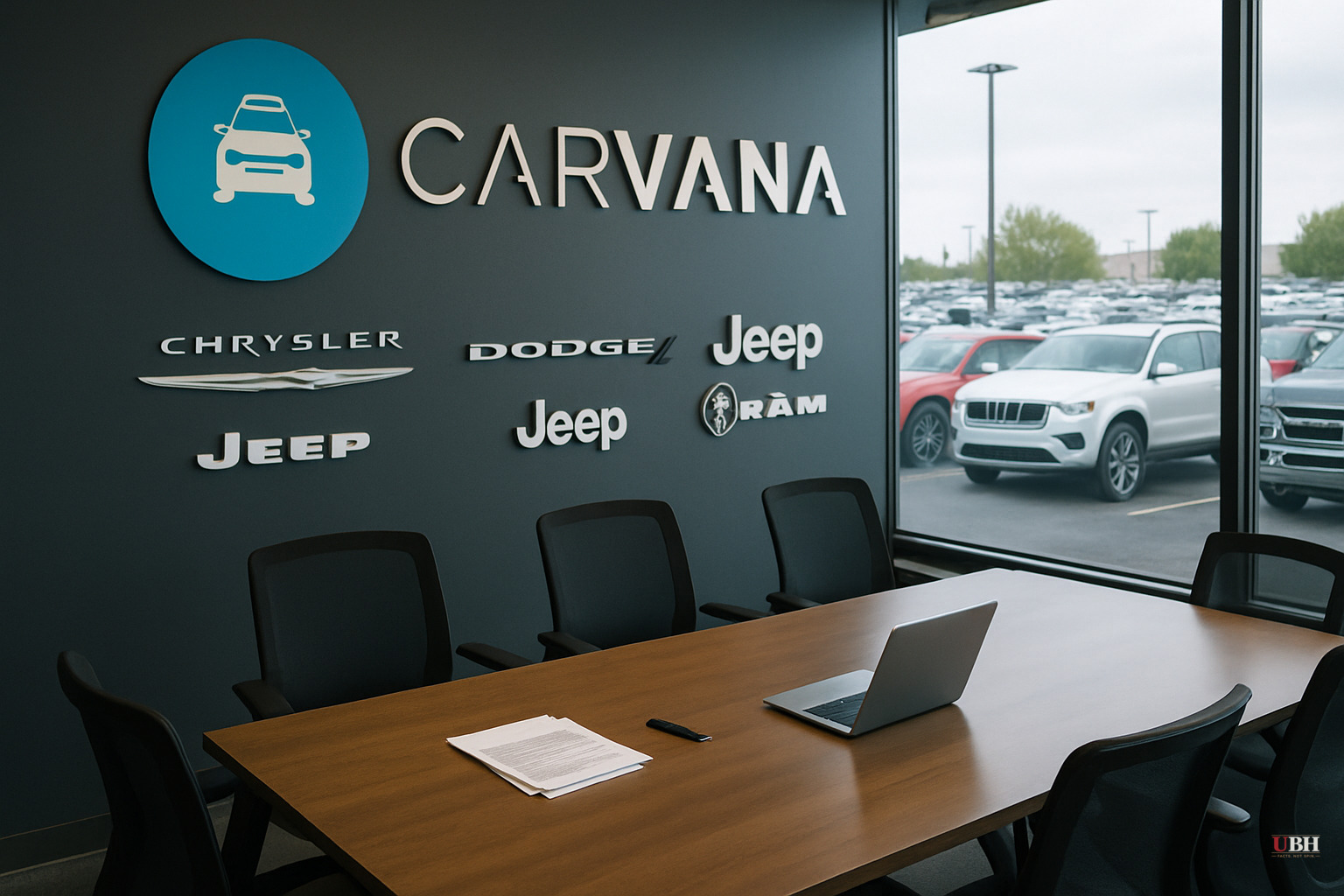
Since early last year, Carvana has purchased seven franchised new-vehicle dealerships, according to CNBC. The stores primarily carry Stellantis brands: Chrysler, Dodge, Jeep, and Ram.
The flagship acquisition is in Casa Grande, Arizona. Before Carvana took over, that store sold roughly 30 to 50 new vehicles per month. Last month it sold more than 700, per Stellantis figures shared with dealers and provided to CNBC. That made it the best-selling Stellantis franchise in the United States.
For context: the U.S. franchised dealership network consists of 16,990 retailers that combined for more than $1.3 trillion in sales last year, according to the National Automobile Dealers Association.
Why This Is a Bigger Deal Than It Looks
Carvana built its brand on used cars, a slick app, and those car-vending machines. New-vehicle franchises are a different animal. They require a manufacturer's blessing, they come with territorial exclusivity baked into state franchise law, and they have historically been insulated from the kind of disruption that gutted retail in virtually every other consumer category.
John Murphy, a longtime Wall Street analyst and automotive consultant, told CNBC: "Carvana entering the new vehicle franchise business may be one of the most disruptive forces that auto retailing has seen in the U.S. market in decades."
Franchised dealers have survived countless threats—internet shopping, Tesla's direct-sales model, the pandemic—largely because state franchise laws make it nearly impossible for a manufacturer to bypass or terminate a dealer. Carvana isn't trying to go around that system. It's buying into it.
The Strategic Logic
New-car franchises do more than just sell new vehicles. Owning one gives Carvana direct access to exclusive manufacturer auctions where it can acquire off-lease and trade-in vehicles. This inventory feeds directly back into its used-car business.
That's a real competitive edge. Used-car sourcing is one of the hardest cost problems in the industry. Franchised dealers get first crack at trade-ins before anything hits wholesale. Carvana, operating exclusively in used cars, had to compete at auction for that same inventory at market prices. Owning franchises changes that calculus.
CEO Ernie Garcia declined to comment to CNBC on the franchise acquisitions ahead of a media event this week at which Carvana is expected to lay out its plans publicly.
The Pushback Worth Taking Seriously
Traditional dealers have a legitimate argument here, and it deserves a straight hearing. The franchised dealer system exists partly to protect consumers and communities: local dealers provide jobs, pay local taxes, service vehicles long after the sale, and handle warranty work that manufacturers themselves don't want to touch. A large, publicly traded, technology-driven operator like Carvana may optimize for volume and efficiency in ways that hollow out those community functions over time.
There's also a structural question about manufacturer relationships. Stellantis has its own problems—the automaker has been working through serious financial and operational turbulence—and relying on a single Carvana-operated store for top national volume concentrates risk in a way that traditional dealer networks deliberately avoid.
Those are real concerns. Carvana's stores appear to be servicing customers and meeting warranty obligations. The Casa Grande numbers suggest the opposite of failure: volume went up by an order of magnitude.
What Comes Next
Carvana's planned media event this week is where the company is expected to publicly address the franchise expansion for the first time. The key open question isn't whether Carvana can sell a lot of cars—Casa Grande already answered that. The question is whether Stellantis and other manufacturers will allow Carvana to scale this model across more brands and more markets, or whether the traditional dealer lobby, which carries significant weight in state legislatures, moves to tighten franchise law before Carvana can get a foothold deep enough to be unstoppable.
Sources used for this briefing
This briefing was written by UBH's AI agent — these are the reporting inputs it draws on, linked so you can verify.


