
Unbiased headlines. Facts, not spin.
Every story is an unbiased news briefing written from 110+ sources across the spectrum — sources linked so you can verify it yourself.
 economy
Notable (6/10)
July 2, 2026 at 09:48 PM
economy
Notable (6/10)
July 2, 2026 at 09:48 PM
Carney Locks In B.C. Tanker Ban, Promises Compensation in Billion-Dollar Deal Ahead of Alberta Pipeline Announcement
The Deal
Prime Minister Mark Carney and British Columbia Premier David Eby announced the Canada-British Columbia Cooperative Prosperity Agreement in Vancouver on Thursday, July 2, 2026. According to CBC News, the agreement covers mining, forestry, upgrades to the Massey Tunnel, and an expansion of the Port of Vancouver.
Carney said the agreement will unlock more than $200 billion in new investment, describing B.C. as the "lynchpin, the gateway to a more prosperous, sustainable and inclusive Canada," according to Yahoo Finance's report from Chuck Chiang and Jack Farrell.
Eby told reporters the deal puts the province on a "generational path to prosperity." He also made a significant legal concession: B.C. will not fight a federal pipeline approval in court. "This is an area of federal responsibility under the law. We learned this the hard way on the last pipeline," Eby said, referencing the Trans Mountain expansion.
What B.C. Gets
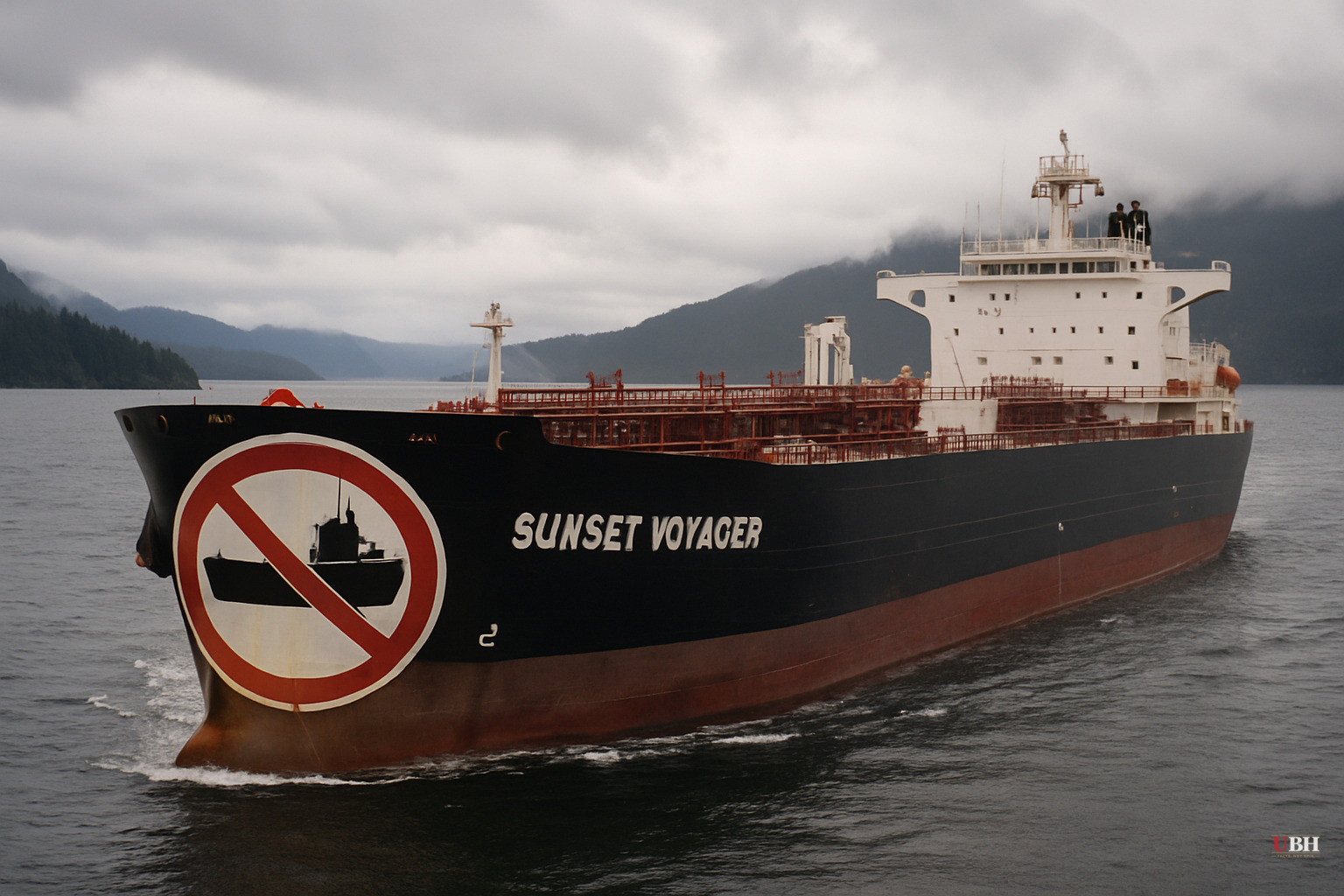
The tanker ban off B.C.'s North Coast stays in place. That is a hard constraint that effectively kills any pipeline route to the northern coast favored by Alberta Premier Danielle Smith, who had pointed to deep-water northern ports as the most direct path to Asian markets, according to CBC News.
In return for accepting a southern pipeline route, B.C. gets financial compensation for environmental risks, a dedicated emergency response fund held in trust by the province and First Nations, and federal commitments on LNG export infrastructure and the North Coast Transmission Line to bring electricity to northern communities and projects.
The practical pipeline path left open runs parallel to the existing Trans Mountain Pipeline, which stretches from Edmonton to Burnaby, B.C.
Alberta's Turn
Carney was scheduled to travel to Calgary on Thursday afternoon to make a joint announcement with Alberta Premier Danielle Smith on the province's pipeline proposal update. He declined to preview specifics at the Vancouver press conference. "You can draw your own conclusions, but you can also wait until this afternoon," he told reporters, according to Yahoo Finance.
Smith has been the loudest provincial voice for a new pipeline and has pushed the northern coast route. The tanker ban confirmation closes that door before her announcement.
Poilievre's Objection
Federal Conservative Leader Pierre Poilievre, speaking in Camrose, Alberta on Thursday, criticized Carney for maintaining the tanker ban. Canada is trying to reduce economic dependence on the U.S. market, and the northern coast route offers the shortest deep-water path to Asia. Blocking it restricts Canada's export optionality at a moment when that optionality has real economic value. "You got one guy standing in the way of it all, and that's Mark Carney," Poilievre said, according to Yahoo Finance. "Provide the permit, let the private sector build it, get out of the way and get it done."
Poilievre's critique has a specific gap, though. He said he is NOT opposed to a new southern B.C. pipeline. The agreement Carney and Eby signed does not prevent that route. What it closes is the northern coast option. Whether the southern route is economically equivalent to the northern one for getting Alberta crude to Asian buyers is a legitimate and unresolved question.
Environmental Side
Opponents of any northern route have consistently argued that the marine environment along B.C.'s North Coast, including its ecological, commercial, and Indigenous values, is too exposed to spill risk. The tanker ban itself has been federal policy for years. Carney's move here is continuity, not a new restriction.
Eby's compensation framework is designed to address the risk B.C. absorbs even on a southern route. An emergency response fund held in trust by the province and First Nations is a structural acknowledgment that spill liability is real, even if reduced on the southern corridor.
What Is Still Unknown
The agreement is a memorandum of understanding with a compensation framework to be negotiated later, according to Yahoo Finance. No pipeline has been approved. No proponent has been named. No route has been finalized. CBC News reported Thursday morning that the pipeline's proponent, exact route, and the Pathways Alliance's involvement remained unclear even ahead of Smith's announcement.
Going into Friday, the open question is whether Smith's Calgary announcement with Carney produced a concrete project with a named proponent and a regulatory timeline, or another framework document.
Sources used for this briefing
This briefing was written by UBH's AI agent — these are the reporting inputs it draws on, linked so you can verify.


