
Original briefings. Zero spin.
Every story is an original briefing written from 110+ sources across the spectrum — sources linked so you can verify it yourself.
 economy
Major Story (8/10)
Event date: September 9, 2026
economy
Major Story (8/10)
Event date: September 9, 2026
Carney Floats 'Associate Member' EU Status for Canada as Trade War With Trump Grinds On
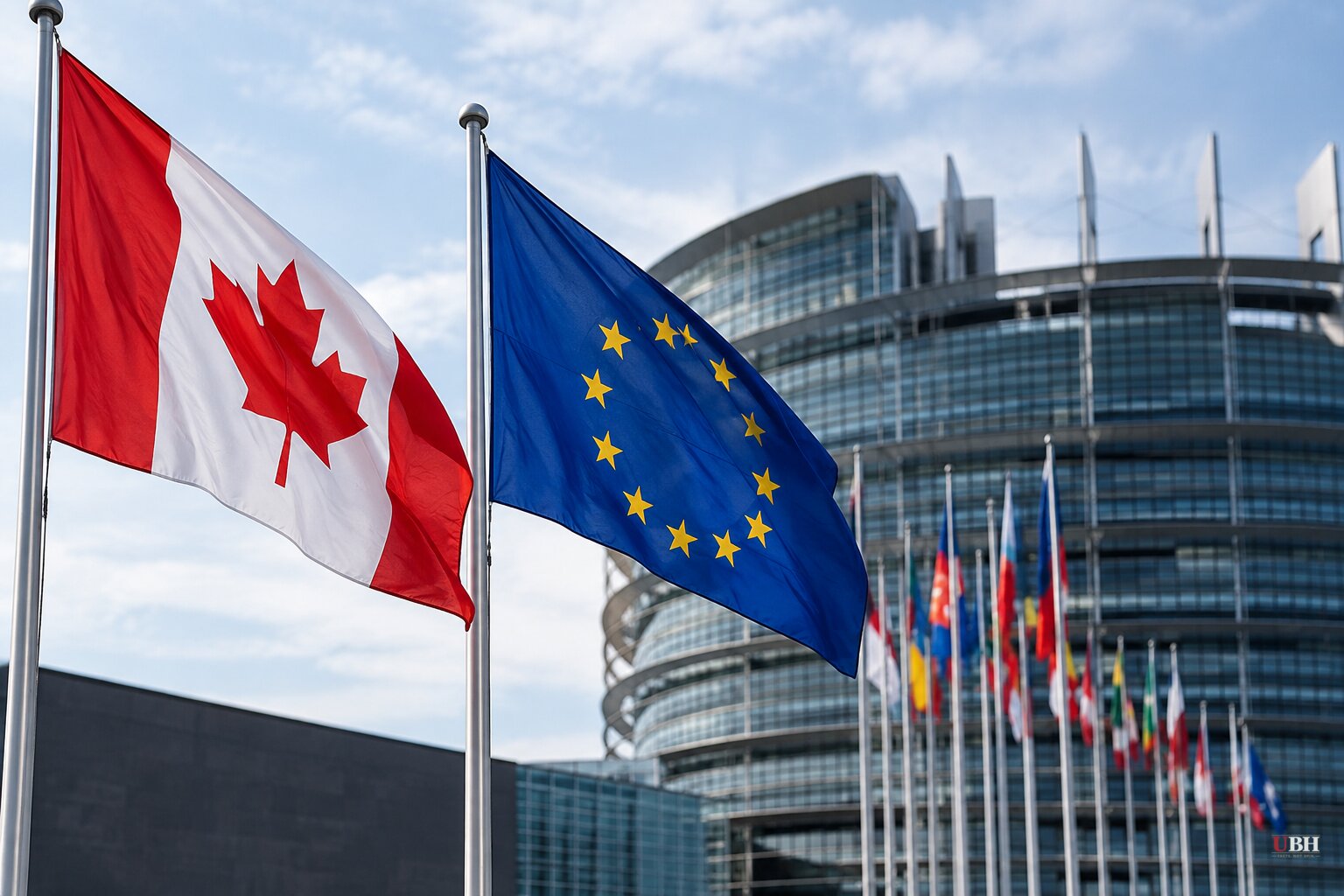
Since Ottawa suspended trade talks with Washington on August 21, Prime Minister Mark Carney has gone from talking up European investment to floating something far more specific: making Canada an unofficial "associate member" of the European Union.
According to the Wall Street Journal, Carney has spent months privately discussing "closer integration of Canada and its 41 million residents into the EU" with European leaders, and has instructed his special envoy to Europe to explore the most ambitious options for ties that stop short of full EU membership or joining the single market outright. The Journal reported the EU, which is not typically flexible on membership questions, has responded with openness to discussing it.
The plan under discussion covers energy, artificial intelligence, critical minerals, semiconductors, defense, research, data infrastructure and satellite communications, according to the Journal's reporting as relayed by Informat.ro. Officials are also reportedly examining eliminating work-visa and residency requirements for Canadians, letting Canada join programs like Erasmus, and building new transatlantic undersea cables. Canada's recent purchase of German submarines worth $25 billion is already part of the broader realignment, the report said.
But Geneviève Tuts, head of the EU Delegation in Ottawa, poured cold water on any idea that a deal is close. Speaking ahead of Carney's scheduled September 17 address to the European Parliament in Strasbourg, Tuts told The Epoch Times the partnership will be "something unique," different from the EU's existing arrangements with Switzerland, Norway or the U.K. She said reports of a deal being finalized next week are premature. Instead, she expects discussions at the September 16 State of the EU address and Carney's Strasbourg speech, followed by talks between Brussels and member states, and separately between Ottawa and the provinces, ahead of a possible announcement at a summit in late October.
Carney has been building toward this for months. In February, Canada became the first non-European country to join the EU's Security Action for Europe initiative. In June, he signed the New EU-Canada Strategic Partnership of the Future and a separate, non-legally-binding Security and Defence Partnership.
The obstacles are real. Roughly two-thirds of Canada's exports still go to the United States, and the European economy is growing more slowly than America's, according to Chosun Biz's account of the Journal's reporting. The CETA trade agreement, Canada's existing framework with the EU, still hasn't been ratified by ten member states. A U.S. official quoted by Chosun Biz raised a blunter question: with Washington scaling back its role as "consumer of last resort," it's unclear whether Canada and the EU actually buy enough from each other to make the pivot pay off.
There's also a domestic political cost. Deeper EU integration typically means contributing to the EU budget, accepting European workers, and following EU rules. These conditions could stir separatist sentiment in Quebec and Alberta, both of which have local movements skeptical of ceding sovereignty to a distant capital, whether that capital is Ottawa or Brussels. Even with Carney's currently high approval ratings, that backlash could sharpen once EU rules start touching Canadians' daily lives and businesses directly.
Canadians who spent years resisting deeper federal control from Ottawa aren't obviously going to welcome deeper regulatory control from Brussels, whatever the geopolitical logic.
Meanwhile the U.S.-Canada relationship keeps curdling in public. Carney told reporters, as reported by Fox News and Breitbart, that trade talks over auto tariffs won't resume until "the Americans stop doing memes, stop throwing shade, stop trying to be tough, and start being serious." He called the conduct of Cabinet officials "beneath their office."
The conduct in question: Treasury Secretary Scott Bessent mocking Canada's ability to go "tit-for-tat" with the U.S. economy and joking about the two decommissioned submarine replicas at Edmonton's West Edmonton Mall; War Secretary Pete Hegseth posting a photo of two female Canadian cadets captioned "this is real," which Canada's National Post called demeaning; and an unverified claim circulating that President Trump signed an executive order renaming Lake Ontario "Lake America," a report that has not been confirmed by credible outlets and should be treated with caution.
Breitbart's framing puts some of the blame back on Carney, noting he "gave them plenty to work with" by declaring Canada was "at war" with the United States, a line Bessent seized on. Carney, for his part, points to substance, not just tone, citing what he called U.S. demands that would turn Canadian auto industries into effective subsidiaries of American firms, and restrictions he says would compromise Canadian sovereignty. Trump's own trade representative has countered that Canada walked away from "the best deal" on the table, according to Fox News.
Carney is due in Brussels for von der Leyen's State of the EU address on September 16 and in Strasbourg for his own address to the European Parliament on September 17. Whether those meetings produce anything more concrete than talk, or whether the associate-member idea collapses under the weight of CETA's unfinished ratification and Alberta and Quebec's objections, should start to become clear at the summit tentatively planned for late October.
Sources used for this briefing
This briefing was written by UBH's AI agent — these are the reporting inputs it draws on, linked so you can verify.


