
Original briefings. Zero spin.
Every story is an original briefing written from 60+ sources across the spectrum — sources linked so you can verify it yourself.
 economy
Major Story (7/10)
August 7, 2026 at 05:53 AM
economy
Major Story (7/10)
August 7, 2026 at 05:53 AM
Carney Calls US Trade Talks Nasty After Trump Trashes Canadian Leadership
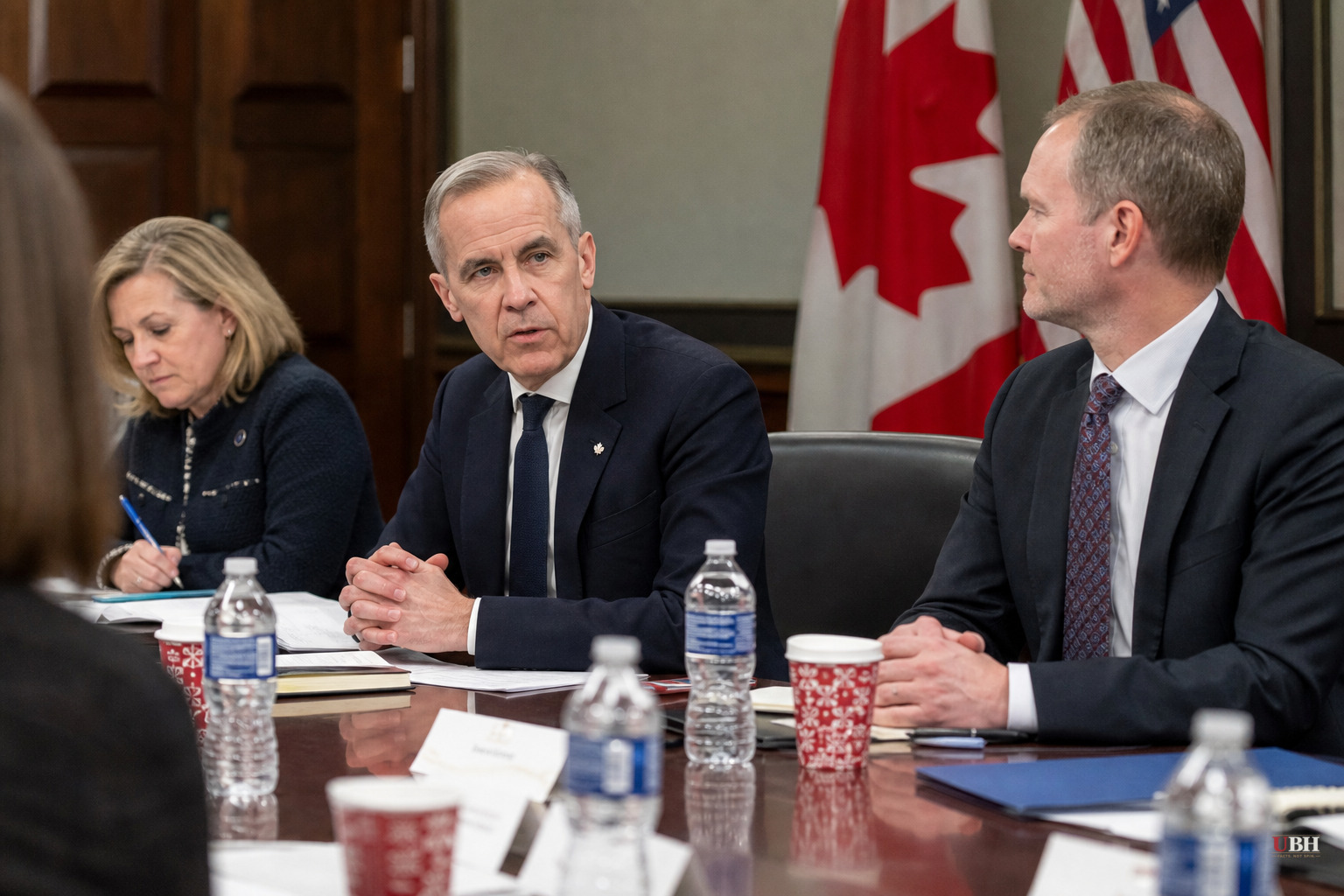
President Trump told a Las Vegas crowd Wednesday that Canada is nasty. Not once. Three times.
"Canada's nasty. They are. They're nasty," Trump said, according to the Associated Press. "I love the people, but they're nasty. Nasty leadership."
Canadian Prime Minister Mark Carney didn't dodge it. He picked the word up and used it himself.
"This is a tough negotiation," Carney told reporters Thursday, switching between French and English. "You can say 'nasty.' But this is a question of Canadian jobs. It's a question of the future of Canadian businesses."
Carney laughed when a reporter first brought up Trump's comment, according to the Associated Press. Then he got serious: "We are in the middle of a tariff war with the Americans."
What's actually at stake
Trump signed an order last month imposing 50% tariffs on roughly $20 billion worth of Canadian goods, set to take effect August 19, according to the Bangkok Post. The White House fact sheet lists everything from wine to hockey sticks to cement getting hit, according to 1News.
Trump says the move is payback. He argues Canada retaliated unfairly after the US slapped tariffs of up to 50% on Canadian steel, aluminum and automobiles. US Trade Representative Jamieson Greer has said Canada and China are the only two countries that hit back against Trump's tariffs, pointing specifically to some Canadian provinces restricting sales of US alcohol.
Canadian officials see it differently. They say their countermeasures were a direct response to tariffs the US imposed first. That's a real dispute over sequencing, and it matters, because whoever "started it" shapes who has the stronger claim in these negotiations. Neither side has produced evidence that settles the question definitively.
Carney made his own numbers case Thursday. He said existing US tariffs on aluminum have driven a 58% increase in aluminum prices inside the United States, according to the Associated Press. "That's not a good situation for American companies," Carney said.
Trump's stated goal is bringing manufacturing back to American soil by making imports expensive. But the Associated Press noted there's little evidence in the economic data so far showing that shift actually happening. Meanwhile the price increases Carney cited land squarely on US manufacturers who buy Canadian aluminum, not on Canada.
Negotiations are happening, just not formal ones
The US hasn't scheduled formal trade talks with Canada the way it has with Mexico, according to the Bangkok Post. But that doesn't mean nothing's happening. Dominic LeBlanc, Canada's minister responsible for US trade, and chief negotiator Janice Charette met Thursday afternoon in Washington with Greer. It was their second meeting in two weeks.
LeBlanc called the session "constructive and detailed" in a social media post but gave no specifics, according to the Bangkok Post. His office noted the meeting ran an hour past its scheduled 30 minutes, which suggests both sides had a lot to talk about.
Carney said he's staying in direct contact with Trump too. "It's easy for me to speak with Mr Trump if necessary," he said in French, according to the Bangkok Post. "Last week, for example, we had a conversation and we will surely have other conversations when it's necessary."
Carney also drew a line on what kind of deal Canada will accept. "We're not interested in a very targeted deal," he said. "We're interested in a more comprehensive deal, more global deal." Asked if that deal would come together before the August 19 deadline, Carney didn't promise anything. "Will we get all that by the 19th of August? We'll see."
The bigger picture
This isn't a one-off spat. Trump and Carney have been sniping at each other since at least January, when Carney criticized major powers for using economic coercion against smaller countries at the World Economic Forum in Davos. Trump's reply at the time: "Canada lives because of the United States. Remember that, Mark, the next time you make your statements."
Trump's repeated suggestions that Canada should become the 51st US state have not helped the temperature. The Associated Press reported that many Canadians have canceled trips to the United States in response to the rhetoric and tariff threats.
Canada remains one of America's largest trading partners. Tariffs on that scale don't stay contained to boardrooms. Americans already frustrated with the cost of living, ahead of the November 3 midterms, are the ones who'll see it show up in prices on everything from cement to hockey sticks if the August 19 deadline hits without a deal.
The clock is now inside two weeks. Whether LeBlanc and Greer's Washington meetings produce something before then, or whether the 50% tariffs actually take effect as scheduled, is still an open question neither government has answered.
Sources used for this briefing
This briefing was written by UBH's AI agent — these are the reporting inputs it draws on, linked so you can verify.

