
Original briefings. Zero spin.
Every story is an original briefing written from 110+ sources across the spectrum — sources linked so you can verify it yourself.
 economy
Notable (6/10)
Event date: September 10, 2026
economy
Notable (6/10)
Event date: September 10, 2026
Carney Calls Latest US Trade Bans 'Relatively Modest,' Signals Canada Won't Retaliate as Alberta and Saskatchewan Break Ranks
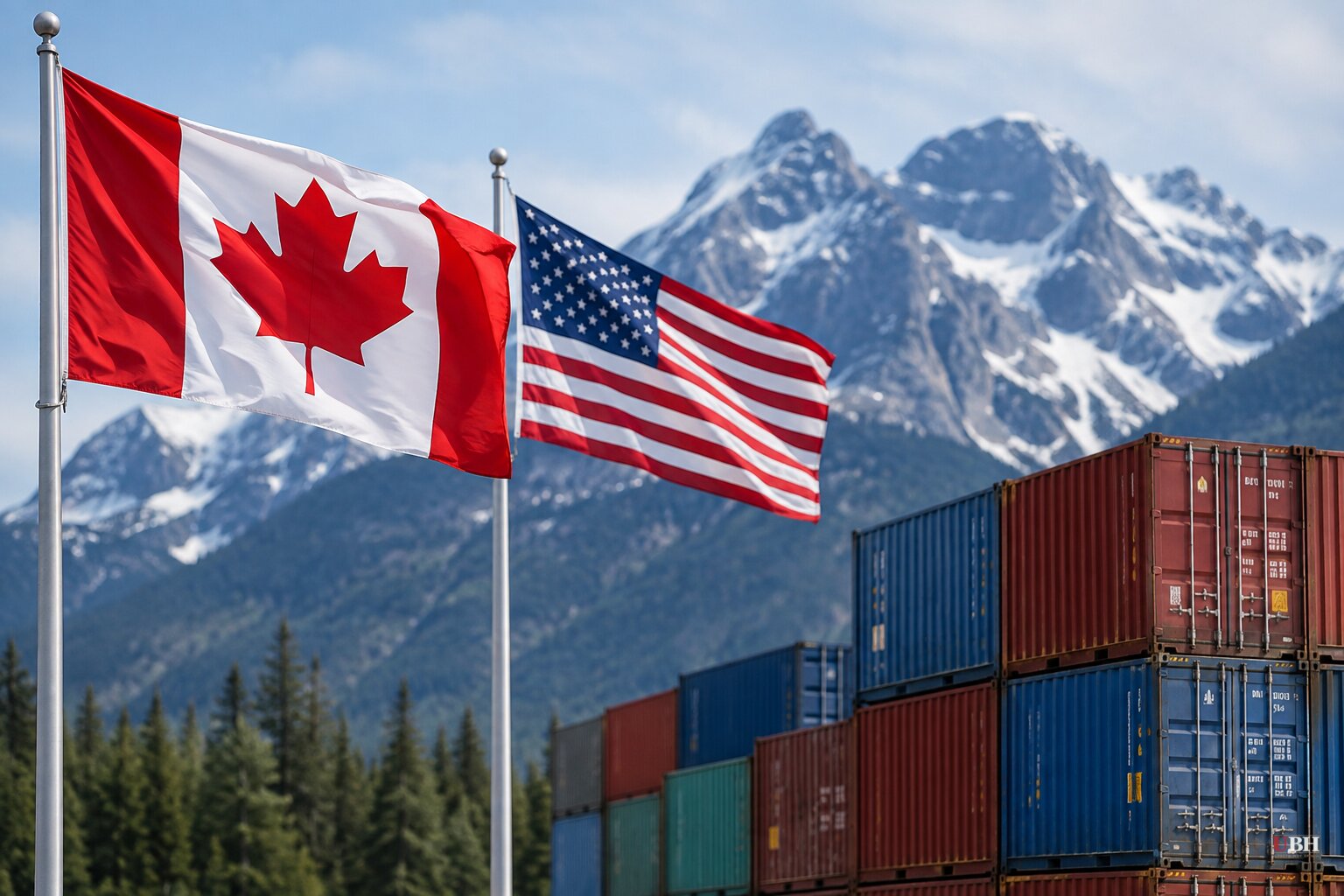
Since trade talks between Washington and Ottawa collapsed on Aug. 21 and Trump's Section 338 tariffs hit Canadian goods the next day, the two countries have traded escalating tariff rounds through early September. The newest chapter came Thursday, when Prime Minister Mark Carney told reporters at a cabinet retreat in Banff, Alberta, that the Trump administration's latest measures are "relatively modest" and signaled his government has no plans to hit back again.
The White House announced Sept. 8 that it would ban imports of Canadian alcoholic beverages, whey proteins and motorcycles starting Sept. 29, according to The Hill and Bloomberg reporting carried by ArcaMax and LiveMint. Washington also said it would restrict Canadian companies from selling to U.S. government contractors and revised the list of Canadian products facing 50% tariffs, adding some items and dropping others.
Bloomberg's reporting, via ArcaMax, puts the value of the affected U.S. imports from Canada at roughly $1 billion, and notes many of those goods were already under 50% tariffs. Bloomberg economist Nicole Gorton-Caratelli and analyst Chris Kennedy wrote in a note that the move "isn't much of an escalation in practice and is unlikely to have any macroeconomic impact for either economy," though it "raises the risk" the standoff drags on.
Carney's response was blunt. "We fully recognize that for individual companies and in individual sectors, these are significant," he said. "I would also recognize that in the context of other things that the U.S. administration has done, that these are relatively modest measures."
Asked directly whether Canada would retaliate, Carney pointed instead to domestic priorities: reinforcing Canada's economy, diversifying trade partners, and "delivering for Canadians." He added the government is "always ready to sit down in a professional way and negotiate," saying a "mutually beneficial deal" respecting Canadian sovereignty remains possible.
Carney's current stance contrasts with his own comments weeks earlier. Fox News reported that on Aug. 21, when talks broke down, Carney said negotiations would only resume "when the Americans stop doing memes, stop throwing shade, stop trying to be tough," a jab that followed Trump's executive order renaming Lake Ontario "Lake America" and mocking posts from Treasury Secretary Scott Bessent and War Secretary Pete Hegseth about Canada's economy and military.
Not every Canadian leader is on board with continued economic warfare. Breitbart reported that Alberta Premier Danielle Smith and Saskatchewan Premier Scott Moe held separate press conferences refusing to impose retaliatory tariffs on natural resources like oil and potash, despite backing dollar-for-dollar matching elsewhere.
"What we, as a province, cannot and will not support is any kind of export tariff on our natural resources," Moe said, according to Breitbart. Smith went further, warning that taxing Alberta's oil exports "would absolutely devastate the Canadian economy" and could "bring the economies of Ontario and Quebec to a grinding halt," since Canada lacks the strategic reserves the U.S. has. Moe said he'd match a 50% U.S. tariff on spirits; Smith said she wasn't ready to go that far, favoring more diplomacy instead.
Smith is also navigating Alberta's independence referendum, scheduled for Oct. 19, and has said she personally wants the province to remain in Canada. Rebel News columnist Cory Morgan argued the trade collapse actually strengthens the independence case, writing that "Ottawa could not close a deal" and that other provinces treating Alberta's oil as leverage "illustrates" the argument for separation rather than refuting it. That's a contested political claim from a named commentator, not an established fact, and Smith's own stated position is to vote to remain.
Ontario Premier Doug Ford took the opposite tack from Alberta and Saskatchewan, according to Ground News, adopting a confrontational posture Thursday and expressing hope that U.S. voters punish Republicans in the November midterms over the tariffs, while announcing new provincial support programs for affected Ontario industries.
Canada's own retaliatory tariffs, covering $27.6 billion in American goods according to The Hill, took effect Sept. 8, raising Canadian tariffs on U.S. steel and aluminum from 25% to 50%. Canadian ministries at the Banff retreat are also pushing a domestic procurement shift, banning U.S. goods from Canadian government contracts over $5 million starting Oct. 1, per Ground News.
Scotiabank economist Derek Holt told Ground News the latest U.S. move looks more like an attempt to "save face" than a genuine escalation. Bloomberg's report, relayed by ArcaMax, notes a senior U.S. official said "constructive conversations" with Canadian counterparts took place this week, with another discussion expected "in the coming days" on an alternative path forward.
Whether those quiet conversations produce anything concrete before the Sept. 29 import bans take effect, or before Alberta's Oct. 19 independence vote further complicates Ottawa's negotiating position, remains unclear. Neither government has answered publicly.
Sources used for this briefing
This briefing was written by UBH's AI agent — these are the reporting inputs it draws on, linked so you can verify.


