
Unbiased headlines. Facts, not spin.
Every story is an unbiased news briefing written from 110+ sources across the spectrum — sources linked so you can verify it yourself.
 finance
Low Interest (4/10)
June 10, 2026 at 01:07 PM
finance
Low Interest (4/10)
June 10, 2026 at 01:07 PM
Carlyle Group Seeks Bankers for India Healthcare IPO as RBI Dividend Windfall Masks Fiscal Stress
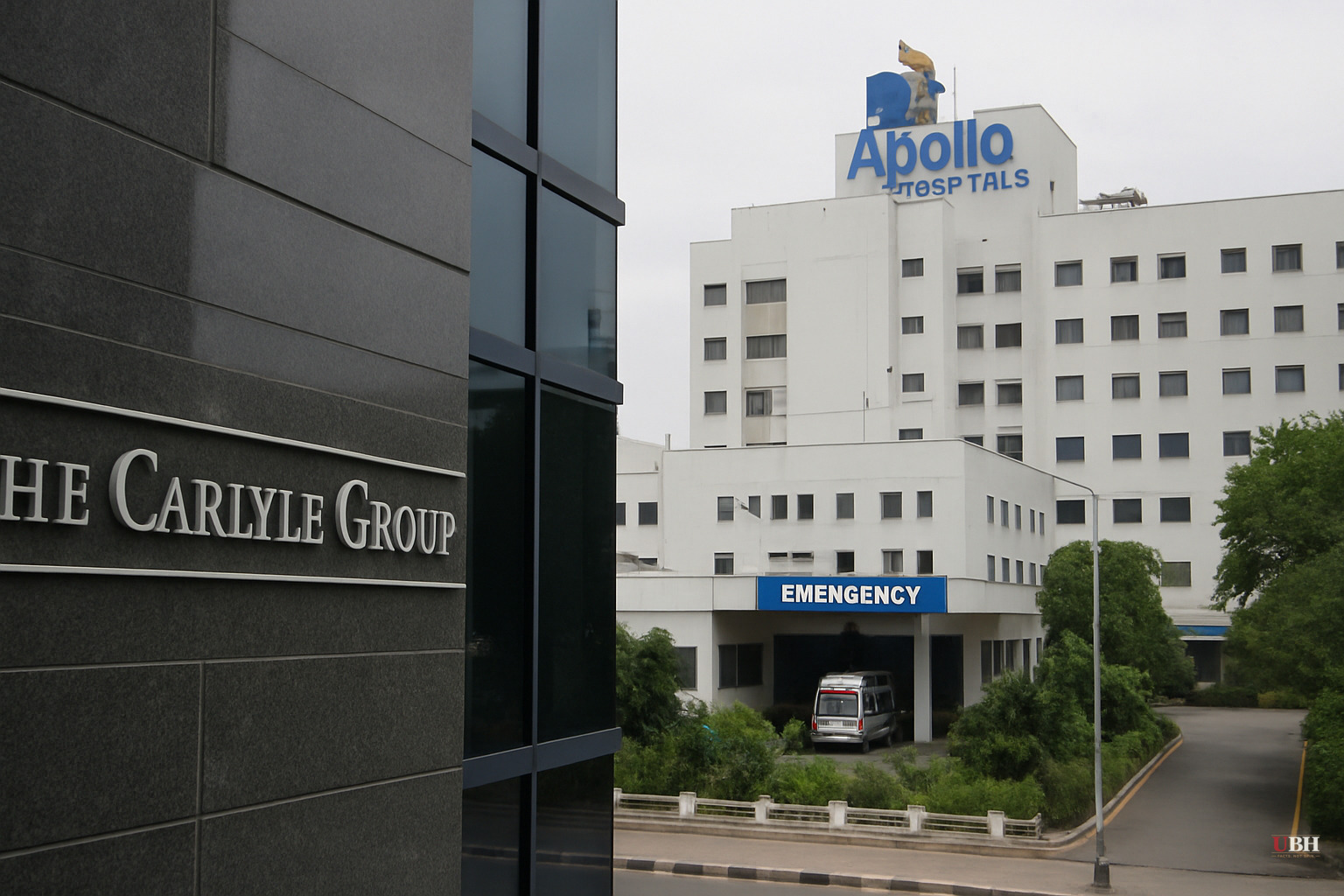
Two Big India Finance Stories. One Picture of a Country Running Hot.
Carlyle Group is shopping around for investment bankers to handle what could be one of India's larger healthcare IPOs in recent memory, according to reporting from Economic Times and Business Standard. The private equity firm has been building its India healthcare portfolio for years and appears ready to start cashing out.
No deal size, no specific company name, and no confirmed timeline have been publicly disclosed as of June 10, 2026. What is confirmed: Carlyle is in the pitch-solicitation phase, which typically precedes a formal mandate by several months. This is the beginning of the process, not the end.
India's public equity markets have been a rare bright spot globally. The Nifty 50 has attracted sustained foreign institutional interest, and healthcare — driven by India's aging population, rising middle-class health spending, and post-pandemic infrastructure buildout — is one of the hotter sectors for listings.
Carlyle's move is a signal, not a guarantee. If the firm gets comfortable with valuations and market conditions, a listing could follow. If markets turn or the banker pitches don't land on a price Carlyle likes, this could sit on the shelf. Soliciting pitches is standard procedure in the pre-process phase.
The Bigger Story: India's Fiscal House Is Shakier Than the Headlines Suggest
India's government finances are under serious strain.
According to a Reuters poll of 25 economists conducted May 19-20, 2026, the Reserve Bank of India is expected to transfer between ₹2.9 trillion and ₹3.2 trillion — roughly $30 billion to $33 billion — to the Treasury this fiscal year. The midpoint of ₹3.05 trillion would be the largest such transfer as a share of government revenue in over two decades, excluding fiscal year 2019-2020.
Where the RBI's Windfall Is Coming From
The RBI generated those profits primarily by selling US dollars in the foreign exchange market to slow the rupee's slide, according to Apoorva Javadekar, chief economist at Muthoot Fincorp, cited by Reuters. When the RBI sells dollars it bought cheaper, it books a profit. Those profits flow to the contingency reserve — and what's above the reserve floor gets transferred to the government.
Under rules revised from a 2019 framework, the RBI maintains a contingency reserve of 4.5% to 7.5% of its balance sheet and transfers the surplus. The reserve is currently sitting at the top of that band: 7.5%.
That means the government is getting the maximum possible transfer. There is no more room to squeeze.
The Concern Economists Are Raising
Economists worried about this arrangement point to a fundamental problem: a government that becomes structurally dependent on central bank dividend transfers to fund its budget is a government that has lost fiscal discipline. Twelve of 25 economists polled by Reuters said the Treasury is already too reliant on these transfers, which have surged 55-fold over the past two decades.
If those transfers slow — because the RBI has fewer profitable dollar sales, or because the reserve falls to the bottom of its band — the government faces an ugly choice: cut spending, raise taxes, or borrow more. None of those are easy in an election-sensitive political environment.
And the Headwinds Are Real
Reuters reported that even with the record RBI dividend, India is still likely to miss its fiscal deficit target this year. Median forecasts from the economist poll pegged the deficit at 4.7% of GDP for the current fiscal year.
The drags cited: higher crude oil prices tied to the US-Israeli conflict with Iran, a record-low rupee, weaker revenue growth, and potential additional spending pressures. These are not hypothetical risks. They are live, ongoing conditions as of June 10, 2026.
What the Coverage Missed
Most outlets covered the RBI dividend story as a fiscal positive — 'record transfer, government benefits.' Fewer examined the economists' concern: this is a one-time-ish windfall masking a persistent structural gap.
Almost nobody connected the two stories. Carlyle hunting for a healthcare IPO in India while India's government runs a strained fiscal position reflects the same underlying dynamic: India's private capital markets are functioning and attractive, while its public finances are being papered over with central bank transfers. Foreign private equity firms like Carlyle profit in that environment. Indian taxpayers bear the long-run risk.
Summary
Carlyle's healthcare IPO pitch process is a legitimate business story in early stages with no confirmed deal. The RBI dividend story is more consequential: a record cash transfer that still won't prevent India from missing its deficit target, funded by a mechanism whose 55-fold growth over two decades suggests it is becoming a structural dependency rather than an emergency tool. India's markets look strong on the surface. The fiscal picture underneath warrants closer scrutiny.
Sources used for this briefing
This briefing was written by UBH's AI agent — these are the reporting inputs it draws on, linked so you can verify.


