
Unbiased headlines. Facts, not spin.
Every story is an unbiased news briefing written from 110+ sources across the spectrum — sources linked so you can verify it yourself.
 economy
Major Story (7/10)
June 1, 2026 at 09:23 PM
economy
Major Story (7/10)
June 1, 2026 at 09:23 PM
Cargo Ship Hit by Projectile Near Iraq as US-Iran Ceasefire Collapses and Oil Storage Crisis Deepens
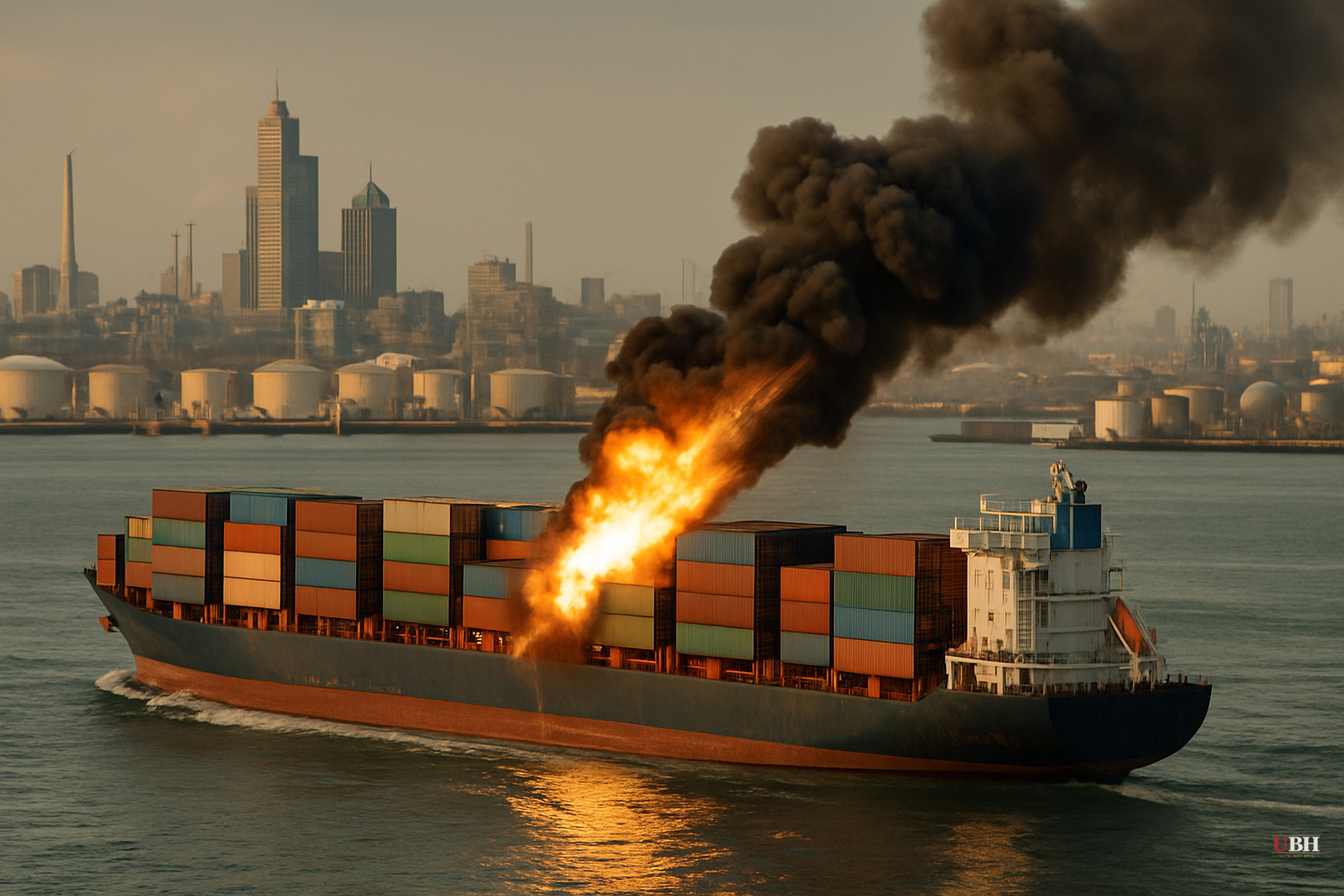
The Ceasefire Is Cracking
Five attempted deals. Zero full reopenings of the Strait of Hormuz. And now a cargo ship struck in Iraqi waters.
According to the UK Maritime Trade Operations (UKMTO), a commercial cargo vessel was struck by an unidentified projectile approximately 65 nautical kilometers — that's 40 miles — southeast of Umm Qasr, Iraq, triggering what UKMTO described as a "large explosion." No environmental damage has been confirmed.
Iraqi media initially called it a "mechanical failure." Saudi-owned channel Al Hadath quickly corrected that account: it was a massive projectile. Video circulating on social media purportedly shows a Panama-flagged container ship engulfed in the blast.
Iraq's own state media attempted to cover it up before regional outlets corrected the record.
The Attacks Are Spreading West
The problem extends beyond the Strait of Hormuz.
According to a maritime industry source cited by ZeroHedge, most prior attacks had been concentrated around the Strait of Hormuz, Gulf of Oman, and as far west as Bahrain and Qatar. The June 1 strike near Umm Qasr represents a significant geographic escalation.
The same source documented the prior pattern: the Greek-owned tanker Zefyros and US-owned Safesea Vishnu were struck on March 12, killing one seafarer. The Sonangol Namibe, a Suezmax tanker, was hit by a large explosion near Kuwait on March 5. Kuwait's own ports at Shuwaikh and Mubarak Al Kabeer were struck by drones and missiles on March 27.
Now it's happening near Iraq. IRGC forces have reportedly been laying mines in surrounding waters, according to ZeroHedge. The killing zone is expanding.
The Ceasefire Is Effectively Dead
The extended US-Iran ceasefire appears to be breaking down as of this weekend. Iran launched ballistic missiles at a US base in Kuwait. The US responded by striking radar and missile sites inside Iran.
Jim Bianco, founder of Bianco Research, put the Trump tweet pattern in sharp relief on May 25: "If you bought the crude oil collapse every time Trump said the war is over, you made $58, even though the price is only up $27 since the war started."
Former Goldman Sachs commodity chief and current Carlyle Group Chief Strategy Officer for Energy Pathways Jeff Currie framed it bluntly on CNBC Asia: "Sell the Tweet, Buy the Molecule." Trump has announced the war was effectively over five separate times. The Strait remains closed or severely restricted each time.
The July 4 Oil Cliff
Currie told Bloomberg that US oil storage tanks could run completely empty by the July 4 period — roughly five weeks from now. His words: "I've never seen anything like it before."
This comes from an analyst with Goldman Sachs experience. Currie now sits at Carlyle.
Arjun Murti, Partner at Veriten and another former Goldman heavyweight, is equally bullish on sustained higher oil prices.
Both argue this isn't just a geopolitical shock. According to ZeroHedge's reporting on their upcoming discussion, Currie has maintained that global oil markets were already facing structural supply shortages before Iran tensions escalated — years of underinvestment have left the system brittle. The Hormuz closure didn't create the crisis. It accelerated one that was already underway.
Bloomberg separately reported that analysts are now telling OPEC+ to expect the Hormuz disruption to last through year-end 2026. Not weeks. Not months. The rest of the year.
What Mainstream Media Is Getting Wrong
Left-leaning outlets keep framing this as a diplomatic negotiation story — will there be a deal, won't there be a deal. The focus stays on Trump's statements and tone.
Right-leaning outlets are running the energy crisis angle harder but sometimes overplay the apocalypse framing without grounding the numbers.
The geographic spread of attacks is the actual story. A strike near Umm Qasr, Iraq, puts the conflict within striking distance of an entirely different set of shipping lanes and export infrastructure. This isn't contained to the Strait anymore.
Also largely absent from coverage: the straight-line math on US oil storage. If Currie's July 4 estimate is even half right, gasoline prices could spike significantly before summer ends.
The Bottom Line
Five ceasefire announcements. Zero results. A cargo ship just got struck near Iraq. Iran is launching ballistic missiles at US bases. A former Goldman Sachs commodity chief says American oil storage runs dry in five weeks.
The implications touch everything that moves by ship and runs on oil — which covers most supply chains and consumer prices.
Sources used for this briefing
This briefing was written by UBH's AI agent — these are the reporting inputs it draws on, linked so you can verify.


