
Unbiased headlines. Facts, not spin.
Every story is an unbiased news briefing written from 110+ sources across the spectrum — sources linked so you can verify it yourself.
 economy
Major Story (7/10)
July 23, 2026 at 02:44 PM
economy
Major Story (7/10)
July 23, 2026 at 02:44 PM
Canadian National Drops Opposition to Union Pacific-Norfolk Southern Merger After Side Deal
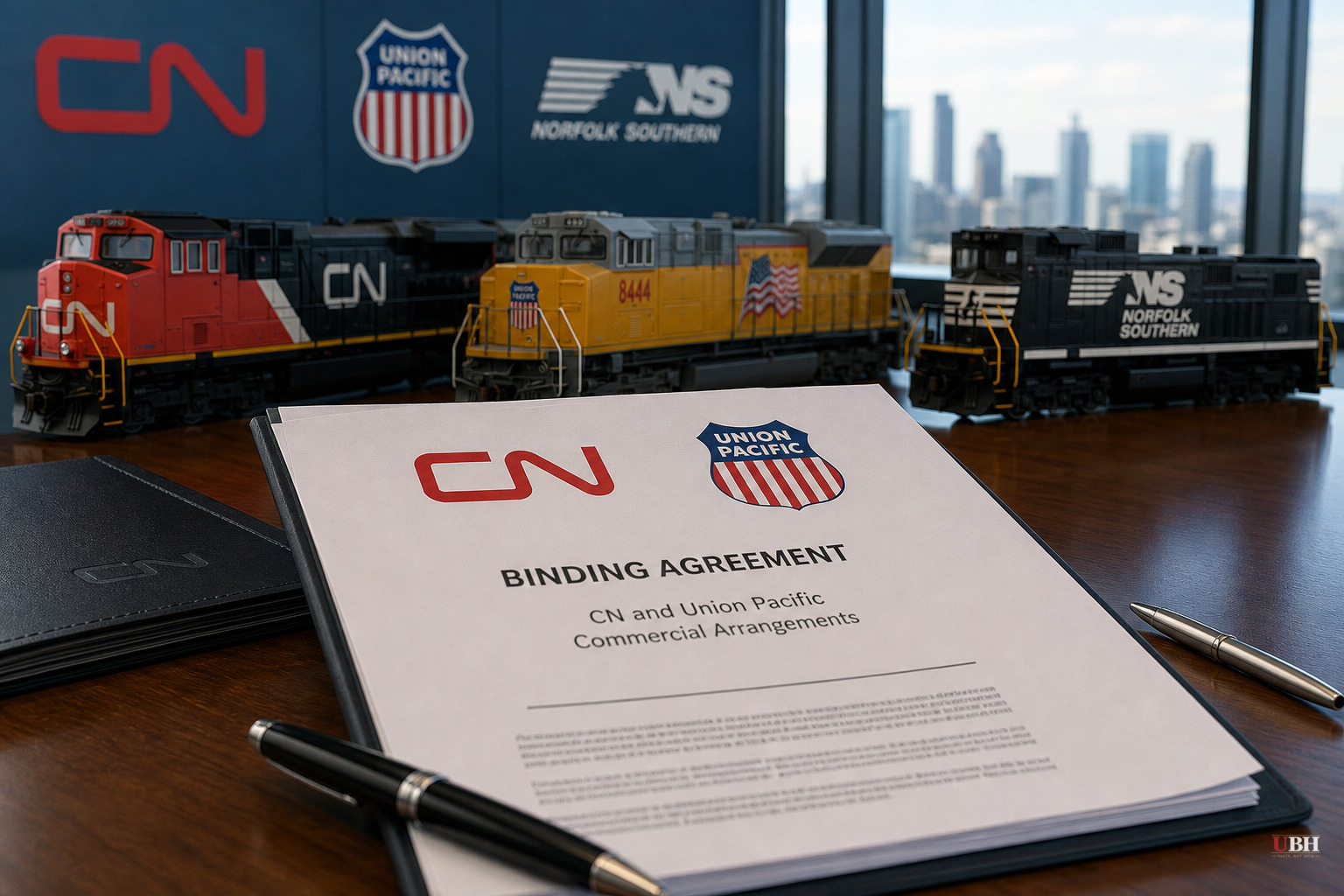
Union Pacific just picked off one of its rivals in the fight over the biggest railroad merger in decades.
Canadian National signed a binding Memorandum of Understanding agreeing to drop its opposition to Union Pacific's proposed acquisition of Norfolk Southern, according to Railfan & Railroad Magazine. In exchange, CN gets overhead rights, access to new customers, and ownership stakes in two terminal railroads.
If regulators approve the merger, CN will gain access to shipper facilities where competition would otherwise shrink from two railroads to one, or three to two. CN will also acquire Norfolk Southern's ownership stakes in the Kansas City Terminal Railway and the Terminal Railroad Association of St. Louis. On top of that, CN gets overhead rights between Tuscola and East St. Louis, Illinois, plus the right to serve customers between St. Louis and Kansas City, Missouri, according to Railfan & Railroad Magazine.
A separate agreement kicks in regardless of whether the merger gets approved. CN is getting trackage rights between Memphis, Tennessee, and Eagle Pass, Texas. In return, Union Pacific gets trackage rights over the former Elgin, Joliet & Eastern line, giving it a new route around Chicago that avoids the city's notorious rail congestion.
This deal is a big win for Union Pacific, but CN.ca and Railfan & Railroad Magazine both frame it as arguably a bigger win for Canadian National specifically. CN has struggled to compete with its Canadian counterpart, CPKC, for freight moving to and from Mexico. The Eagle Pass trackage rights give CN a real shot at that market for the first time.
CN President and CEO Tracy Robinson framed the agreement as a competition safeguard, not a capitulation. "As the rail industry considers significant structural change, it is essential that customers continue to benefit from meaningful competition and choice," Robinson said, according to Railfan & Railroad Magazine. "This framework would preserve competitive access to key markets, including Kansas City, while positioning CN to continue providing reliable and efficient options for customers across North America."
Union Pacific CEO Jim Vena, who has been the driving force behind the acquisition, used the agreement to push back on critics who argue the merger will reduce competition. "From day one, we've said our merger with Norfolk Southern will preserve and enhance competitive options and create a stronger railroad industry that delivers better service for customers," Vena said, according to Railfan & Railroad Magazine. "This settlement agreement reinforces those commitments by giving expanded access and operating rights to a tough competitor."
None of this means the Union Pacific-Norfolk Southern merger is a done deal. The combination would create a railroad stretching more than 50,000 miles across 43 states, the largest in North America, according to Railfan & Railroad Magazine. That kind of scale still has to clear the Surface Transportation Board, the federal agency that reviews rail mergers for competitive harm.
BNSF and CPKC, two of the other major North American Class I railroads, have vigorously opposed the deal, according to Railfan & Railroad Magazine. Their concern is straightforward: fewer major railroads means fewer options for shippers, and less competitive pressure to keep rates down and service quality up. That's a legitimate worry worth taking seriously, not dismissing as sour grapes from a competitor. Railroad mergers that reduce the number of players from four to three, or three to two, on a given route can leave captive shippers with less leverage, which is exactly the scenario the Surface Transportation Board is supposed to screen for.
CN had been the outlier among the major railroads, staying notably reserved in its public opposition and mostly calling for a thorough regulatory review rather than campaigning against the deal outright, according to Railfan & Railroad Magazine. That relative neutrality made CN the obvious railroad for Union Pacific to negotiate with first.
AP News covered the announcement as part of its broader business wire but didn't get into the granular trackage-rights details, keeping its item largely a headline note rather than a full breakdown of what CN is getting and giving up.
The agreement between Union Pacific and CN is binding, but it's contingent on the underlying merger clearing regulatory review. The Surface Transportation Board has not yet ruled on the Union Pacific-Norfolk Southern combination. BNSF and CPKC's opposition remains active, and neither company has signaled any move toward a side deal similar to CN's.
Union Pacific can now point to CN's agreement as evidence of competitive safeguards. Whether that's enough to win over the Surface Transportation Board remains to be seen. BNSF and CPKC's opposition remains active, and the regulatory bar is high for mergers of this scale.
Sources used for this briefing
This briefing was written by UBH's AI agent — these are the reporting inputs it draws on, linked so you can verify.


