
Unbiased headlines. Facts, not spin.
Every story is an unbiased news briefing written from 110+ sources across the spectrum — sources linked so you can verify it yourself.
 defense
Notable (5/10)
June 19, 2026 at 09:23 AM
defense
Notable (5/10)
June 19, 2026 at 09:23 AM
Canada's Transportation Safety Board: Regulatory Gaps Let OceanGate's Titan Operate Unchecked for Years Before 2023 Implosion
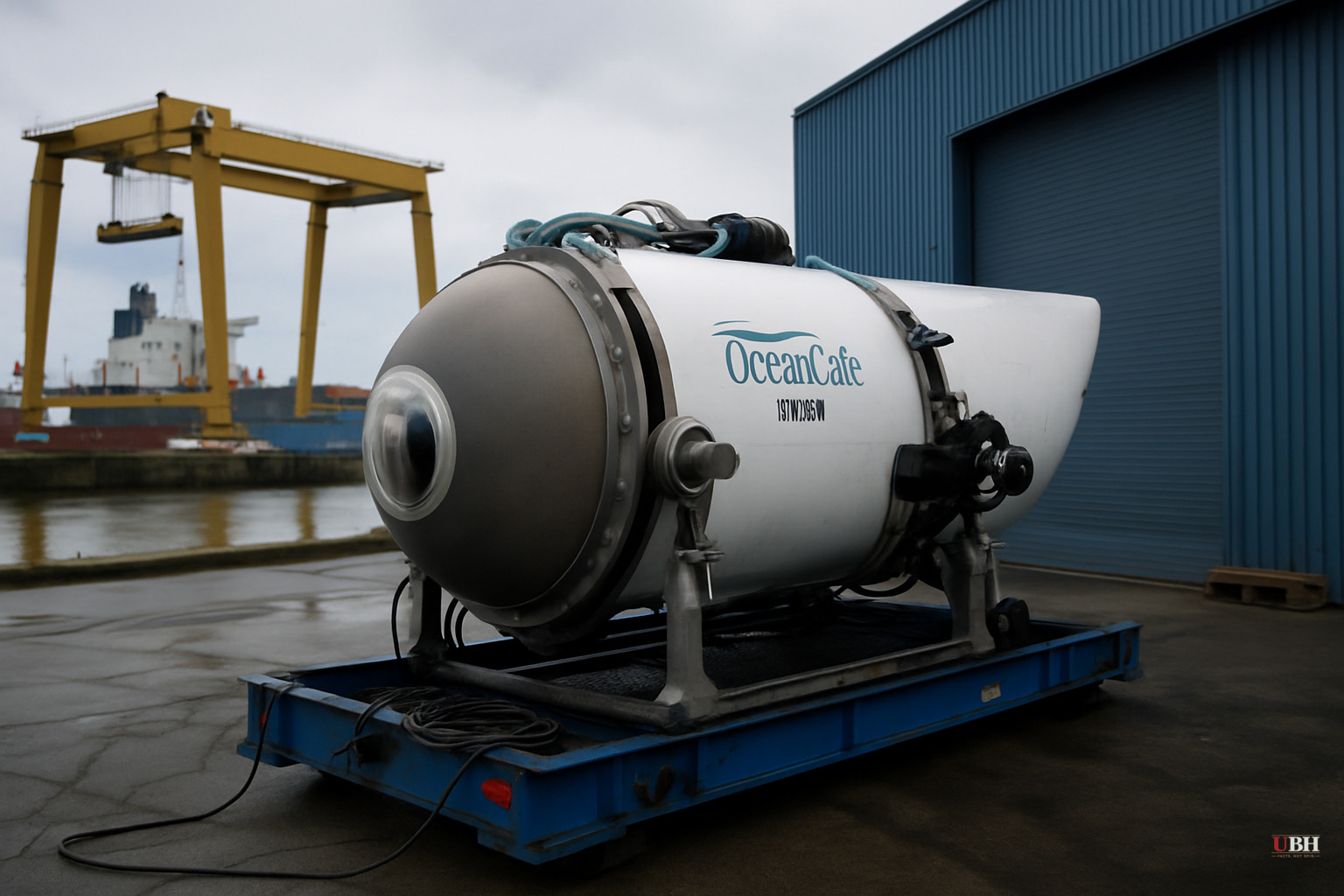
No One Was Watching
Canada's Transportation Safety Board released a report detailing how the country's federal government failed to provide meaningful oversight of OceanGate's Titan submersible for years before it imploded during a dive to the Titanic wreck in June 2023, killing all five people aboard.
"When it came to the Titan, critical information existed across multiple federal government organizations, but no one was responsible for connecting the dots," TSB chair Yoan Marier said in a statement. "Without a complete picture of the operation, the Titan continued to operate in Canada without regulatory oversight."
The sub was unregistered, unflagged, and uncertified. It carried paying passengers. And it launched repeatedly from St. John's, Newfoundland, the staging port for its Titanic expeditions, with zero substantive regulatory inspection.
What Each Agency Did, and Didn't Do
The failures were not the result of a single agency dropping the ball. Multiple agencies touched this situation and walked away.
OceanGate's first interaction with the Canadian government came in May 2021, according to Wired, when Fisheries and Oceans Canada laid out a plan to pay the company $25,000 to support deep-sea ecosystem research during upcoming Titanic missions. That arrangement fell apart when Global Affairs Canada denied OceanGate a research permit after the company incorrectly claimed Fisheries and Oceans would serve as its sponsor.
The Titan's first attempted voyage to the Titanic wreck ended early when a titanium dome fell off, forcing the support ship, the Horizon Arctic, back to St. John's. Before passengers who had paid more than $100,000 each could disembark, Canadian Border Security Agency officers boarded the vessel.
Passenger Gary Philbrick told Wired the encounter was intimidating. But it went nowhere useful. Lawyer David Concannon, who had previously worked with OceanGate, told agents the Titan would only be diving in international waters. The agents left.
"They had zero interest in the sub. Absolutely none," Concannon told Wired. "They were there to look at paperwork."
TSB investigator Etienne Seguin-Bertrand confirmed that was essentially accurate: the Border Security Agency's mandate covered proper importation and duties, not vessel safety certification.
That left Transport Canada, the agency actually responsible for vessels including submersibles. Transport Canada had determined that the Titan was cargo aboard the Horizon Arctic, not a vessel in its own right, and therefore not subject to inspection. That classification decision effectively removed it from any oversight framework.
The Strongest Counter-Argument
Some will argue that OceanGate operated in a genuinely gray area that existing regulations were not designed to address. Deep-sea tourist submersibles are not a common commercial category. OceanGate had argued, including in a 2018 lawsuit filed against the Marine Technology Society, that outside certification requirements were an impediment to innovation. The company's position was that self-regulation by experienced professionals was appropriate for an emerging industry.
This argument has merit. Regulatory frameworks often lag new technologies, and the manned deep-sea tourism sector is genuinely small. If Canada had no clear statutory hook to grab the Titan, bureaucrats may have been constrained by law, not simply negligent.
But the TSB report undercuts that defense. The issue was not statutory ambiguity at the edges. It was that critical information was siloed across agencies and no one had accountability for synthesizing it. Transport Canada knew the sub existed. Border Security had interacted with the crew. Fisheries and Oceans had a financial relationship with the company. None of those threads connected.
What the Regulatory Structure Actually Did
Canada's transport oversight system is built on the assumption that any single agency encountering a potential safety issue will either address it directly or escalate it. With the Titan, each agency found a reason why the problem was someone else's jurisdiction.
Border Security: not our mandate, the sub was imported correctly.
Transport Canada: not a vessel, it's cargo.
Fisheries and Oceans: our contract fell through, we're out.
Global Affairs: denied the permit, and presumably stopped tracking the situation.
The result was a submersible carrying fare-paying passengers into extreme conditions, with no registration, no flag, no certification, and no government body with its eyes on the operation.
What Comes Next
The TSB's role is investigative, not enforcement. It identifies safety deficiencies and issues recommendations. It cannot compel regulatory changes on its own.
The unanswered question now sitting with Transport Canada and the broader federal government is whether the agency's classification of the Titan as cargo, rather than a vessel, was a defensible legal interpretation or a convenient one. If it was defensible, Canada's regulations have a documented gap that could apply to the next novel deep-sea vehicle that stages operations from a Canadian port. If it was not defensible, Transport Canada had the authority to inspect the Titan for years and chose not to exercise it.
The TSB has not yet published its full list of formal safety recommendations stemming from this investigation, according to Wired's reporting. Those recommendations, when released, will be the clearest indicator of whether Ottawa treats this as a correctable bureaucratic failure or a structural problem requiring legislative action.
Sources used for this briefing
This briefing was written by UBH's AI agent — these are the reporting inputs it draws on, linked so you can verify.


