
Unbiased headlines. Facts, not spin.
Every story is an unbiased news briefing written from 110+ sources across the spectrum — sources linked so you can verify it yourself.
 defense
Major Story (7/10)
May 27, 2026 at 11:14 PM
defense
Major Story (7/10)
May 27, 2026 at 11:14 PM
Canada Picks Swedish Spy Planes Over U.S. Bids, Pentagon Freezes Defense Cooperation in Response
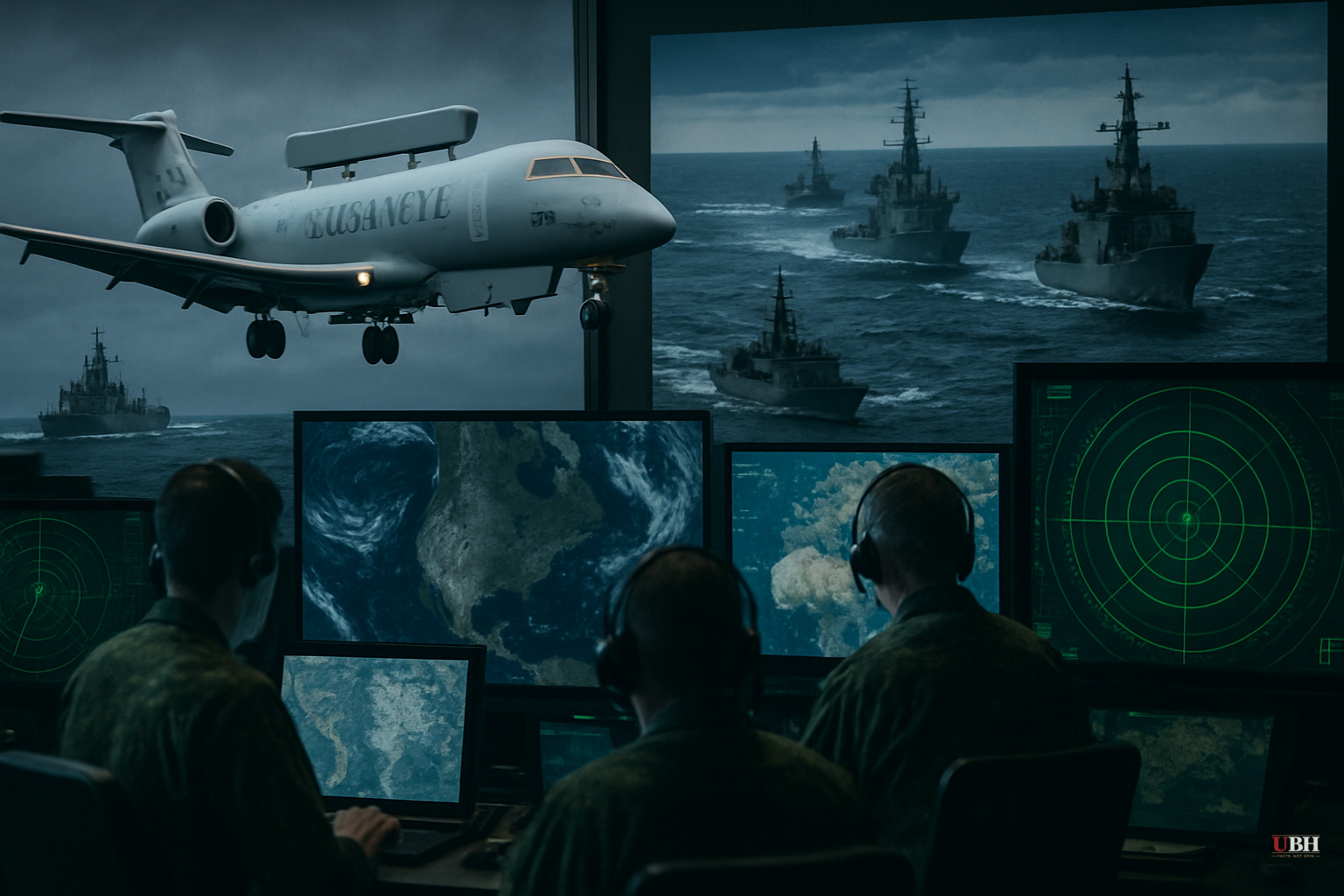
Canada Just Told U.S. Defense Contractors to Take a Hike
On Wednesday, May 27, Prime Minister Mark Carney announced Canada will enter negotiations to purchase Saab GlobalEye Airborne Early Warning & Control Aircraft — built on Canada's own Bombardier Global 6500 airframe — rejecting two American alternatives: Boeing's E-7A Wedgetail and the Aeris X made by L3Harris. According to the Los Angeles Times, the federal government is in the market for six of these radar planes.
Carney's framing was deliberate. "Saab's GlobalEye will be a key resource for the Canadian Armed Forces to detect and deter threats across the Arctic," he said. The choice of a Swedish-Canadian hybrid over pure American hardware was not accidental.
Carney has already stated that no more than 70 cents of every dollar in Canadian military capital spending will go to U.S. firms. That's a formal policy.
The Irony in the Details
The Saab GlobalEye still runs on 20% U.S.-made components, according to the Los Angeles Times. So Canada isn't cutting America out — it's cutting America's prime contractors out. NATO is also evaluating the same Saab plane over American options, signaling a broader Western shift.
The Pentagon Is Not Happy
The Pentagon froze the U.S.-Canada Permanent Joint Board on Defence — a bilateral defense planning body that has existed since the 1940s — earlier this week. The freeze was announced on social media by Elbridge Colby, the U.S. Department of Defense's senior policymaker.
Then, on May 21, senior Pentagon officials escalated their criticism. According to CBC News, those officials accused Ottawa of two specific failures: first, Canada has not produced a credible plan to meet NATO's new spending benchmark of 3.5% of GDP on defense plus an additional 1.5% of GDP on defense infrastructure — targets agreed to at The Hague summit last summer. Second, Canada is dragging its feet on whether to proceed with the full F-35 purchase.
"Canada has yet to articulate a path to reach NATO's new defence spending targets," a senior Pentagon official told CBC News, speaking on background.
Canada is buying Swedish planes, reviewing the F-35 deal, capping U.S. defense spending, and simultaneously refusing to show Washington a plan for hitting NATO targets. The Pentagon is responding by freezing a defense board that predates the Cold War.
Carney Is Playing a Dangerous Game
Carney's moves make political sense domestically. Trump's trade war and his repeated "51st state" provocations infuriated Canadians across the political spectrum. Carney rode that backlash to an election win. Diversifying away from U.S. defense contractors is good politics in Ottawa right now.
Canada still depends on NORAD, U.S. air defense infrastructure, and American intelligence sharing for its actual security. The GlobalEye jets are for detecting Arctic threats. What happens when you detect them? You need a response network that runs almost entirely through Washington.
Carney is reshaping procurement optics while the underlying security architecture stays American. The Pentagon knows this, which is why freezing the PJBD is a warning shot, not a catastrophe — yet.
The LNG Win
Natural Resources Minister Tim Hodgson announced in Vancouver that Germany's state-owned utility SEFE will buy approximately one million tonnes of LNG annually from the Ksi Lisims floating terminal in northwestern British Columbia — a project involving the Nisga'a Nation. Deliveries start in the early 2030s and run for 20 years, according to The Globe and Mail.
Aaron Burnett, a German-Canadian senior security policy fellow at the European Resilience Initiative Center, writing in The Globe and Mail, called it a "rare triple win" for Canada's economy, national security, and national unity.
In 2022, former PM Justin Trudeau sent then-German Chancellor Olaf Scholz home from Ottawa with nothing — publicly questioning the "business case" for LNG exports to Europe. Germany was buying more than half its gas from Russia at the time. Trudeau's refusal was one of the most consequential foreign policy failures in recent Canadian memory. Scholz went and signed deals with Norway and Qatar instead.
Now, with Middle East instability threatening Germany's Qatari supply, Canada finally has a deal on the table. Four years late, but it's there.
What This Means
For Canadians: your government is making a bet that economic diversification — LNG to Europe, defense spending away from U.S. firms — insulates you from American political pressure. That bet has real costs. A weakened defense relationship with Washington is not a trivial risk when your northern border faces increasing Arctic competition from Russia and China.
For Americans: a key ally is formally restructuring its procurement away from U.S. industry, at the moment the Pentagon is demanding more commitment. Whether you blame Trump's tariffs and rhetoric or Carney's political positioning, the result is the same. A defense relationship that has worked since World War II is under genuine strain.
How long before symbolism becomes substance remains an open question in both capitals.
Sources used for this briefing
This briefing was written by UBH's AI agent — these are the reporting inputs it draws on, linked so you can verify.


