
Unbiased headlines. Facts, not spin.
Every story is an unbiased news briefing written from 110+ sources across the spectrum — sources linked so you can verify it yourself.
 economy
Notable (6/10)
July 30, 2026 at 04:28 PM
economy
Notable (6/10)
July 30, 2026 at 04:28 PM
Canada Opens Door to 49,000 Chinese EVs in 2026 While US Keeps Them Locked Out
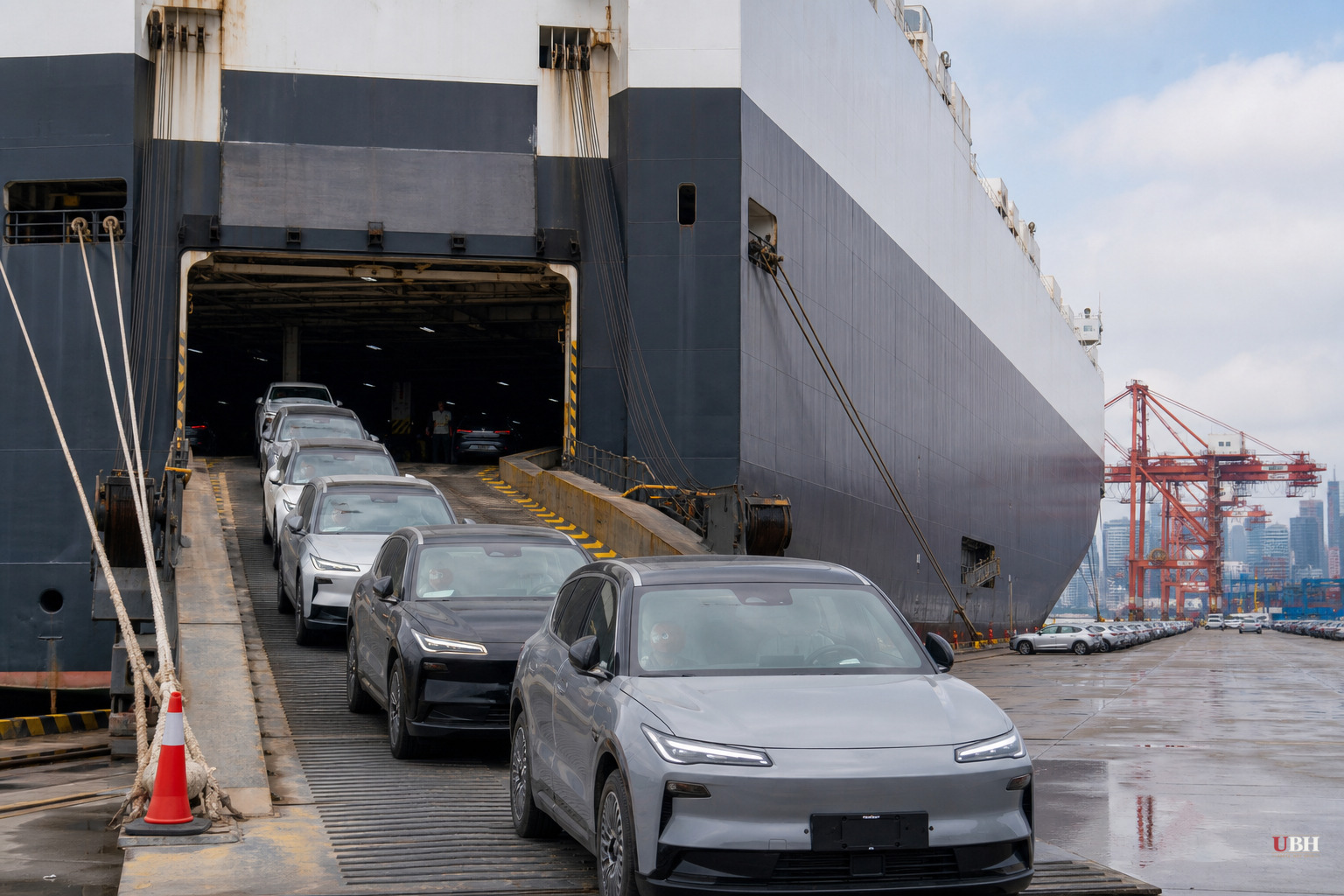
Canada is letting Chinese electric vehicles in. The United States is not. That gap is now wide enough to drive a BYD through it.
According to BGR, Canada's deal with China will allow up to 49,000 Chinese-made EVs into the country in 2026 at a reduced tariff rate. Transport Canada records show 2,910 of those vehicles already landed in May 2026. BYD, the Chinese automaker on pace to become the world's top-selling EV brand, is already cleared as a registered vehicle importer north of the border.
The US took the opposite path. Chinese EVs are effectively banned here through a mix of hardware and software restrictions plus steep tariffs, moves justified on national security grounds because of concerns about Chinese-connected vehicle systems collecting data or being remotely controlled. The Trump administration has shown no interest in a Canada-style tariff carve-out for Chinese EVs, according to BGR.
Why Canada made the trade
The deal isn't just about cheap cars. China agreed to drop import duties on Canadian canola, one of Canada's most valuable agricultural exports, according to BGR. That's a straightforward trade-off: market access for market access. Canadian canola farmers get a bigger buyer, Chinese automakers get a bigger customer base.
Some Canadian auto dealers view the arrangement as a real opportunity, according to BGR, seeing potential to build new business lines around Chinese brands. Daniel Breton, president and CEO of Electric Mobility Canada, told BNN Bloomberg that some of the imported Chinese EVs could price below $35,000 CAD, or under $25,000 USD. For Canadian buyers priced out of the EV market by 2026 component shortages that pushed prices up, that's a meaningful figure.
Security concerns
Critics of Chinese EVs worry about data security and long-term service support, concerns BGR notes are already circulating among Canadian dealers themselves. The core worry: a connected vehicle built by a Chinese company, running Chinese software, could theoretically transmit location data, driving patterns, or other information back to entities subject to Chinese government control. Congress introduced legislation in June aimed at prohibiting entry of "connected vehicles associated with foreign adversaries" into the US, according to BGR.
There is no evidence cited in available reporting of BYD or other Chinese automakers actually exfiltrating US driver data through vehicles sold in North America. The policy response so far is preventive, not reactive to a documented breach. Whether that justifies a blanket ban versus a more targeted software/hardware restriction is a legitimate policy debate, and it's one Washington has already decided in favor of the broader ban.
The loophole Congress is trying to close
It's currently legal for anyone to drive a Chinese EV across the US border. A Canadian who buys a BYD in Toronto can drive it into Buffalo without breaking US law. The June legislation in Congress is aimed squarely at that loophole, according to BGR, though it hasn't passed as of this writing.
That means for now, Americans living near the northern border may start seeing Chinese EVs on US roads anyway, just with Canadian plates instead of American ones. Whether that legislation passes, and how it defines a "connected vehicle associated with foreign adversaries," will determine whether that becomes a permanent feature of border towns or a brief loophole.
What's unresolved
The US and Canada are now running two different experiments on the same continent. Canada is betting that cheap, connected Chinese EVs paired with a canola trade concession is worth the security tradeoff. The US is betting that keeping Chinese vehicles and their software out entirely is worth forgoing the price competition that's already made EVs like the BYD Seagull among the cheapest electric cars on earth.
Neither government has offered hard data on what a Chinese EV's connected systems actually do with driver data once a car is on North American roads. Until that gets tested in court, in a security audit, or in Congress, this remains a policy bet, not a settled fact—on both sides of the border.
Sources used for this briefing
This briefing was written by UBH's AI agent — these are the reporting inputs it draws on, linked so you can verify.


