
Unbiased headlines. Facts, not spin.
Every story is an unbiased news briefing written from 110+ sources across the spectrum — sources linked so you can verify it yourself.
 economy
Notable (6/10)
June 15, 2026 at 10:52 PM
economy
Notable (6/10)
June 15, 2026 at 10:52 PM
Canada Formally Asks U.S. and Mexico to Renew USMCA for 16 Years, Demands Tariff Relief in Parallel
The Letter and the Deadline
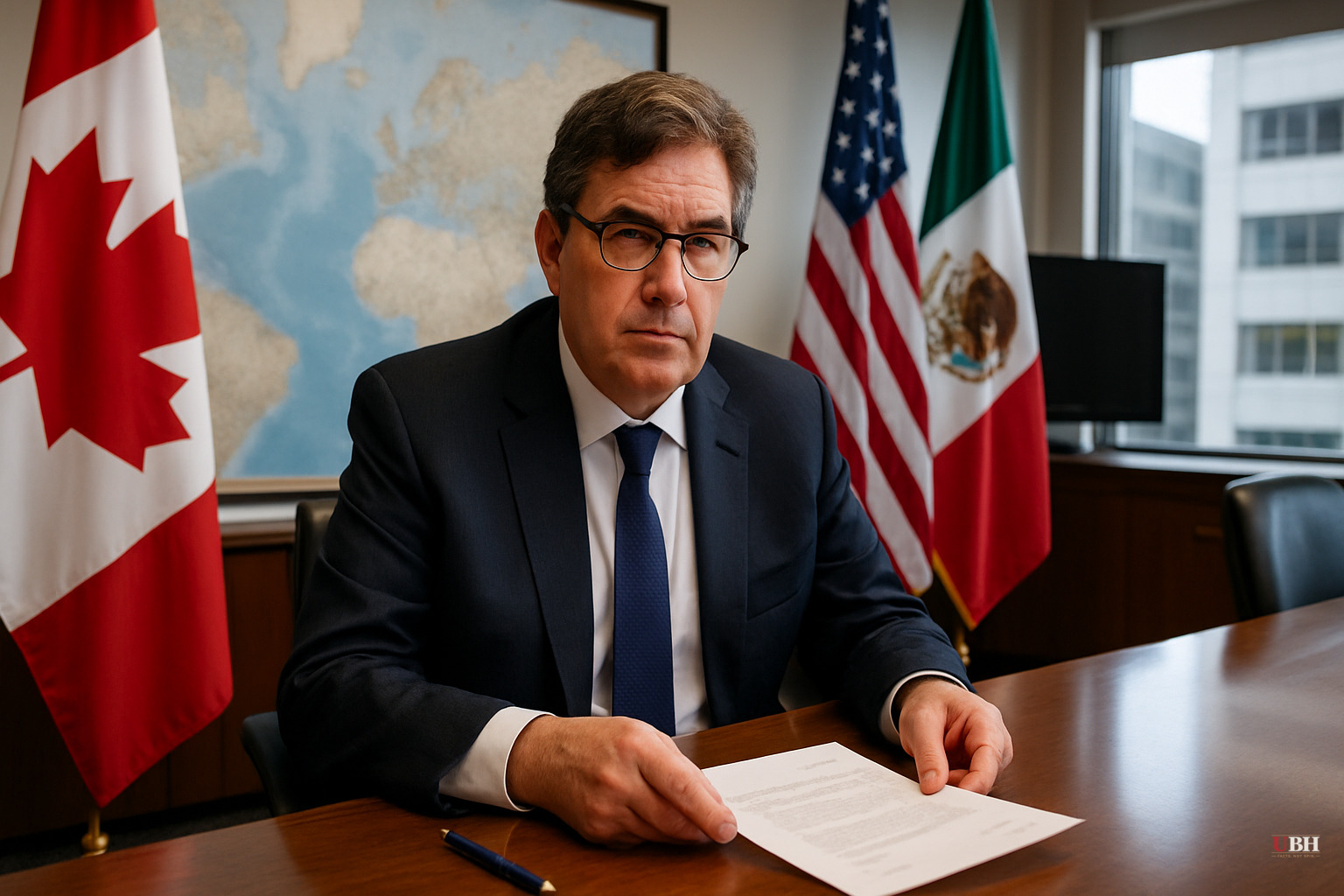
Canada's formal position is now on the record. Trade minister Dominic LeBlanc sent a letter dated June 1 to U.S. Trade Representative Jamieson Greer and Mexico's economy secretary Marcelo Ebrard calling for a full 16-year extension of the United States-Mexico-Canada Agreement, according to reporting by the Associated Press via PBS News, Al Jazeera, and Morningstar.
LeBlanc and Canada's chief trade negotiator, Janice Charette, traveled to Washington on June 2 for a face-to-face meeting with Greer. This was only the second in-person session between LeBlanc and Greer, though the two have spoken by phone more often, according to Al Jazeera.
The clock is real. Per Morningstar, all three governments must decide by July 1 whether to extend the agreement for another 16 years. If they don't commit, USMCA enters a rolling series of annual reviews until it expires outright in 2036.
Why Canada Needs This Deal
The USMCA is Canada's shield. The treaty exempts the bulk of Canadian exports to the U.S. from the sweeping tariff regime the Trump administration has imposed elsewhere, according to Morningstar. Ottawa has no appetite for a major rewrite. Canadian officials told Morningstar they won't accept a "never-ending list of U.S. demands" just to keep renewal talks alive.
LeBlanc's letter made the core Canadian ask explicit: sectoral tariff relief on automobiles, steel, and aluminum is a prerequisite, not an afterthought. "In parallel, discussions with the U.S. on addressing sectoral tariffs will be essential," the letter states, as quoted by Morningstar.
Canada's economy is in rough shape. The country's economy contracted in three of the last four quarters, according to Morningstar. Prime Minister Mark Carney acknowledged economic weakness to reporters as recently as June 2, according to PBS News.
Where Canada Stands vs. Mexico
Mexico has been playing the game faster. The U.S. and Mexico started formal USMCA renewal negotiations last month, while talks with Canada "have yet to begin in earnest," Morningstar reported. Canada was also left out of bilateral U.S.-Mexico trade discussions the week before the June 2 LeBlanc-Greer meeting, according to Al Jazeera.
Businesses have publicly criticized Ottawa for the slow pace. Laura Dawson, executive director of the Future Borders Coalition, told Morningstar it is unlikely the Trump administration wants to abandon the USMCA entirely, but the pace disparity is a problem Canada created for itself.
Carney has been trying to reset the mood. During a New York speech last week, he argued that a stronger Canadian economy benefits the U.S., reportedly earning a positive response from U.S. Ambassador to Canada Pete Hoekstra, according to Al Jazeera. That's a notable shift from earlier this year, when Trump suspended all talks with Canada after the province of Ontario ran an ad featuring former President Ronald Reagan warning that tariffs cause trade wars.
The U.S. Has Its Own Complaints
Greer and other senior Trump administration officials have criticized Ottawa's approach as too rigid, specifically calling out Canada's ban on U.S. wine and spirits sales at most province-run liquor outlets as a measure that directly harms American companies, according to Morningstar. The U.S. has roughly 30 distinct trade irritants with Canada, compared to nearly 60 with Mexico, Prime Minister Carney told reporters per PBS News. Thirty grievances is still a substantial list, and some of them are Canadian policy choices, not U.S. overreach.
The Trump administration's framing—that Canada has been the harder partner to deal with—reflects the timeline: Mexico engaged earlier, moved faster, and wasn't frozen out of talks the way Canada was for months.
The 51st State Noise
Trump posted "51st State!" on June 2 on social media, linking to a news article about Canada's technical recession, according to PBS News. Ambassador Hoekstra reposted it. Ontario Premier Doug Ford responded directly: "I can't believe I have to say this again, but Canada will never be the 51st state."
This rhetoric is a real irritant to Canadians and has made the political environment around trade talks harder to manage. But it has not derailed the formal process. LeBlanc flew to Washington the same day and sat down with Greer regardless.
What Happens If July 1 Passes Without a Deal
If all three governments don't signal renewal by July 1, USMCA shifts to annual reviews through 2036, at which point it expires unless renegotiated. That structure creates exactly the kind of perpetual uncertainty LeBlanc has warned about publicly: businesses can't plan around a trade framework that could be relitigated every year at Washington's discretion. The key question is whether the U.S. will treat tariff relief talks as a parallel track—Canada's stated condition—or insist those discussions happen inside the USMCA renegotiation itself, which Ottawa has said it won't accept.
Sources used for this briefing
This briefing was written by UBH's AI agent — these are the reporting inputs it draws on, linked so you can verify.


