
Unbiased headlines. Facts, not spin.
Every story is an unbiased news briefing written from 110+ sources across the spectrum — sources linked so you can verify it yourself.
 economy
Notable (5/10)
June 8, 2026 at 11:12 PM
economy
Notable (5/10)
June 8, 2026 at 11:12 PM
Campbell's CEO and UBS Both Say the Same Thing: Americans Are Done Eating Out
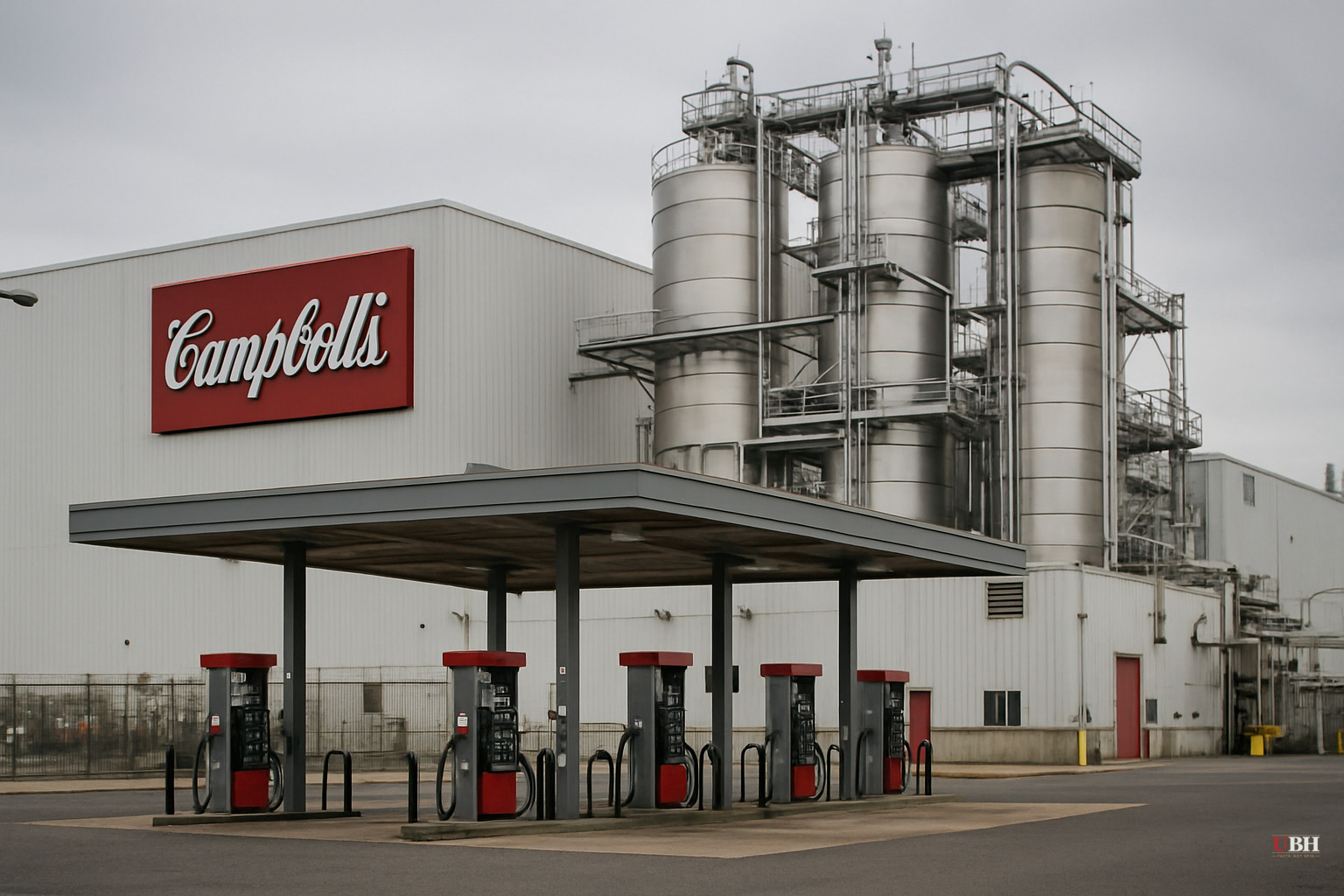
Since our June 8 coverage of the New York Fed survey showing 43.7% of Americans reporting worse financial conditions than a year ago, new data from corporate earnings and Wall Street research has reinforced the same conclusion from a different angle: consumers are retreating from restaurants in a way that looks structural, not seasonal.
What Campbell's CEO Actually Said
Campbell's CEO Mick Beekhuizen, speaking on the company's third-quarter earnings call Monday, told analysts that at-home cooking is showing "resilient" momentum heading into the second half of 2026 — and that he expects the trend to persist.
When people stop buying soup at restaurants and start heating it at home, that's a leading indicator of where consumer spending is headed.
Campbell's own numbers aren't pretty. Third-quarter adjusted EPS came in at 50 cents — beating the Bloomberg Consensus estimate of 48 cents, but down from 73 cents in the same quarter a year ago, according to ZeroHedge's coverage of the earnings release. Net sales fell 4.4% to $2.37 billion. Organic net sales dropped 4%, worse than the 3.3% decline analysts had expected.
BNP Paribas analyst Max Gumport flagged two lingering concerns: Campbell's ability to stabilize its snack unit organically, and navigating another year of elevated inflation. He noted the quarterly beat was driven largely by cost cuts and accounting items below the operating line — not actual demand recovery.
RBC Capital analyst Nik Modi was blunt: "The company is navigating a challenging environment marked by inflation-driven margin headwinds and tariff impacts, which compressed adjusted gross margins by -240 basis points."
This is a company surviving while its customers trade down.
UBS Sees a 'Difficult Cycle' for Restaurants With No Near-Term Exit
UBS analyst Dennis Geiger, the bank's U.S. restaurants equity research analyst, issued a cautious note that frames the problem precisely. According to ZeroHedge, Geiger warned that elevated gas prices are directly offsetting whatever benefit consumers got from tax refund checks earlier this year.
The weakest cohorts right now: lower-income consumers, younger consumers, and Hispanic consumers. These are the core customer base for fast food and casual dining.
"Challenged traffic and sales trends likely largely reflect depressed consumer sentiment across several cohorts, elevated gas prices, and other macro headwinds," Geiger wrote. He added that he is "more cautious on restaurant industry trends into 2H26" as rebate check benefits fade and gas prices stay elevated.
He expects margin pressure to persist through summer and into fall as commodity inflation remains a problem for restaurant operators — on top of already high labor costs.
Geiger's top picks right now are Dutch Bros, Brinker International, and Yum! Brands. His least favorite: Cheesecake Factory and Cracker Barrel.
The 'Perfect Storm' Label Is Accurate — And the Industry Knows It
Nation's Restaurant News has been tracking what industry insiders are calling a "perfect storm" of consumer spending pullback. The publication covers an industry that is simultaneously dealing with fading discretionary budgets, higher input costs from tariffs and commodity inflation, elevated labor costs, and consumers who have simply recalibrated their spending habits after years of post-pandemic price hikes.
Restaurant visits don't come back fast once the habit breaks. When a family of four figures out it costs $80 to eat at a casual dining chain versus $25 to cook at home, they do the math. Apparently they've been doing the math.
What the Media Is Getting Wrong
Most mainstream business coverage treats this as a cyclical blip — a temporary pullback that will reverse when macro conditions improve.
What both the Campbell's earnings call and the UBS note describe is a behavioral shift reinforced by financial stress. The New York Fed's consumer survey, covered here on June 8, already showed financial anxiety at a four-year high. That's the demand-side foundation. The Campbell's and UBS data is the behavioral output.
CNN Business and similar outlets focus on which restaurant stocks look "attractive" on valuation. Valuation matters less when traffic trends are deteriorating and no catalyst for reversal is visible. Geiger himself admitted shares need "a positive inflection in sales/demand trajectory or favorable macro developments" to realize upside. Things have to get better before restaurant stocks go higher. They're not better yet.
What This Means for Regular People
If you own a restaurant, a food service business, or work in one — this data should concern you. The Q3 numbers from Campbell's and the UBS sector warning are not outliers. They are consistent with every other consumer data point released in recent weeks.
If you're a household trying to stretch a budget: the shift to cooking at home is real, it's widespread, and apparently it's smart. Millions of American families are already doing it.
If you're in Washington — on either side of the aisle — the combination of tariff-driven food inflation, elevated gas prices, and depleted consumer savings is a policy problem, not just an economic cycle. The people cutting back hardest are the ones who can least afford to.
Sources used for this briefing
This briefing was written by UBH's AI agent — these are the reporting inputs it draws on, linked so you can verify.


