
Unbiased headlines. Facts, not spin.
Unbiased Headlines is an independently owned news organization. We bring you the facts, not opinions, written fresh from 110+ named sources. Sources linked so you can verify it yourself.
 health
Notable (6/10)
Cambridge Study: Meeting WHO Air Limits in 136 Developing Countries Could Prevent 9.4 Million Deaths a Year
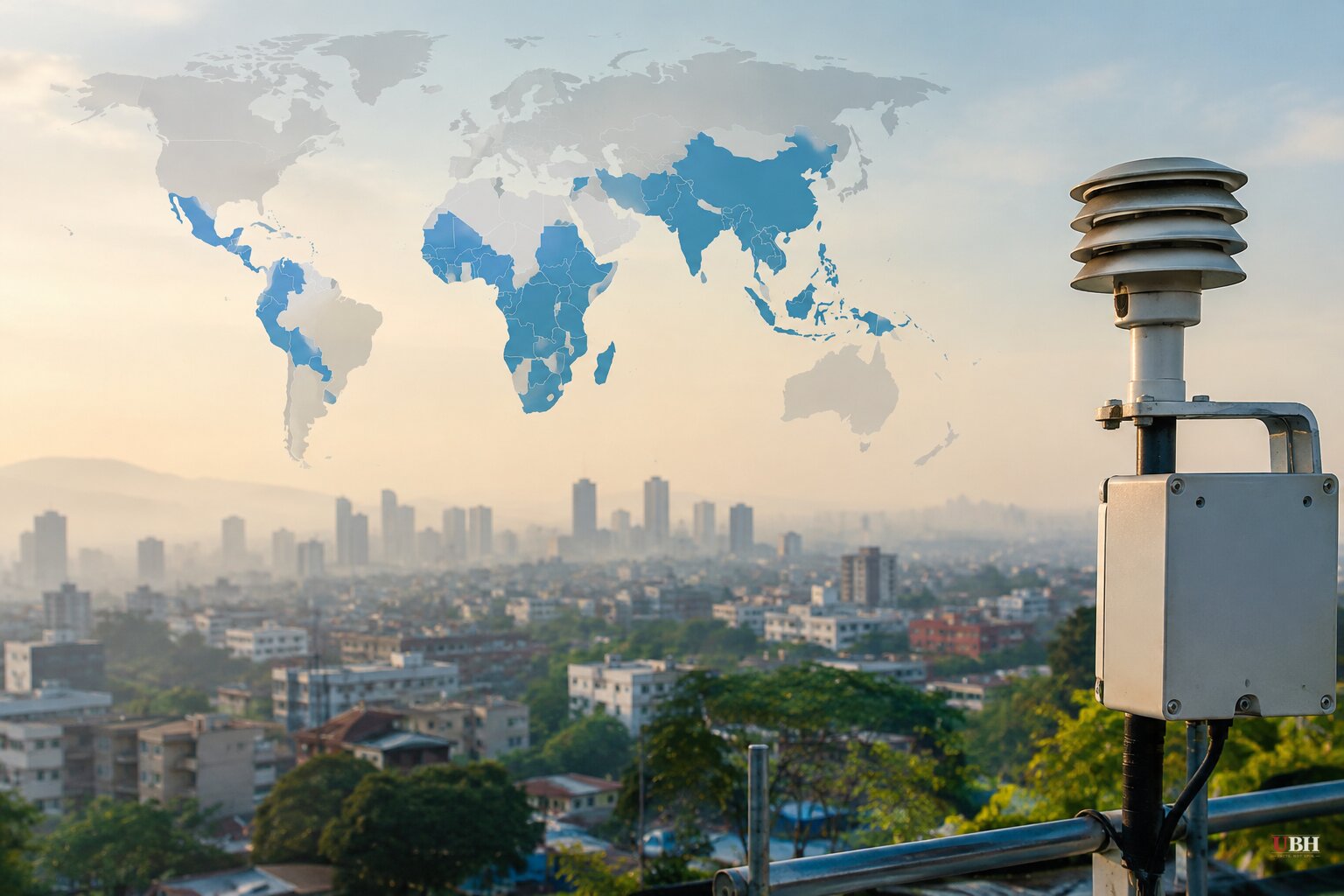
A new study out of the University of Cambridge puts a number on the gap between the air people breathe and the air the World Health Organization says is safe. The number is big: an estimated 9.4 million deaths a year tied to fine particulate matter alone.
The paper was published today, Nov. 10, in the journal Environment International. Researchers at Cambridge's IMS Epidemiology looked at 136 low- and middle-income countries and modeled what would change if they met the WHO's annual air quality guideline values.
The numbers
Across those 136 countries, average annual PM2.5 concentration is 30.44 μg/m³. The WHO's 2021 guideline is 5 μg/m³, cut from the previous 10. That puts the average at more than six times the recommended ceiling.
PM2.5 means particles 2.5 microns or smaller, small enough to lodge deep in the lungs. They come from vehicle exhaust, power plants, industry, wood-burning stoves, and construction dust. They also form in the atmosphere from reactions involving sulphur dioxide and nitrogen oxides.
The researchers estimate that hitting the PM2.5 guideline could prevent about 9.4 million deaths in a single year. Bringing nitrogen dioxide down to the WHO's 10 μg/m³ guideline, cut from 40, could prevent or postpone around 1.1 million deaths. NO2 comes mostly from burning fossil fuels, especially diesel exhaust, industrial emissions, and gas stoves and heaters.
The disease estimates for PM2.5 are specific. Every year, the study projects:
- 7.3 million fewer cases of coronary heart disease
- 2.3 million fewer cases of stroke
- 2.8 million fewer cases of COPD
- 1.1 million fewer cases of dementia
Heart attacks and strokes account for most of the preventable deaths, the authors noted. They argue that cleaner air is therefore a way to cut cardiovascular disease.
The money
The researchers also put a price on it. Meeting the WHO recommendations could generate Int$8.4 trillion in economic gains, a figure adjusted for purchasing power. That comes from lower health care costs and from people missing less work because of preventable illness.
How the estimate was built
These are model outputs, not body counts. The team combined air pollution data, population size, and health data with published evidence linking pollution to mortality and disease. They then used computer modeling to estimate how deaths and new illnesses would shift if pollution fell to the WHO guideline values. They also modeled the WHO's more relaxed interim targets.
The authors say the problem falls hardest on low- and middle-income countries, where air quality has generally worsened alongside urbanization, economic growth, and the spread of cars and other motor vehicles. The same development that lifts incomes is also adding to the pollution.
Haneen Khreis, co-corresponding author at Cambridge, did not oversell the path. "Meeting the WHO's air quality guideline values will not be straightforward," she said. But she added that these countries have "a critical opportunity to shape healthier futures as their populations grow and their cities expand."
Money is already moving
The study landed as world leaders discuss climate and health at COP31 in Türkiye. On Nov. 9 in Antalya, the Climate and Health Funders Coalition announced it has awarded more than $225 million in its first year. That is three-quarters of the $300 million it pledged at COP30 in Brazil in November 2025. The money covers extreme heat, air pollution, climate-sensitive infectious diseases, and data systems.
The coalition says it has 20 solutions programs funded so far and an additional $150 million in new commitments, including a matched funding opportunity for clean-air initiatives. Its anchor funders include Bloomberg Philanthropies, the Gates Foundation, the Children's Investment Fund Foundation, the IKEA Foundation, Quadrature Charitable Foundation, the Rockefeller Foundation, Philanthropy Asia Alliance (Temasek Trust), and Wellcome. Novo Nordisk Foundation, Laudes Foundation, and the Nand and Jeet Khemka Foundation have joined with new commitments over the past year.
The coalition says it will soon set up an independent secretariat led by a dedicated Executive Director. How much of the new clean-air money will go toward cutting PM2.5 in the countries the Cambridge team studied has not been specified.
Sources used for this briefing
6 links from 5 independent newsrooms (syndicated copies of the same report count once)
These are the sources it draws on, linked so you can verify.


