
Unbiased headlines. Facts, not spin.
Every story is an unbiased news briefing written from 110+ sources across the spectrum — sources linked so you can verify it yourself.
 economy
Notable (5/10)
June 21, 2026 at 10:43 AM
economy
Notable (5/10)
June 21, 2026 at 10:43 AM
Cambodia's Scam Crackdown Freed Thousands of Trafficking Victims. Now They're Stranded.
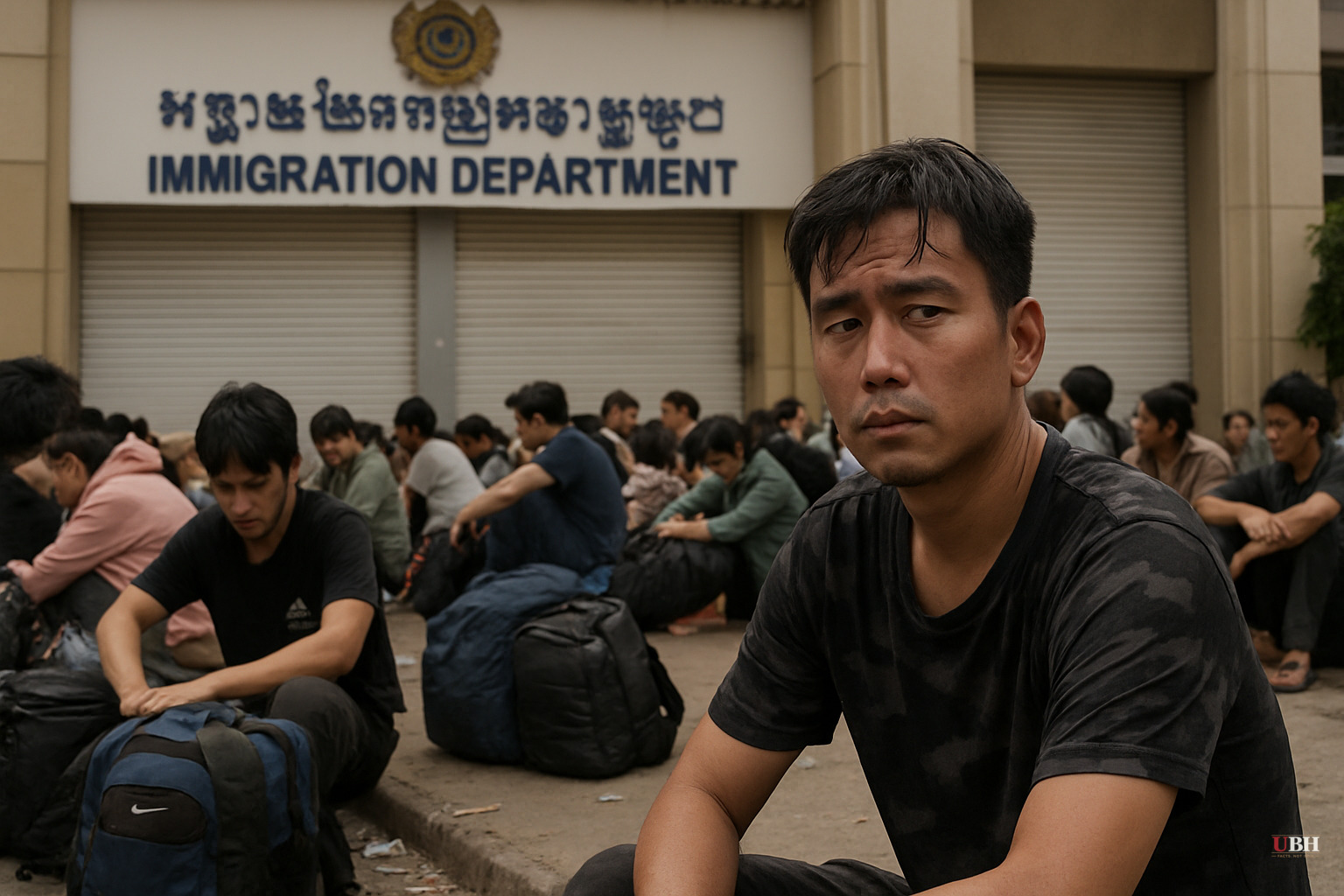
For more than five years, Cambodia was a global hub for industrial-scale online fraud. High-rise towers along the Mekong River, luxury compounds in provincial cities, even supermarket chains all served as cover for operations that ran thousands of workers around the clock, targeting victims worldwide with fraudulent investment schemes.
Late last year, under sustained foreign pressure, the Cambodian government launched a large-scale enforcement sweep. The scam operations closed. Police raided buildings. The world's press covered the takedowns.
But the people left behind drew far less attention.
Who Was Actually Inside Those Compounds
According to NPR, more than two dozen migrants from Indonesia, Uganda, Ghana, and Sierra Leone described nearly identical recruitment stories. They were offered legitimate-sounding jobs, good wages, free housing, and meals. Then they found themselves held against their will, forced to work as scam operators under strict daily quotas.
They were not willing employees. They were hostages with keyboards.
One man, Shuiab, a 24-year-old Ugandan, said he was promised $850 a month as a delivery driver before being taken to a compound hidden behind a casino and forced to scam Americans. Another man, Wilson, said he was electrocuted for failing to meet his quotas. NPR identified both men by first names only because they fear reprisals. "They have a place called the black room," Wilson said, referring to the owners of the scam centers. "Inside that black room, they can do anything to you."
Amnesty International and other NGOs classify many of these workers as human trafficking victims. In a report on the Cambodian government's scam crackdown this June, Amnesty International said it had interviewed 73 people released from compounds in recent months and determined all were victims of human trafficking. Aid workers interviewed by NPR say thousands of them are now roaming the streets of Phnom Penh with no money, no legal status, no repatriation plan, and no safety net. There is only one shelter for trafficking victims in Cambodia that they can stay in, but it is full, with a waitlist of hundreds.
The Scale of the Fraud Itself
The FBI calls these operations "pig-butchering" scams, a name drawn from the method of fattening a victim with fake profits before slaughtering their savings. According to the FBI's Internet Crime Complaint Center, Americans were defrauded of more than $20 billion last year through these types of scams — a number that has grown every year in the agency's data.
The U.S. also took direct action against one of the alleged operators. Prince Holding Group, a massive Cambodian conglomerate, was hit with U.S. sanctions for allegedly running industrial-scale scam compounds. The company's branded supermarket locations in Phnom Penh now sit partially abandoned, cardboard boxes and debris scattered outside.
Last October, the U.S. sanctioned Prince Holding Group and indicted its chairman, Chen Zhi, for allegedly directing "forced-labor" scam compounds and laundering billions in criminal proceeds. In January, Chen was extradited from Cambodia to China, where he was born, with a bag over his head. Chen's lawyers have denied any wrongdoing and are fighting the case in U.S. courts. The U.S. also charged a Cambodian tycoon with cryptocurrency fraud related to these operations, according to NPR's reporting.
The Half-Solved Problem
Mark Taylor, a consultant on human trafficking who previously led a USAID-backed anti-trafficking program in Cambodia, put the failure plainly: "The government has only addressed half of this problem. But it is totally ignoring what fueled that problem" — meaning the tens of thousands of vulnerable migrants who were lured in and are now at acute risk of being re-trafficked.
That risk is not hypothetical. Traffickers recruit from exactly the population these workers now represent: broke, undocumented, far from home, with no official help incoming.
The Cambodian government has also insisted that stranded migrants pay fines for overstaying their visas — fines of $10 a day that can add up to thousands of dollars. Embassies are working to get those fines waived, but the process is slow.
The Strongest Counterargument
Cambodia's defenders would note that the government did, in fact, act. Shutting down an entrenched, multi-billion-dollar criminal industry that had corrupted real estate, banking, and local politics is not a small thing. Sovereign governments face real constraints on how fast they can process thousands of undocumented foreign nationals, and repatriation requires coordination with multiple origin countries, some of which have limited administrative capacity themselves. Critics pointing at Cambodia's incomplete response should acknowledge that no government has cleanly solved a crisis of this scale and complexity.
That said, acknowledging difficulty is not the same as having a plan. As of June 21, 2026, according to NPR's on-the-ground reporting in Phnom Penh, there is no visible coordinated government program to shelter, document, or repatriate the stranded workers.
What Happens Next
The question is whether international pressure — the same pressure that forced Cambodia's crackdown on the scams themselves — will now turn toward the victim population. For the workers on Phnom Penh's streets right now, that policy question has a very concrete deadline. Every week without a repatriation pathway is another week they are exposed to the same criminal networks that trafficked them the first time.
Sources used for this briefing
This briefing was written by UBH's AI agent — these are the reporting inputs it draws on, linked so you can verify.


