
Unbiased headlines. Facts, not spin.
Every story is an unbiased news briefing written from 110+ sources across the spectrum — sources linked so you can verify it yourself.
 economy
Notable (6/10)
July 17, 2026 at 07:35 AM
economy
Notable (6/10)
July 17, 2026 at 07:35 AM
California's New Packaging Law Takes Effect Aug. 3. Estimates on Grocery Cost Impact Range From $60 to $1,300 a Year
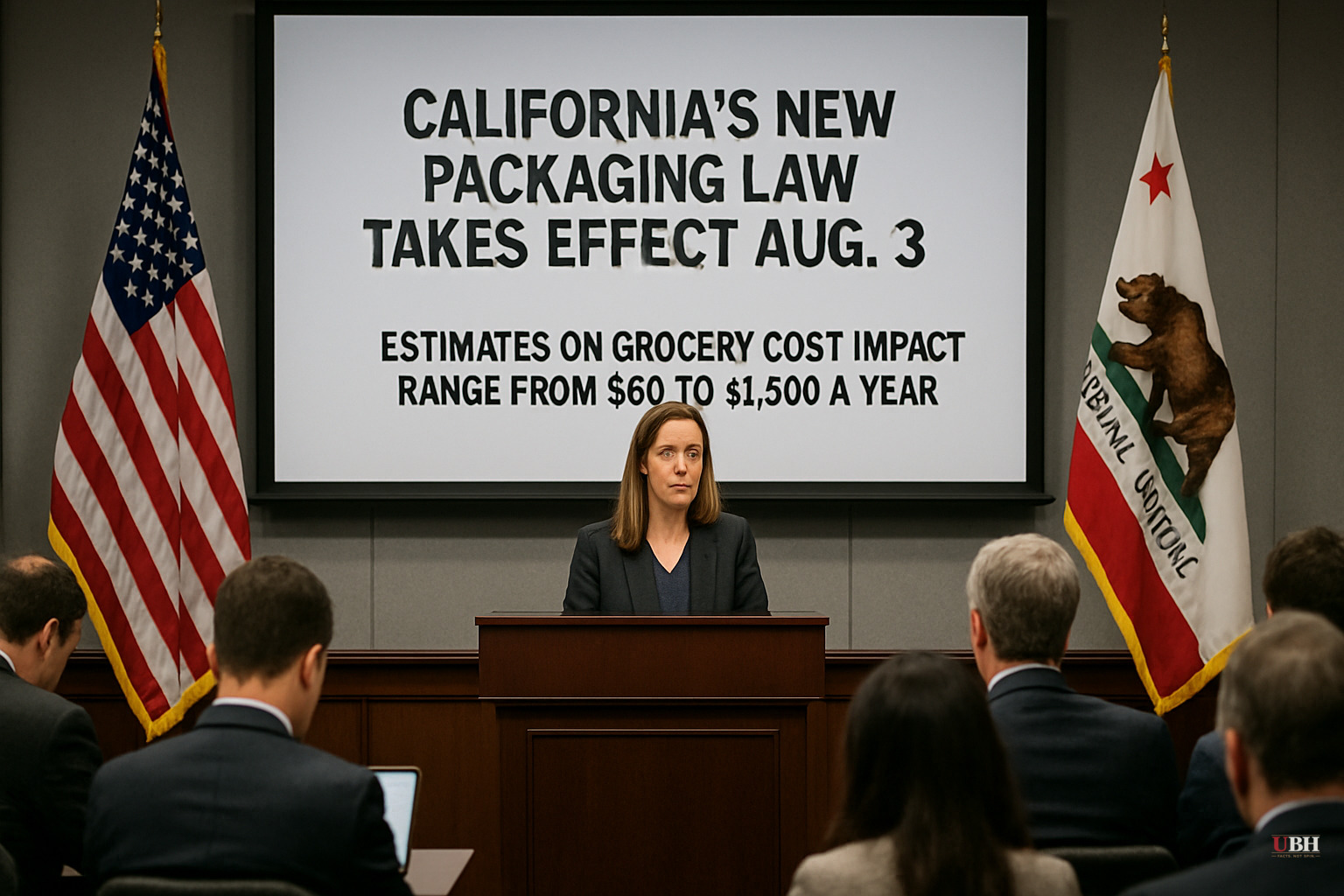
California's Senate Bill 54, the Plastic Pollution Prevention and Packaging Producer Responsibility Act, takes effect Aug. 3. It requires companies that produce packaging sold in California to help cover the cost of recycling and disposing of that packaging, shifting the bill away from taxpayers and local governments.
How much that will cost the average household is disputed, and the range in estimates is enormous.
CalRecycle, the state agency responsible for implementing the law, estimates the added cost to households at roughly $60 to $190 a year, according to the Daily Signal. That's the number state officials are using to defend the policy.
The Dairy Institute of California says that estimate is way off. Executive Director Katie Davey told SFGate her organization's analysis puts the real cost at closer to $1,300 per household annually, nearly seven times CalRecycle's high-end figure. Both sides have an incentive to shade the number: CalRecycle wants the law to look affordable, and the dairy industry wants it looking expensive enough to fight.
No independent, neutral third-party estimate is cited in the available reporting to settle which number is closer to reality. Californians deserve a credible, non-partisan cost estimate before the law takes effect.
The Bag Ban Precedent
California Assemblyman Carl DeMaio, in an interview with the Daily Signal, argued SB 54 will repeat a mistake he says the state already made with its 2014 plastic bag ban.
DeMaio claims that ban backfired because consumers switched to thicker reusable plastic bags, which he says quadrupled plastic waste going into landfills. "These people are not even good environmentalists with these Band-Aids," DeMaio said, adding that "so many of these Band-Aids are being sold as good for the environment, and they're actually bad for the environment, and worse than that, they increase costs."
That's a specific factual claim about landfill volume that deserves scrutiny beyond DeMaio's say-so, and the sourcing here doesn't independently verify the "quadrupled" figure. It's DeMaio's characterization, not an audited state statistic cited in this reporting. Whether SB 54 actually reduces plastic waste or just shifts costs around is a core question, and it's one regulators, not politicians on either side, ought to be able to answer with data once the law is in effect.
DeMaio didn't hold back when asked what he'd tell Californians worried about their grocery bills. "Well, bend over and take it, because California Democrats don't seem to care about your cost of living," he said. That's a pointed partisan line, not a factual claim. Democrats who back the law argue it's manufacturers, not families, who are supposed to absorb the packaging costs. Whether that holds up once retailers set prices is exactly what's in dispute.
The Affordability Backdrop
This law isn't landing in a vacuum. California was recently ranked the least affordable state in the nation in Consumer Affairs' annual report. Any added cost, even at the low end of CalRecycle's $60-to-$190 estimate, lands on top of a state where housing, gas, and utility costs are already among the highest in the country.
Even a modest per-household cost increase is a bigger deal in California than it would be in a lower-cost state, and businesses passing costs to consumers is a predictable outcome of any producer-responsibility law, regardless of the stated intent.
The case for the law itself is straightforward: someone pays to deal with packaging waste. Supporters argue it's fairer for the companies producing that packaging to pay rather than taxpayers footing the landfill and recycling bill through local government budgets. That's a legitimate policy argument, whatever you think of the cost estimates attached to it.
Legal Fight Beyond California's Borders
SB 54 is also facing lawsuits from a coalition of 17 Republican attorneys general and the National Association of Wholesaler-Distributors. Their argument: because many manufacturers use identical packaging nationwide, California's requirements could force companies to redesign packaging for products sold in every other state too, effectively letting California regulate commerce beyond its own borders.
States regulate commerce within their borders all the time, but courts have struck down state laws before when they functionally dictate business practices nationwide. No ruling has been issued in this case as of now, and the litigation is ongoing.
The law takes effect Aug. 3 regardless of the pending litigation. Whether the actual household cost lands near CalRecycle's $60-to-$190 estimate or closer to the Dairy Institute's $1,300 figure will only become clear once companies start passing costs through to shelf prices. California grocery shoppers will be able to check for themselves within a few months of the law taking effect.
Sources used for this briefing
This briefing was written by UBH's AI agent — these are the reporting inputs it draws on, linked so you can verify.


