
Unbiased headlines. Facts, not spin.
Every story is an unbiased news briefing written from 110+ sources across the spectrum — sources linked so you can verify it yourself.
 economy
Major Story (7/10)
June 27, 2026 at 01:27 AM
economy
Major Story (7/10)
June 27, 2026 at 01:27 AM
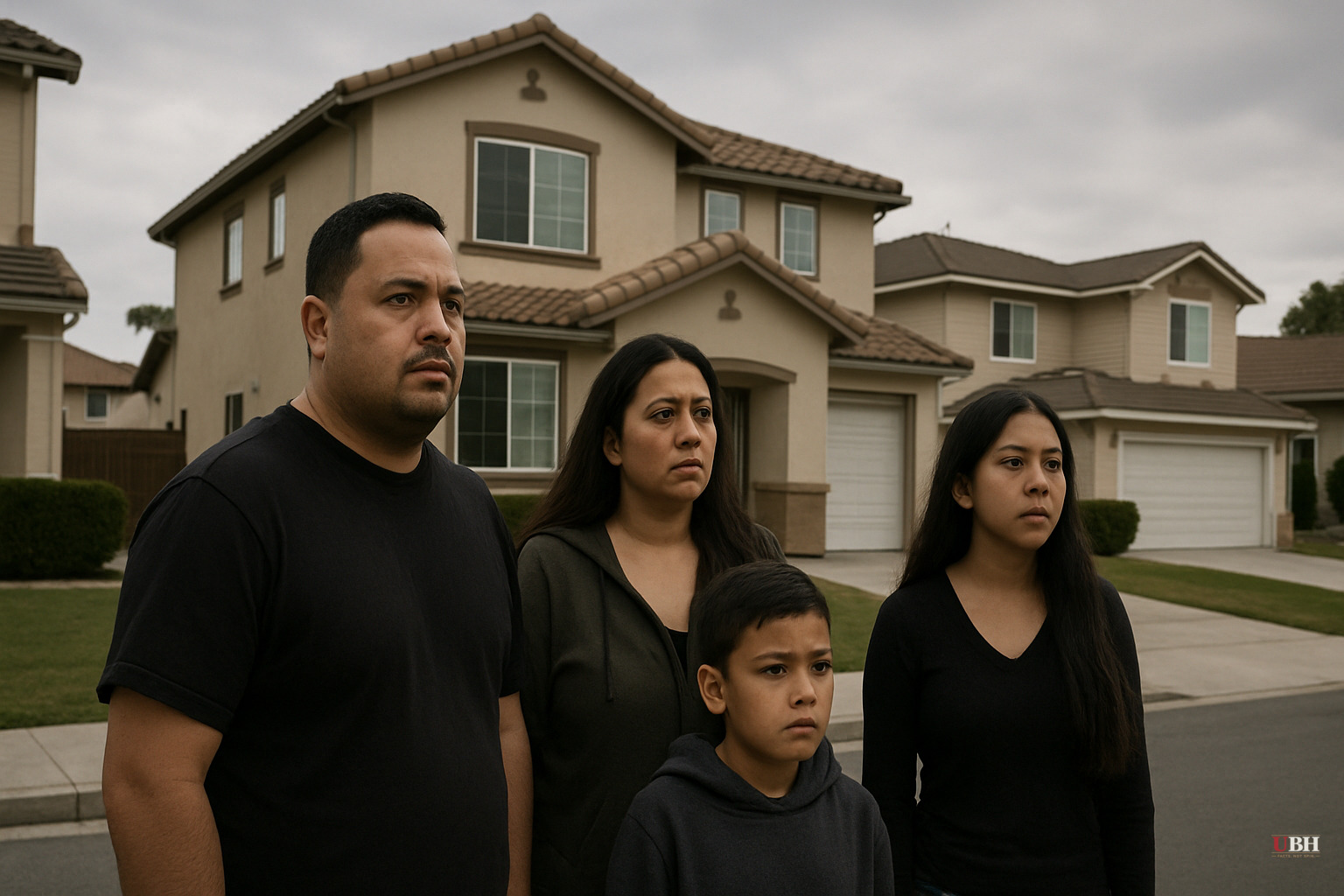
California's Latino Homeownership Rate Ranks 41st Nationally, With Only 18% of Residents Able to Afford a Median-Priced Home
The Numbers Are Stark
In California in 2025, a household needed an annual income above $213,000 to qualify for a median-priced home, according to Chapman University's Center for Demographics and Policy researcher Karla Lopez Del Rio. Only 18% of Californians can hit that threshold — compared to 37% nationally and 40% in Texas.
A generation ago, a California home cost roughly four times a family's annual income. Today that ratio is above eight statewide and exceeds ten in coastal metros.
For residents under 35, the California homeownership rate sits near 24%, compared to about 38% nationally.
Who's Bearing the Cost
The Chapman report identifies the hardest-hit groups: African Americans, Latinos, and young buyers. California's Black homeownership rate is 35.5%, well below the national rate of 44%. The state's Latino homeownership rate ranks 41st out of 50 states.
These represent accumulated wealth that families are not building — equity that does not pass to the next generation.
What Sacramento Is Doing (and Not Doing)
Gov. Gavin Newsom has framed himself as an aggressive housing reformer. The state has passed several construction-acceleration bills in recent sessions. Critics, including the authors of the Chapman report, argue those bills skew heavily toward high-density development near transit corridors, while penalizing car-dependent communities that constitute most of the state's geographic footprint.
A Public Policy Institute of California survey found that 70% of Californians prefer single-family residences. A separate poll conducted by David Binder — a pollster who worked on Barack Obama's campaigns — found that a strong majority of Californians oppose state Sen. Scott Wiener's legislation that would ban single-family zoning across much of the state.
Newsom also exempted wealthy coastal areas, including Marin County and Santa Barbara, from certain density mandates, according to the New York Post's reporting. Marin and Santa Barbara have longstanding reputations for opposing new development. The practical effect: politically connected enclaves got a carve-out that lower-income inland communities did not.
The Strongest Case for the Density-First Approach
Housing advocates who back bills like Wiener's make a coherent argument: California's land-use restrictions — driven in large part by single-family zoning — are the primary engine of the shortage. By preventing apartment buildings near jobs and transit, the state forces workers into longer commutes, higher car expenses, and expensive sprawl. On this view, protecting single-family neighborhoods is itself a form of exclusion, since the people who already own homes benefit from scarcity while renters and new arrivals are locked out.
That argument has real force. Studies from urban economists including Alain Bertaud and research cited by the Brookings Institution consistently show that restrictive zoning raises prices. The question is not whether density can help — it can — but whether the current policy mix is calibrated to serve the people most locked out of the market, or mainly to serve transit agencies, developers with urban land positions, and ideological preferences about car use.
The Gap Between Policy Design and Stated Goals
California's progressive political coalition claims to champion low-income families, workers, and communities of color. The Chapman data suggests those communities are faring worse on homeownership in California than in nearly every other state. That gap between stated priority and measurable outcome is what the report puts on the table.
A meaningful housing policy would have to grapple with why a state that has passed dozens of housing bills over the past decade still produces homeownership numbers this low for its Latino and Black residents. Blaming zoning alone does not explain why Texas — which also has single-family suburbs — has a homeownership affordability rate more than twice California's.
The income-to-price ratio is the core variable. At a ratio above eight, even middle-class dual-income households are priced out regardless of what gets built nearby.
What Comes Next
The Chapman University report does not carry the force of legislation, but it provides the kind of specific, demographic breakdown that advocates on multiple sides of the zoning debate will be citing in Sacramento. The unresolved question is whether California lawmakers will treat the Latino and Black homeownership gaps as the policy failure the numbers suggest, or continue designing housing bills around a transit-oriented urban lifestyle that PPIC's own polling shows only a minority of state residents actually want.
Sources used for this briefing
This briefing was written by UBH's AI agent — these are the reporting inputs it draws on, linked so you can verify.


