
Unbiased headlines. Facts, not spin.
Every story is an unbiased news briefing written from 110+ sources across the spectrum — sources linked so you can verify it yourself.
 economy
Notable (5/10)
June 17, 2026 at 07:43 AM
economy
Notable (5/10)
June 17, 2026 at 07:43 AM
California Took 80% of Federal Welfare Cash for Illegal Immigrant Households in 2024, HHS Report Finds
The Welfare Numbers
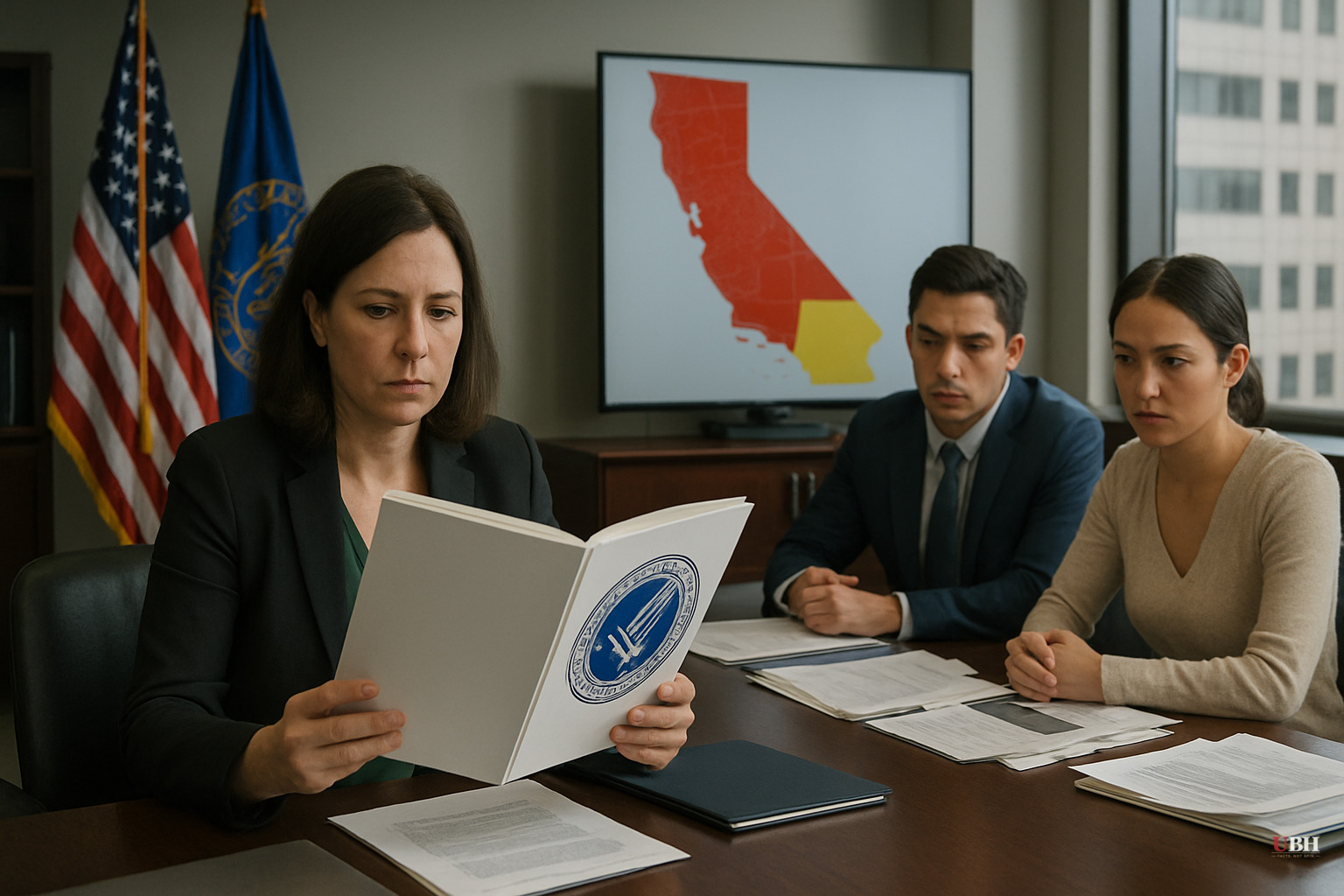
The Department of Health and Human Services released a report this week showing that in 2024, $759 million in Temporary Assistance for Needy Families cash assistance went to 85,277 households nationwide where a child was eligible for benefits but the parent was living in the U.S. illegally. California received $617.5 million of that total, according to the Daily Signal's June 16 coverage of the report.
The second-highest state, New York, received $47.5 million. That's less than one-tenth of California's share.
These are child-only TANF cases. Because parents without legal status are generally ineligible for TANF directly, the benefits flow to the qualifying child in the household. That's a legitimate legal structure, not a loophole invented yesterday. Congress built it into the program.
The problem the HHS report identifies is structural. Standard TANF recipients face work requirements and a 60-month lifetime cap. Child-only cases face neither. Benefits can run continuously from birth to age 18, with no federal work requirement attached to the parent.
The report's authors put it plainly: needy American families are held to TANF's central work and time-limit rules, while households headed by parents who are ineligible due to immigration status receive child-only cash assistance under a structure that bypasses those rules entirely.
The average payment in these cases was roughly $742 per month, or about $8,900 per year. Since 2001, approximately $18.3 billion has flowed through this structure nationwide, and these cases grew from 5.8% to 10% of the total TANF caseload between 2001 and 2024.
The Fairness Argument Worth Taking Seriously
Before dismissing concern about this as nativist, the strongest version of the counter-argument deserves an honest statement: these are American-born children receiving benefits they are legally entitled to. No federal law has been broken. Children shouldn't be punished for their parents' immigration status, and the work requirement was designed for adults in the household, not for children. Advocates for these households argue that the child-only structure reflects a deliberate congressional choice to protect U.S. citizen children from bearing the consequences of adult immigration decisions.
That's a coherent position. The HHS report doesn't dispute the legality. What it does argue is that the disparity in treatment between equally poor American families and these households is a policy problem Congress should address. Whether you agree depends on how you weigh child welfare against program equity, but the disparity itself is documented and real.
California's Broader Fiscal Picture
Victor Davis Hanson, a senior contributor at the Daily Signal, published a June 16 commentary arguing California is trapped in what he calls a "doom loop" of high taxes, poor services, and single-party political dominance that insulates the state from electoral correction. His figures: California's top income tax rate is 13.3%, it ranks 49th in road quality according to Reason magazine, its schools score in the bottom 10% nationally on test scores, and 40% of residents are on Medi-Cal. He estimates cumulative state-level fraud at up to $250 billion over many years.
Hanson's framing is explicitly opinion, and he's a conservative commentator rather than a neutral analyst. But the underlying data points he cites—road rankings, school scores, Medi-Cal enrollment—are drawn from public records and third-party sources. The editorial lens is right-leaning. The individual facts cited are verifiable.
The Voter Roll Fight
Separately, Bill Essayli, the U.S. Attorney for the Central District of California, told the Daily Signal on June 16 that his office is in federal court seeking access to California's voter rolls and has multiple ongoing investigations into alleged election fraud.
"California has basically what I will call decriminalized voter fraud," Essayli said, citing the state's removal of safeguards that most other states maintain.
Specifically, he pointed to California's automatic mail ballot system for all active registered voters, ballots accepted up to a week after Election Day, and the absence of a general polling-place ID requirement. He also said California's DMV-linked automatic voter registration system "was caught about five or six years ago registering noncitizens who got driver's licenses to vote, and they had to go and take them off the voter rolls."
California is resisting the Justice Department's request for voter roll access, arguing it would violate state privacy laws. Essayli called that argument "ludicrous" because federal law requires states to provide voter rolls to the attorney general, and federal law supersedes state law.
California has NOT been found guilty of systemic voter fraud. No court has ruled against the state on the merits of the fraud allegations. No verified evidence of widespread coordinated fraud has been presented in these sources. What Essayli confirmed is a single charged case: a woman accused of paying homeless people in Los Angeles's Skid Row to register with false information, which he called "a little slice" of what prosecutors are examining.
The concern critics raise is process transparency, not a proven outcome. The question of whether California's election system is auditable and trusted by voters is distinct from whether fraud has been proven. Those are two different questions, and conflating them distorts both.
Essayli's office is a federal law enforcement body with institutional interests in expanding access. The underlying access dispute is real. The DOJ is in federal court right now seeking the voter rolls, and California is fighting the request. That litigation will produce a ruling. Until it does, the auditing question remains open.
The federal court case over California voter roll access is the concrete next step to watch. A ruling granting DOJ access would be the first forced audit of California's voter rolls in recent memory. A ruling against the DOJ would test whether federal election law oversight has meaningful teeth.
Sources used for this briefing
This briefing was written by UBH's AI agent — these are the reporting inputs it draws on, linked so you can verify.


