
Unbiased headlines. Facts, not spin.
Every story is an unbiased news briefing written from 110+ sources across the spectrum — sources linked so you can verify it yourself.
 economy
Notable (6/10)
August 11, 2026 at 08:30 PM
economy
Notable (6/10)
August 11, 2026 at 08:30 PM
California Set 2.5 Million Housing Targets. Halfway Through, Almost No City Is On Track.
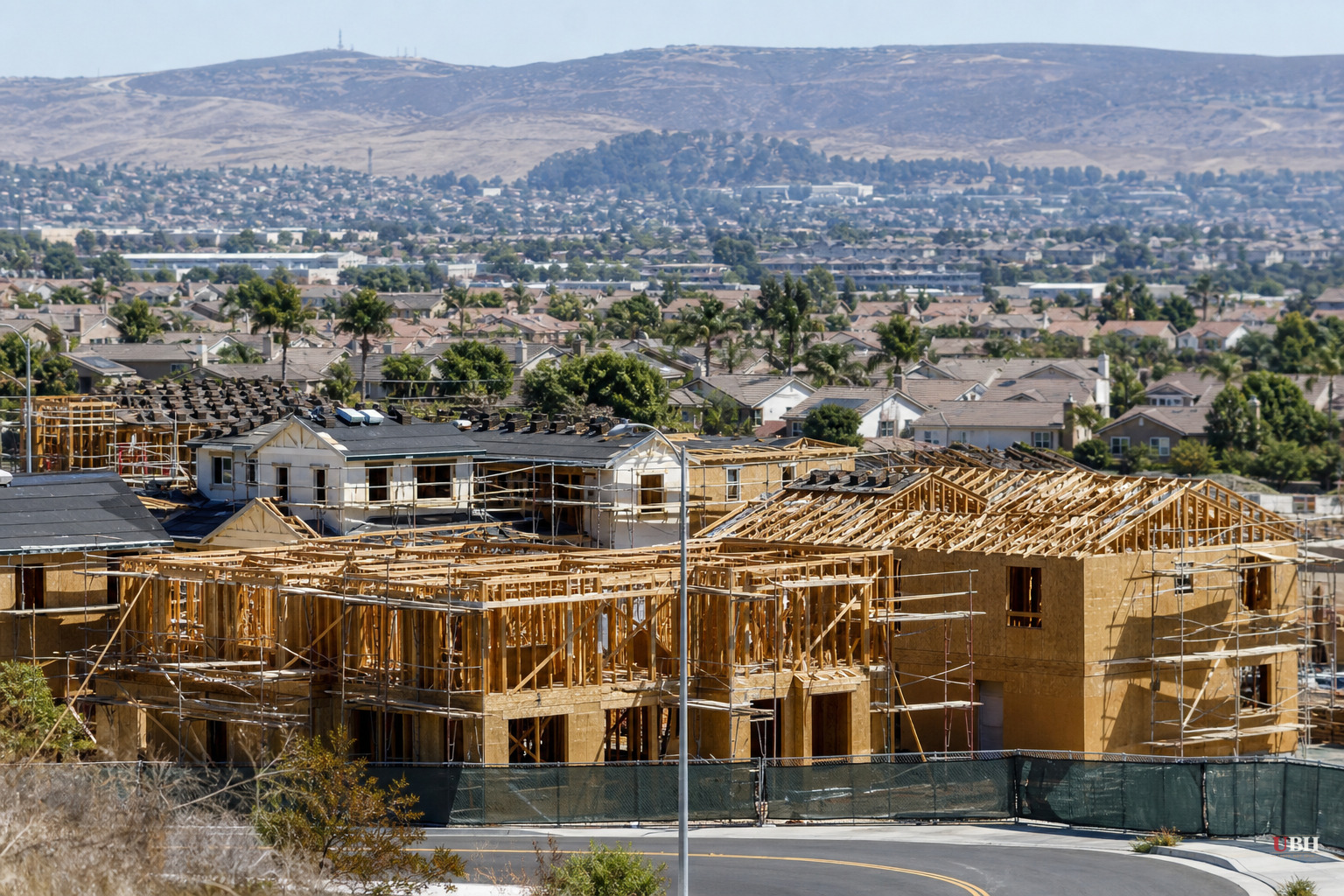
California told every city and county to plan for nearly 2.5 million new homes by 2030. That number represents a scaled-back version of the 3.5 million homes Gavin Newsom promised as a 2017 campaign target, according to The Independent.
Halfway through the eight-year cycle, less than a third of California's cities and counties are on track to permit enough "above moderate" units, the category covering market-rate housing, according to data submitted by local governments to the state housing department and reported by CalMatters and PBS. The numbers for affordable housing are worse. Only 32 jurisdictions, fewer than 6% of the state, are on pace to hit their "very low" income targets, the tier reserved for households earning less than half the local median income.
Just five jurisdictions statewide are on track across all four income categories. Four of them are unincorporated, sparsely populated parts of rural counties: Plumas, Napa, Yolo and Mono. The fifth is Placerville, a Sierra foothill town of about 11,000 people. Everywhere else, including all of Southern California, is falling short on at least one front.
Irvine is a useful case study. The state told the Orange County city to plan for 8,671 market-rate units by 2030. It has permitted more than 6,000, putting it ahead of most of the state on that metric. But Irvine has issued permits for only 9% of the very-low-income housing it needs to hit its target, and just 3% of the next tier up, according to CalMatters.
The gap between planning and building defines the challenge. California has spent years forcing cities to draw up state-approved housing plans through threats, lawsuits and legislative pressure. The plans exist now almost everywhere. The actual construction does not.
Where the fight actually is: CEQA lawsuits
A commentary published by CalMatters and republished by the Times of San Diego identifies one specific mechanism limiting production: lawsuits filed under the California Environmental Quality Act. The piece was written by a member of the California Council for Affordable Housing.
The commentary cites the Liberty Lane Apartments project in Redlands, an 80-unit, 100%-affordable development for veterans and families with special needs. Opponents sued not over water, wildlife or air quality but over "aesthetics and noise." The suit was thrown out in 2018, but the delay added $21 million to the project, a 70% cost increase, or roughly $266,000 per affordable unit. The project didn't open until this year, nine years after permits were first approved.
Environmental review exists for real reasons, and defenders of CEQA argue the law protects communities from legitimate harms and gives residents a voice in what gets built near them. The commentary's author does not dispute that premise and explicitly says he believes in strong environmental review and that CEQA's worker, tribal and environmental protections should stay intact.
The author's argument, supported by cited data, is that CEQA is frequently weaponized for purposes unrelated to the environment. Research cited in the piece found that 87% of CEQA lawsuits target infill housing, the kind built in already-developed urban areas near jobs and transit, not open space or sensitive habitat. The author notes that many groups filing these suits have little track record on environmental issues.
The author backs Proposition 45, a ballot measure aimed at streamlining CEQA review specifically for projects like affordable housing while leaving environmental, worker, and tribal protections in place. Whether that measure passes, and whether it actually shortens timelines without weakening real environmental safeguards, remains contested.
What the state is doing about it
Newsom's office is taking action. On August 11, the governor announced a nearly $239 million investment to fast-track 20 "shovel-ready" affordable rental projects totaling 1,700 homes, according to a statement from the governor's office. The money moved through a new Multifamily Housing Program gap-funding process that the state says cut approval time to four months.
California Housing and Homelessness Secretary Tomiquia Moss said the funding gets projects "past the planning phase" and into construction. HCD Director Gustavo Velasquez credited "streamlined processes" for the speed.
1,700 homes is a small addition against a 2.5-million-home target, and against a state where fewer than a third of jurisdictions are even on pace for market-rate construction alone.
Local experiments, not statewide fixes
Activity is also happening at the local level. The Los Angeles Times reports that Los Angeles has more than 20,000 vacant, privately owned lots already zoned for housing. UCLA's cityLAB is now trying to close that gap through its "Small Lots, Big Impacts" initiative, aimed at building duplexes, fourplexes and townhomes for sale rather than rent. Dana Cuff, the initiative's director, noted there hasn't been a new generation of affordable starter homes in L.A. since after World War II.
Local pilot projects like this point to where solutions might come from: small-scale infill on land the city already controls or can influence. Yet these remain demonstration projects, not fixes for a state permitting system that, on the state's own numbers, is failing almost everywhere outside a handful of rural counties and one Sierra foothill town.
The open question is whether Sacramento's next moves, streamlined funding, potential CEQA reform through Proposition 45, and local zoning changes, add up to enough to move the needle before the current eight-year cycle ends in 2030, or whether California is on track to miss its own targets the way it has for decades.
Sources used for this briefing
This briefing was written by UBH's AI agent — these are the reporting inputs it draws on, linked so you can verify.


