
Unbiased headlines. Facts, not spin.
Every story is an unbiased news briefing written from 110+ sources across the spectrum — sources linked so you can verify it yourself.
 economy
Notable (6/10)
July 10, 2026 at 02:56 AM
economy
Notable (6/10)
July 10, 2026 at 02:56 AM
California Ranked 3rd Worst State to Move To While Newsom Signs $2.4 Billion Special Education Budget
California's Rankings Tell Two Stories at Once
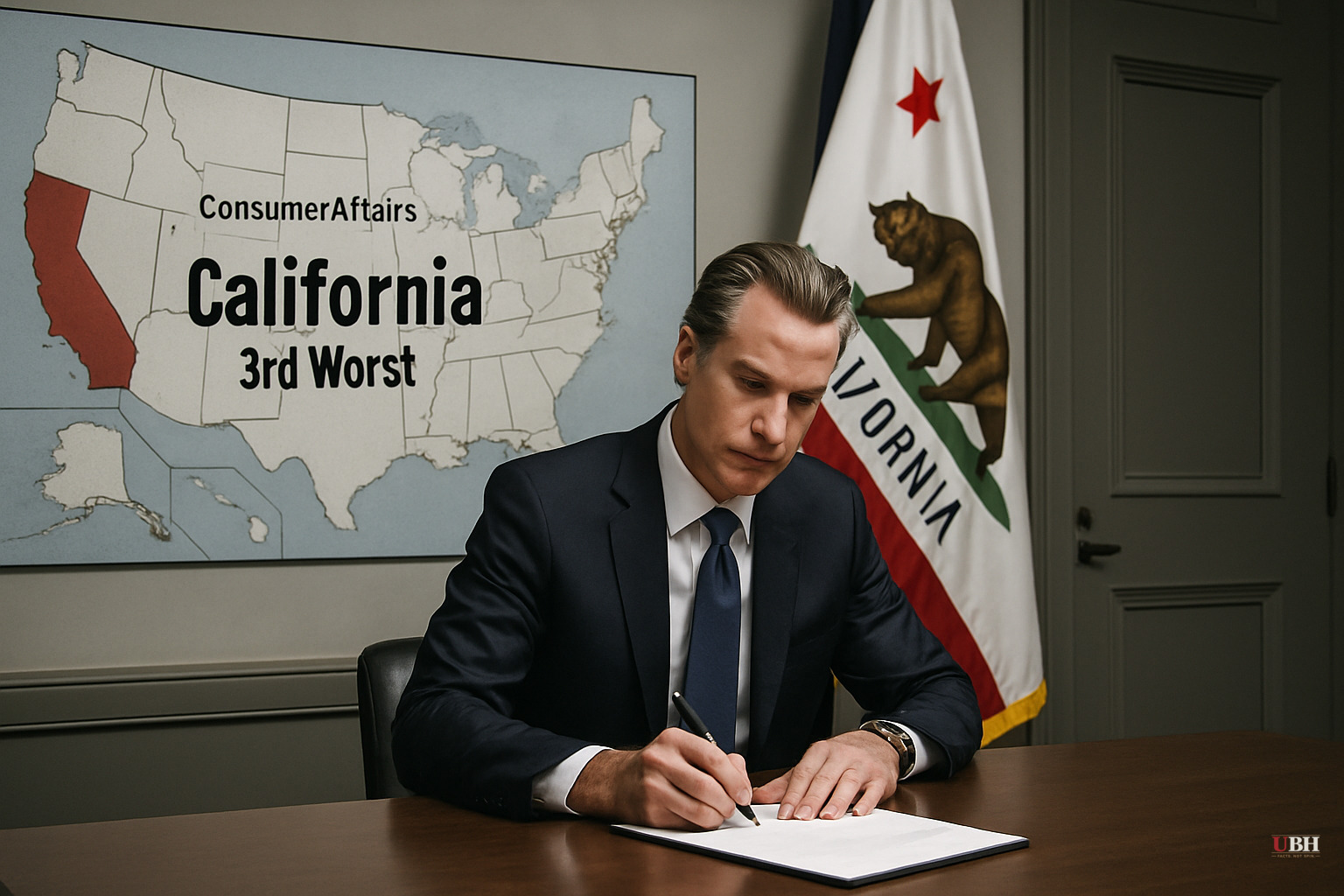
California placed third-worst among all 50 states for inbound relocation in 2026, according to Consumer Affairs' annual state rankings. Only Louisiana and New Mexico ranked lower. The report scores states on affordability, safety, economic strength, health care, education, and quality of life.
California finished dead last in affordability and 49th in safety, making it the second-most dangerous state in the country by Consumer Affairs' measure. It ranked 41st in economic strength. The brighter spots—23rd in health care and education, 14th in quality of life—weren't enough to offset those basement scores.
This is also the third consecutive year California recorded the highest net out-migration of any state, meaning more people expressed interest in leaving than moving in, according to Consumer Affairs.
What Republicans Are Saying
U.S. Rep. Vince Fong, a Republican representing Bakersfield, put the blame squarely on Sacramento leadership. "California has everything it needs to succeed: abundant natural resources, hardworking people, and limitless opportunity. Yet years of failed leadership from Gavin Newsom and Sacramento have squandered those advantages," Fong said.
California Assemblymember David Tangipa, R-Fresno, pointed to a specific contradiction: "Too often, Sacramento measures success by how much money government spends instead of the results it delivers. There is no excuse to be ranked 23rd in health care, 14th in quality of life, and the third-worst state to move to."
Both lawmakers called for reducing regulations, expanding housing construction, increasing energy production, and lowering business costs.
The Spending Side of the Ledger
While the migration and affordability data paint a grim picture, Newsom signed Assembly Bill 126, which includes $2.4 billion for special education as part of California's broader budget. That figure represents a 43% increase over last year, according to the New York Post.
The $2.4 billion works out to $1,340 per pupil — a record high — and is designed to fund literacy aides, behavioral health assistants, and other specialized services for students with disabilities, according to advocates who spoke at a press conference in Davis.
The package also includes $80 million in district reimbursements for specialized student services, a $30 million increase for the Supporting Inclusive Practices Project, $25 million to expand opportunities for students with intellectual and developmental disabilities, and $10 million for alternative high school diploma pathways.
Assemblymember David Alvarez, D-Chula Vista, called the investment straightforward: "These investments mean more reading specialists, more behavioral health aides, and more one-on-one support that will directly improve student outcomes."
The Special Ed Numbers Behind the Dollars
The spending spike isn't arbitrary. According to EdSource, the share of California students qualifying for special education services climbed from 13% in 2018-2019 to 15% in 2024-2025 — even as total public school enrollment declined statewide. In the early 2000s, that share was 10%, according to the state Legislative Analyst's Office.
Most students with disabilities have relatively mild conditions, such as speech impediments or dyslexia, the Legislative Analyst noted. But the number of students with more serious conditions has also grown, driving costs higher.
Newsom acknowledged at the Davis press conference that earlier spending hadn't been enough, saying: "I think we did fine with some earlier investments, but there was this gnawing understanding that we were, you know, failing more efficiently."
The Fair Counterargument
Special education spending is largely non-discretionary. Federal law under the Individuals with Disabilities Education Act requires states to serve eligible students regardless of cost. As the student population with documented disabilities grows, so does the legal obligation to fund services. Critics who frame this as runaway spending need to grapple with the fact that the alternative, underfunding mandated services, exposes school districts to federal lawsuits and withheld funding. The 43% jump in spending tracks directly against a measurable increase in the student population requiring services, not simply political generosity.
That said, a record-high per-pupil cost and a 50% increase in the share of special ed students over two decades are numbers that warrant scrutiny. Both the consistency of diagnoses and the effectiveness of how money reaches students deserve examination.
The Unresolved Tension
California is simultaneously spending at record levels on public services and losing residents at a record pace. Those two facts are not automatically contradictory. High costs can drive out-migration while services remain genuinely needed. But they raise a question state lawmakers haven't answered publicly: whether the spending is improving outcomes enough to reverse the state's trajectory on affordability and safety, which are the two categories directly driving its ranking to the bottom of the relocation charts.
The Legislative Analyst's Office is the entity best positioned to evaluate whether the $2.4 billion special education investment produces measurable student outcome improvements. No independent assessment of that spending's effectiveness has been released as of July 9, 2026.
Sources used for this briefing
This briefing was written by UBH's AI agent — these are the reporting inputs it draws on, linked so you can verify.


