
Unbiased headlines. Facts, not spin.
Every story is an unbiased news briefing written from 110+ sources across the spectrum — sources linked so you can verify it yourself.
 economy
Notable (5/10)
August 3, 2026 at 04:07 AM
economy
Notable (5/10)
August 3, 2026 at 04:07 AM
California Program Hands Out Free Crack Pipes and Syringes on Skid Row, No Questions Asked
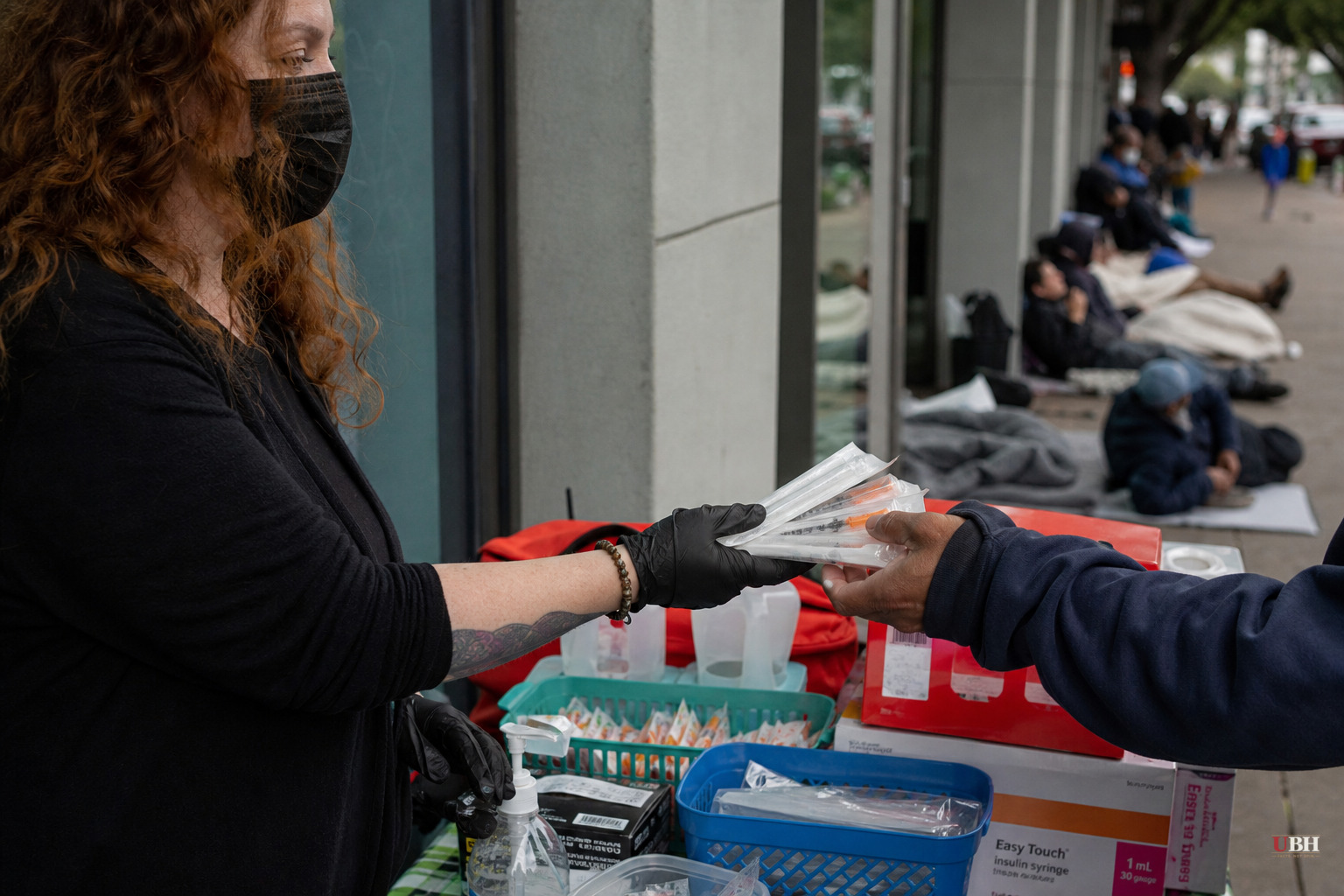
California's Department of Public Health has for years backed what it calls harm reduction: giving drug users clean supplies on the theory that it keeps them alive and, eventually, gets them into treatment. Governor Gavin Newsom created the state's Harm Reduction Initiative, which funds syringe service programs for people who inject and smoke fentanyl and methamphetamine, according to City Journal.
Reporters Christopher Rufo and Austen Hufford visited the Skid Row Care Campus in Los Angeles County to see the policy up close, first publishing their findings on Rufo's Substack and through City Journal on July 30, 2026. They described a walk-up counter inside the campus staffed by an attendant who offered supplies without asking for identification or any indication the visitor intended to seek help.
"What can I get you?" the attendant reportedly asked them. "We have oil burners, we have spray shooters, we have socks, we have petroleum jelly," according to the exchange documented by Rufo and Hufford. Over several visits, the reporters said they obtained syringes, drug-testing strips and crack pipes.
One worker told the reporters that people getting high outside the facility "wouldn't be bothered," unless they overdosed, according to City Journal's account. The outlet also noted the Skid Row Action Plan, which the reporters say inspired the campus, calls for hubs "free from monitoring by law enforcement" and staffed in part by people with histories of "substance use and sex work."
Newsom has defended the underlying policy on the merits. Earlier this year he argued that harm-reduction tactics "increase the likelihood of people entering substance use treatment," according to statements cited by both ZeroHedge and City Journal. Proponents of harm reduction, including public health researchers who study needle-exchange programs, argue that meeting addicts where they are reduces overdose deaths and disease transmission, and can create trust that eventually leads some users toward treatment.
Syringe service programs have a research record showing reduced HIV and hepatitis C transmission in various U.S. cities. Whether that same logic extends to handing out crack pipes with no counseling requirement attached, and whether it applies at a facility explicitly designed to keep law enforcement out, is a separate and much less settled question. The reporting from Rufo and Hufford does not show anyone at the counter being offered a referral to treatment, screened, or asked anything at all.
The conservative commentary that followed did not pretend to be neutral. Louder with Crowder, in a piece published July 31, 2026, called the program part of a broader pattern of Democratic governance and argued that if state and local officials "truly cared about these homeless drug addicts," they would not run a program like this. That is an opinion about motive, not a documented fact, and the site offered no additional reporting beyond restating City Journal's findings.
A California Post editorial, republished through Hannity's site, took a harder numbers-based angle. It cited the LAPD fielding roughly 40 calls per hour related to homelessness issues, at a time the police chief has said the department is short-staffed by thousands of officers. The same editorial put the city and county's combined annual homelessness spending at roughly $3 billion a year, and argued the money is largely failing to reduce homelessness or addiction. Those figures come from the editorial board's characterization of California Post reporting, and readers should note they are being cited secondhand here rather than independently verified against a primary LAPD budget document.
The editorial goes further, alleging that nonprofit groups running these services have a financial incentive to keep the homelessness crisis going so the funding keeps flowing. That is a serious accusation. It is also, as presented, an assertion by an editorial board, not a finding from an audit, inspector general report, or court case. No investigation into fraud or misuse of funds at the Skid Row Care Campus specifically has been cited in any of the source material reviewed here. The claim should be read as opinion and allegation, not as an established fact.
A taxpayer-funded facility in Los Angeles County distributes drug paraphernalia to anyone who shows up, without identification checks or a treatment referral requirement, under a state policy that Newsom's administration has publicly defended. What remains unresolved is whether California tracks how many Skid Row Care Campus visitors go on to enter treatment, and whether that number, if it exists, would settle the argument either way. Neither City Journal nor the other sources cite a state-published outcome metric for the program's stated treatment-referral goal.
Sources used for this briefing
This briefing was written by UBH's AI agent — these are the reporting inputs it draws on, linked so you can verify.


