
Unbiased headlines. Facts, not spin.
Every story is an unbiased news briefing written from 110+ sources across the spectrum — sources linked so you can verify it yourself.
 economy
Notable (5/10)
July 18, 2026 at 10:54 AM
economy
Notable (5/10)
July 18, 2026 at 10:54 AM
California Democrats Push AI Restrictions and Union Wage Fights That Cut Against Their Own Affordability Promises
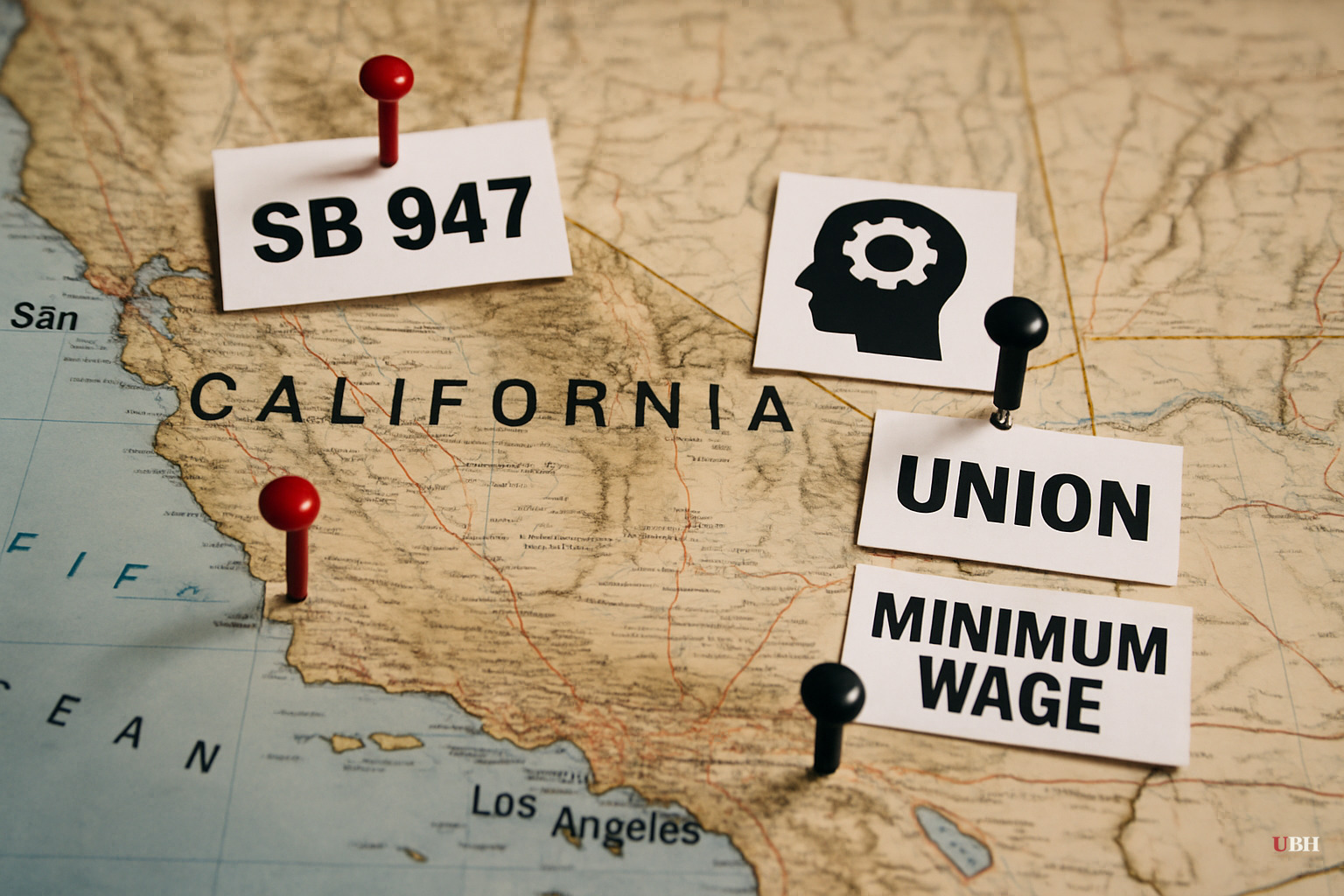
California Democrats say they want to fix the state's affordability crisis. Their own legislative session keeps getting in the way.
When state lawmakers return from recess in the coming weeks, they'll take up a stack of bills sponsored by the California Labor Federation of Labor Unions aimed at regulating how employers use artificial intelligence, according to Capitol Weekly. The centerpiece is SB 947, the No Robo Bosses Act, authored by Senator Jerry McNerney (D-Pleasanton) and co-authored by Senator Eloise Gómez Reyes (D-San Bernardino) and Assemblymember Chris Ward (D-San Diego).
The bill would bar employers from using automated decision systems to discipline, fire, or deactivate workers without a human involved. That includes app-based gig workers like rideshare and delivery drivers.
"It concerns me that we would be using these automated decision-making systems to discipline and fire people without a human being in the loop," McNerney told Capitol Weekly. He said humans bring "understanding and compassion" that raw data can't capture, and can recognize when a worker is productive even if they miss certain metrics.
Workers and unions pushing this bill have a legitimate point that automated systems can be blunt instruments, and a company shouldn't be able to hide behind software to avoid accountability for a bad call.
But the California Chamber of Commerce, in a letter of opposition obtained by Capitol Weekly, argues the bill goes far beyond that narrow problem. The Chamber says SB 947 "broadly targets businesses of all sizes, across every industry, and regulates even low-risk applications of automated decision systems," and warns it "will drive up costs for consumers." The Chamber's letter acknowledges the underlying worry about unfair terminations but says the bill doesn't weigh the benefits ADS technology already delivers.
Other union-backed measures in the pipeline would require 60 days' notice before technological displacement and let health care workers override automated systems with professional judgment, according to Capitol Weekly. Senator Reyes' office framed the push as balance: "California should continue leading in innovation while also leading in responsible governance," a statement to Capitol Weekly said, adding that lawmakers need "thoughtful safeguards so technological advancement benefits Californians without leaving workers or communities behind."
The $28 Wage That Died at Union Hands
While Sacramento debates AI rules, a separate fight just showed how California's own unions can block policies meant to help workers. A proposal to set a $28 minimum wage for certain California homebuilders collapsed after the state's influential building trades union protested, according to CalMatters reporter Ben Christopher. The trades union argued the flat wage floor could undermine existing prevailing-wage pay rates that some workers already earn above $28.
That fight is really the latest round in an ongoing dispute between two rival construction unions over the direction of California housing policy. Labor is fighting labor, with a wage increase for lower-paid workers as collateral damage.
CalMatters columnist Dan Walters has also tracked the broader pattern. California's $20-an-hour fast food wage, which took effect in 2024, led to higher menu prices and, according to a UC Santa Cruz study Walters cited, fewer jobs and worker hours alongside more self-order kiosks, mobile apps, and AI drive-through systems. An industry-backed study put the job loss at 19,000 positions, though Walters noted a union-friendly economic center found prices barely moved and jobs held steady, illustrating how contested the underlying numbers still are.
The Abundance Critique
This is the exact tension Reason has been writing about in its coverage of the Democratic Party's internal split between an "abundance" faction and unions the party depends on for votes and money. The abundance argument, per Reason, is that Democratic-run cities have restricted supply of things like housing through regulation, then subsidized demand, driving up costs. The fix, in that view, is deregulation and market mechanisms, not more mandates.
Reason's framing captures a real tension. When a party promises to lower costs and then lets a single union veto a $28 wage floor for other workers, or pushes broad restrictions on labor-saving technology across every industry regardless of size or risk, it's hard to square that with an affordability message. The Chamber's warning about compliance costs cascading to consumers isn't just industry spin. It's a predictable outcome when regulation targets "even low-risk applications," as the Chamber put it.
At the same time, the worker-side concern isn't nothing. An employee fired by an algorithm with zero human review, and zero notice before a job disappears to automation, is a real problem that market mechanisms alone haven't solved. No verified data in these sources settles whether SB 947's mandates would meaningfully reduce wrongful terminations or simply raise costs without fixing the underlying issue.
SB 947 and its companion bills haven't passed yet. The Legislature returns in the coming weeks, and the Chamber of Commerce coalition has signaled it will keep fighting the package. Whether Sacramento Democrats side with the labor federation that helped kill the $28 construction wage, or with the abundance-minded critics inside their own party, will show which faction actually controls policy when the two goals collide.
Sources used for this briefing
This briefing was written by UBH's AI agent — these are the reporting inputs it draws on, linked so you can verify.


