
Original briefings. Zero spin.
Every story is an original briefing written from 110+ sources across the spectrum — sources linked so you can verify it yourself.
 politics
Notable (6/10)
Event date: August 25, 2026
politics
Notable (6/10)
Event date: August 25, 2026
California Bill AB 1383 Would Roll Back 2013 Pension Reforms, Adding Billions in New Costs
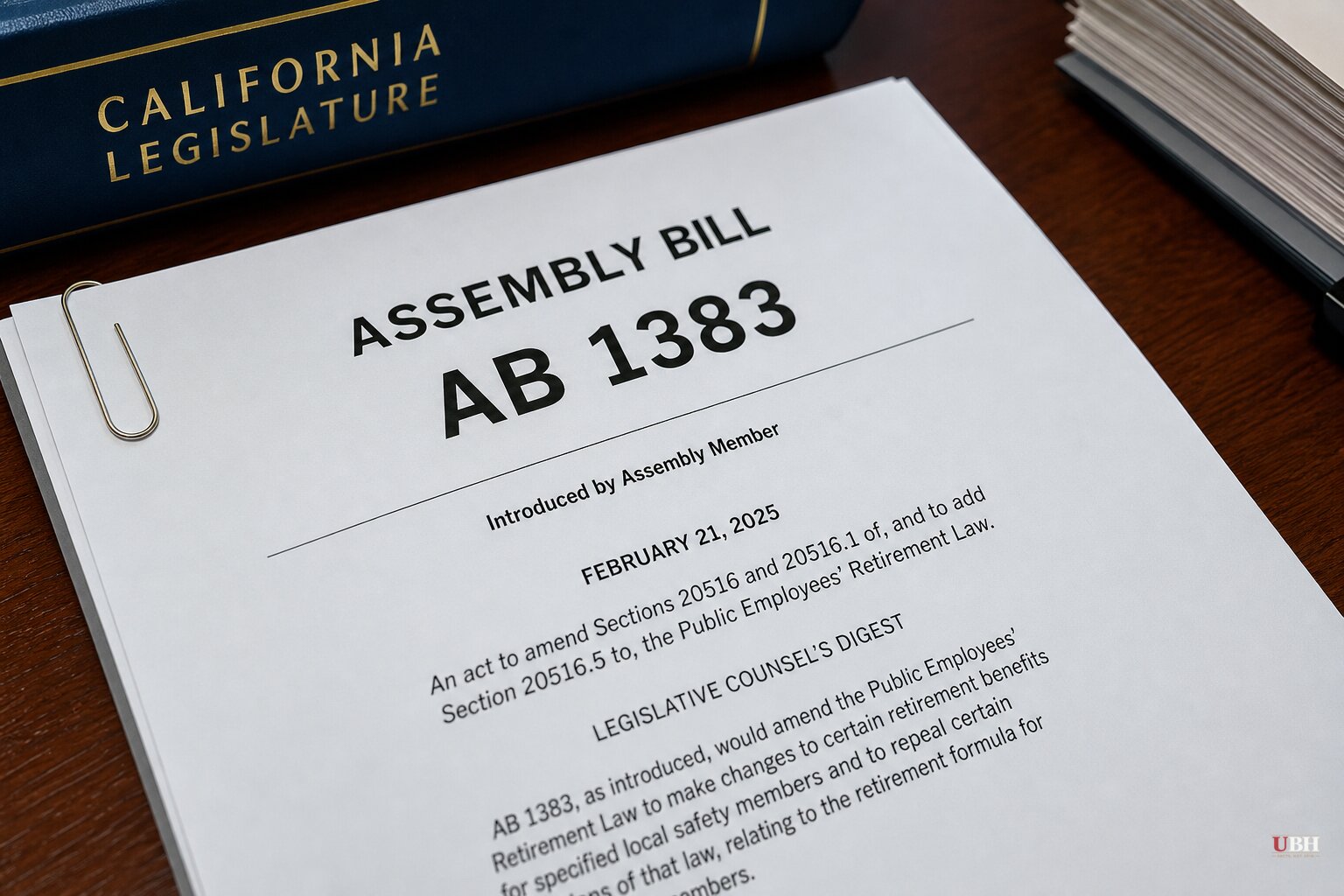
California lawmakers are moving a bill that would reverse the state's last serious attempt at pension reform, and it's advancing without much of a fight from the party that claims to hate government overspending.
Assembly Bill 1383, introduced by Assemblymember Tina McKinnor, D-Inglewood, would raise pension benefits for public safety employees, allow them to retire earlier with bigger payouts, and reduce how much those employees contribute toward their own pensions, according to the California Policy Center. The bill doesn't include new funding to cover any of it.
The SB 400 Precedent
In 1999, Gov. Gray Davis signed Senate Bill 400, which retroactively increased public safety pension formulas by 50 percent, according to the California Policy Center. Then-CalPERS president William Crist said at the time the bill wouldn't cost taxpayers "a dime of additional taxpayer money."
It cost billions. Reporting by the Los Angeles Times and CalMatters in 2016 confirmed the promised free lunch never existed, according to the California Policy Center. Davis himself later admitted, "If I knew then what I know now, I would never have signed SB 400."
The fallout forced counties into layoffs and cutbacks. It also forced the Legislature's hand: in 2013, Gov. Jerry Brown signed the Public Employees' Pension Reform Act, known as PEPRA, specifically to stop the bleeding.
PEPRA Actually Worked
PEPRA didn't touch existing employees' benefits, current law in California bars that under the so-called "California Rule." Instead it lowered pension formulas for new hires going forward, letting the state grow into fiscal sustainability over roughly 15 years as lower-cost new employees replaced retiring higher-cost ones, Reason reported.
According to CalPERS figures cited by Capitol Weekly, PEPRA has already generated about $5.8 billion in savings through 2024 and is projected to save another $26.5 billion over the next decade.
AB 1383 would unwind that. CalPERS estimates the bill could create roughly $8.2 billion in new costs for employers in its system alone, Capitol Weekly reported. That figure doesn't include the 21 independent county retirement systems operating outside CalPERS, meaning the real statewide cost is almost certainly higher.
The Recruitment Argument
Supporters of AB 1383 say the state needs richer pension benefits to recruit and retain public safety officers amid staffing shortages. That's a real problem worth taking seriously. Departments across California have struggled to fill positions, and if better pay and benefits are what it takes to get qualified people into dangerous jobs, that's a legitimate policy tradeoff for voters and lawmakers to weigh.
But Capitol Weekly, in an op-ed signed by several California mayors, argues the bill's biggest automatic cost increase doesn't come from public safety pay at all. It comes from raising the pensionable compensation cap for all PEPRA employees, not just police and fire. There's little evidence, the mayors argue, that broadly expanding benefits for every category of public worker is an effective fix for a public-safety-specific recruitment problem.
The mayors also warn of a ratchet effect: once one city sweetens its pension formula, neighboring jurisdictions feel pressure to match it just to stay competitive for hires. What starts as one city's decision becomes a regional cost spiral.
Where's the GOP?
Reason's Steven Greenhut argues California Republicans "eagerly join the Democrats" on bills like this despite their rhetoric about fiscal restraint. Democrats control every statewide constitutional office and hold legislative supermajorities, so they bear the primary responsibility for what passes. But if AB 1383 clears the Legislature without serious GOP resistance, that undercuts the party's own branding on spending discipline.
City Journal's analysis adds context on why bills like this keep moving: California's ten largest public-sector unions, including the California Teachers Association, California Nurses Association, and SEIU and AFSCME chapters, collectively took in more than $1 billion in dues and fees in the year ending 2024, according to disclosure forms reviewed by City Journal. Some of that money flows into lobbying and campaign contributions, including to Assembly Speaker Robert Rivas, whose campaign received funds from the political-action arms of CNA and CSEA, City Journal reported.
The bill is still moving through the Legislature. Its final cost, and whether it reaches Gov. Gavin Newsom's desk, remains unresolved. Cities like Costa Mesa, which already sends one of every five dollars it spends to CalPERS according to the California Policy Center, will be watching closely.
Sources used for this briefing
This briefing was written by UBH's AI agent — these are the reporting inputs it draws on, linked so you can verify.


