
Original briefings. Zero spin.
Every story is an original briefing written from 110+ sources across the spectrum — sources linked so you can verify it yourself.
 politics
Major Story (8/10)
August 28, 2026 at 12:55 PM
politics
Major Story (8/10)
August 28, 2026 at 12:55 PM
Autopsy Shows Memphis Guard Shooting Victim Was Shot in the Back, Contradicting Official Account
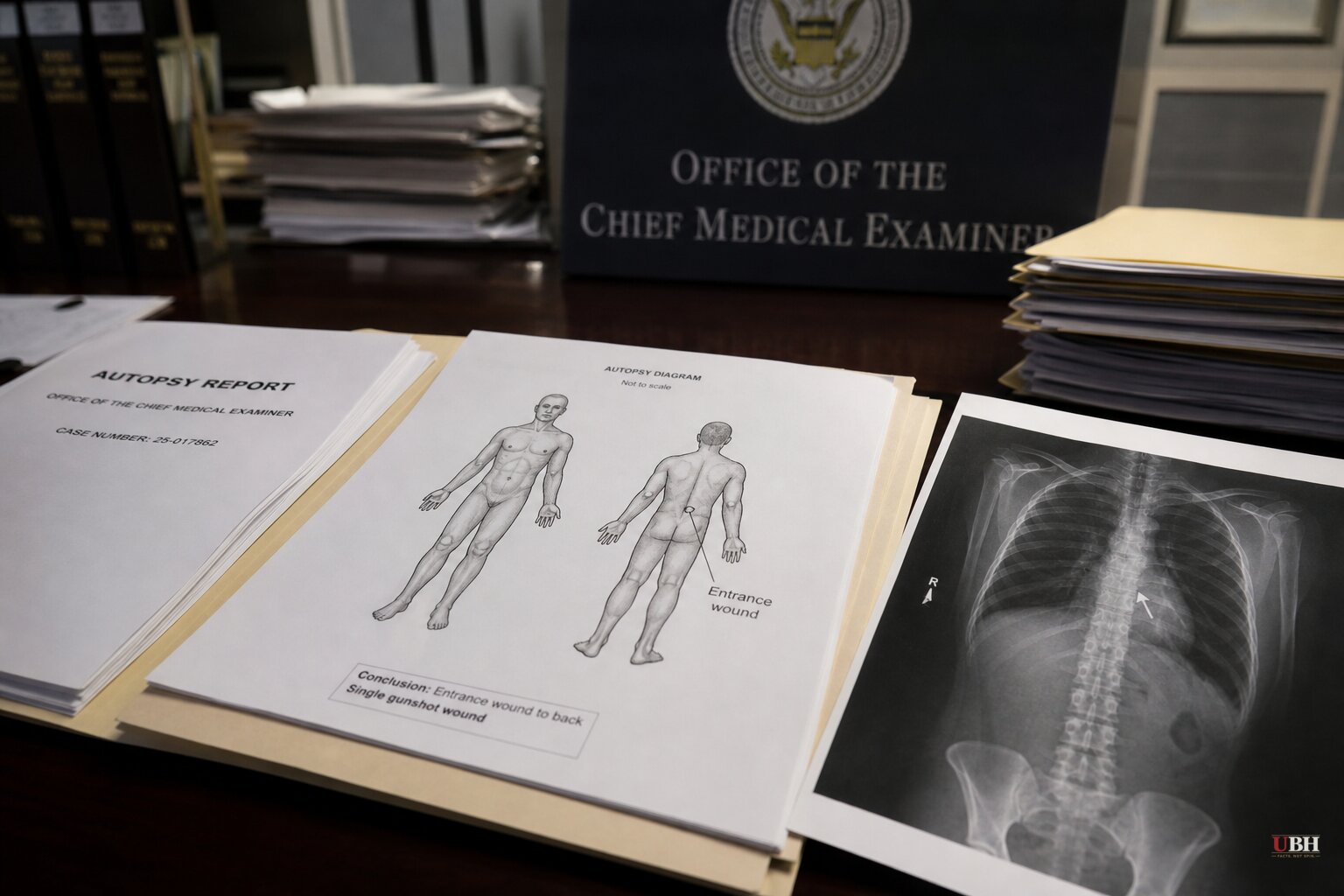
Tyrin Johnson, 20, died in the early hours after the Fourth of July in Memphis when Tennessee National Guard troops deployed as part of President Trump's federal anti-crime operation shot him. An autopsy report obtained by the family and shared with the Associated Press shows a single bullet entered the right side of his back and exited through his upper right chest.
That contradicts the official version of events.
A Tennessee National Guard report obtained by the AP said Johnson "rounded on" two troops and pointed a handgun at them before both opened fire. Police and Guard accounts have consistently said Johnson ran from authorities, then turned toward the troops while armed, prompting the shooting.
The entry wound doesn't fit that story. Dr. Steven White, a forensic pathologist not involved in the original autopsy but who reviewed the findings for the AP, said the bullet's slightly upward trajectory is consistent with Johnson running away from the shooter, not turning to face him. White also said the report showed no evidence the weapon was fired at extremely close range.
The medical examiner classified Johnson's death as a homicide, a term used in forensic pathology to describe a death caused by another person, not necessarily an assertion of criminal guilt.
An investigative narrative attached to the autopsy report, based on information from a Tennessee Bureau of Investigation agent, offers yet another version. It states Johnson reached toward his waistband, drew a firearm, and was shot after officers saw the weapon. That account doesn't clarify the direction Johnson was facing when hit.
Andre Wharton, an attorney representing Johnson's family, told the AP the mismatch between the physical evidence and the official narrative is hard to explain away. "I just see some kind of blatant inconsistency there, in terms of what law enforcement reports," Wharton said. "The versions don't seem to match."
Johnson's grandfather, Evaniel Johnson, has been blunt about what he wants. "Be transparent, you shot him in the back," he told the AP. "I just want to make sure somebody be responsible for what happened. Some accountability. They ain't never going to bring my grandson back."
What we don't know
No charges have been filed against either Guard member involved in the shooting. No independent investigation outcome has been announced. The Tennessee Bureau of Investigation's narrative and the National Guard's incident report both describe Johnson as armed and moving toward troops before he was shot, but neither account, as reported by the AP, squares with an entry wound in the back with an upward trajectory.
Johnson could have been shot while turning, mid-motion, in a way that could produce a back wound even if he had briefly faced the troops seconds earlier. Gunfights are fast and bodies move. That's a real possibility a jury or investigator would have to weigh, and it's the kind of scenario defense attorneys for the Guard members would likely raise. But it's not the scenario the initial reports described, which said he "rounded on" troops and pointed a weapon at them at the moment of the shooting.
Johnson did have a gun. Nobody disputes that. The question is what he was doing with it, and which way he was facing, in the instant he was shot.
The bigger picture
This is not an isolated incident. It's happening inside a National Guard deployment to Memphis that Trump ordered as part of a federal anti-crime push, one of several such deployments to U.S. cities this year. Any fatal shooting by federalized troops carries more scrutiny than a routine police shooting, because the chain of command runs through the Pentagon and the White House, not just a local police department.
The Tennessee Bureau of Investigation is the agency that would normally handle a use-of-force review involving Guard troops in the state. The AP's reporting doesn't indicate whether TBI's inquiry is still open or whether any findings will be made public. Family attorney Wharton's comments suggest the family intends to keep pressing for those answers.
The next concrete marker to watch: whether Tennessee prosecutors or the TBI release a formal determination on the shooting, and whether that determination addresses the specific contradiction between the entry wound and the claim that Johnson turned to face the troops before he was shot.
Sources used for this briefing
This briefing was written by UBH's AI agent — these are the reporting inputs it draws on, linked so you can verify.


