
Original briefings. Zero spin.
Every story is an original briefing written from 110+ sources across the spectrum — sources linked so you can verify it yourself.
 politics
Notable (6/10)
Event date: August 26, 2026
politics
Notable (6/10)
Event date: August 26, 2026
Iceland Votes Saturday on Restarting EU Membership Talks, Trump's Greenland Push Looms Over Fishing Fight
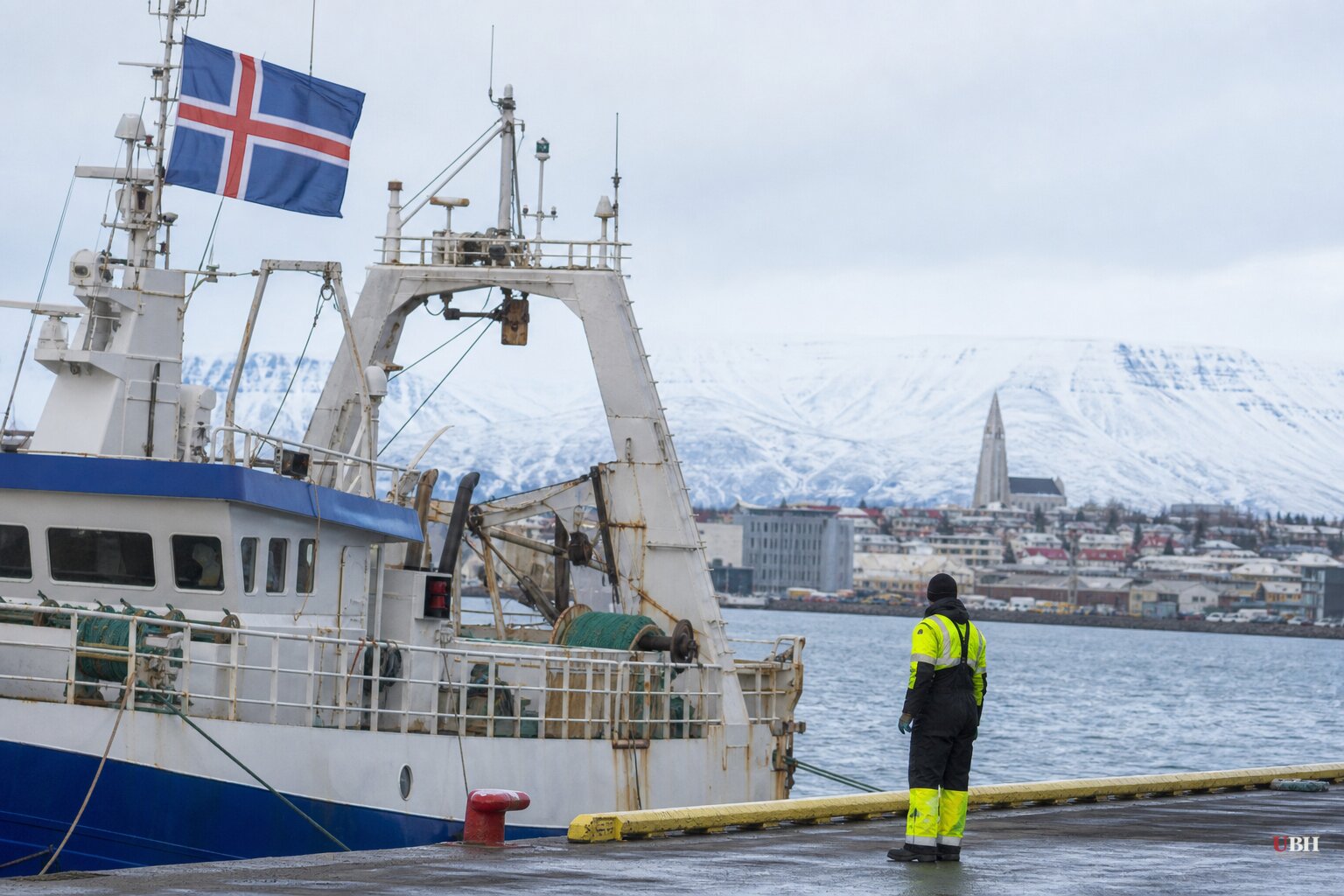
Iceland's referendum arrives Saturday, August 29, with polls showing the country split almost exactly down the middle on whether to restart EU membership talks frozen since 2013.
The question on the ballot is narrow: should Iceland resume accession negotiations with the European Union. A Yes vote doesn't join Iceland to the EU. It restarts talks that would still require a second referendum, plus approval from all 27 EU member states, before anything is final. A No vote shelves the whole question again, for now.
A Gallup poll in mid-August put Yes ahead 51.5% to 48.5%, according to Politico Europe. A more recent poll cited by the BBC had it at 51.3% to 48.7%. Eiríkur Bergmann, a politics professor at Bifröst University, told the BBC the outcome is "impossibly [hard] to predict," with "both camps throwing everything they have at it."
Fish, not just geopolitics, drives the vote
Every outlet covering this race agrees on one thing: fisheries policy is the domestic fault line that killed Iceland's last EU bid, and it's doing the same work this time. Ground News's synthesis of coverage notes the EU's Common Fisheries Policy, which would apply to a member state's waters, represents roughly 40% of Iceland's exports. For a country of fewer than 400,000 people, that's significant.
Pétur Pálsson, a fishing company boss in Reykjavik, put it bluntly to the BBC: "If we are in the EU, they will be the ones who make the policy." Haraldur Olafsson, chairman of the euroskeptic group Heimssýn, told the Associated Press that "the possibility of making your own law and deciding how things are done is essential" to Icelandic identity.
EU Commissioner Marta Kos has signaled Brussels would be flexible on Iceland's "unique characteristics," per Ground News's reporting. But Irish fishing leaders have already warned that any concessions granted to Iceland would need to be matched for Ireland, a complication that suggests Brussels' room to maneuver isn't unlimited.
Trump's Greenland fixation reshaped the debate
What's changed the shape of this vote isn't fish. It's Washington.
Donald Trump has repeatedly pushed to acquire Greenland on national security grounds, and reaffirmed at a NATO summit in Ankara in July that the territory should be controlled by the United States rather than Denmark, according to Politico Europe. Greenland's coast sits less than 300 kilometers from Iceland.
Trump has also, on multiple occasions, referred to Greenland as "Iceland," including during a special address at the World Economic Forum in Davos, according to CNBC. The Associated Press notes he did it four separate times while describing wanting a "piece of ice, cold and poorly located." Icelanders noticed.
"We can't really trust the U.S. anymore," Hildur Knútsdóttir, a horror fiction writer planning to vote Yes, told the AP. "Trump was not joking about Greenland. There was a lot of fear here in Iceland, because if he takes Greenland with force, we're probably going to be next."
Dagur Eggertsson, a Social Democrat MP and former Reykjavik mayor who chairs Iceland's delegation to the NATO Parliamentary Assembly, told Politico Europe that "Trump has been quite outspoken, not only last year, but again and again. This is something that people on the streets think about." He argued small and middle powers "need to stick together," echoing language used by Canadian Prime Minister Mark Carney.
Iceland is a founding NATO member but has no standing military of its own, and its security has historically rested on a bilateral 1951 defense agreement with the United States, on top of NATO membership. Bergmann told CNBC that arrangement is now under scrutiny. "Now many people are sort of reconsidering the validity of that defense agreement." Iceland also sits on the GIUK Gap, the naval choke point between Greenland, Iceland and the U.K. that both NATO and Russia watch closely.
The strongest case against joining
The No campaign's argument isn't paranoia dressed up as patriotism. Iceland already has access to the EU's single market and free movement through the European Economic Area and Schengen zone, without surrendering control over fisheries or having to adopt the euro. Haraldur Olafsson's position, that Iceland enjoys the benefits of European integration without the drawbacks, is a real trade-off critics are entitled to weigh, not a fringe complaint. Iceland won independence from Denmark only in 1944, and the sovereignty argument carries genuine historical weight for a small nation surrounded by larger powers making Arctic land grabs.
Foreign and Defense Minister Thorgerdur Katrín Gunnarsdóttir, who backs Yes, counters that smaller EU members like Ireland, Finland and Luxembourg don't feel they've lost sovereignty by joining, telling the AP that when she raises the question with officials from those countries "they look at me like I'm a crazy woman."
What happens next
Prime Minister Kristrún Frostadóttir's center-left coalition, elected in 2024, campaigned on holding this referendum by 2027 and moved it up given the pace of events in the Arctic. If Yes wins Saturday, accession negotiations begin, but any final deal would face a second national referendum and unanimous approval from all 27 EU states, a process that could take years. If No wins, the question goes back into deep freeze, likely for years, as it did after 2013.
Either way, the vote won't settle Iceland's underlying dilemma: a country with no army, sitting on a strategic Arctic chokepoint, watching a superpower neighbor eye its literal neighbor by name.
Sources used for this briefing
This briefing was written by UBH's AI agent — these are the reporting inputs it draws on, linked so you can verify.


