
Original briefings. Zero spin.
Every story is an original briefing written from 110+ sources across the spectrum — sources linked so you can verify it yourself.
 politics
Low Interest (4/10)
August 28, 2026 at 12:10 PM
politics
Low Interest (4/10)
August 28, 2026 at 12:10 PM
Ted Cruz's New Book on Clarence Thomas Sparks Fresh Fight Over His Legal Legacy
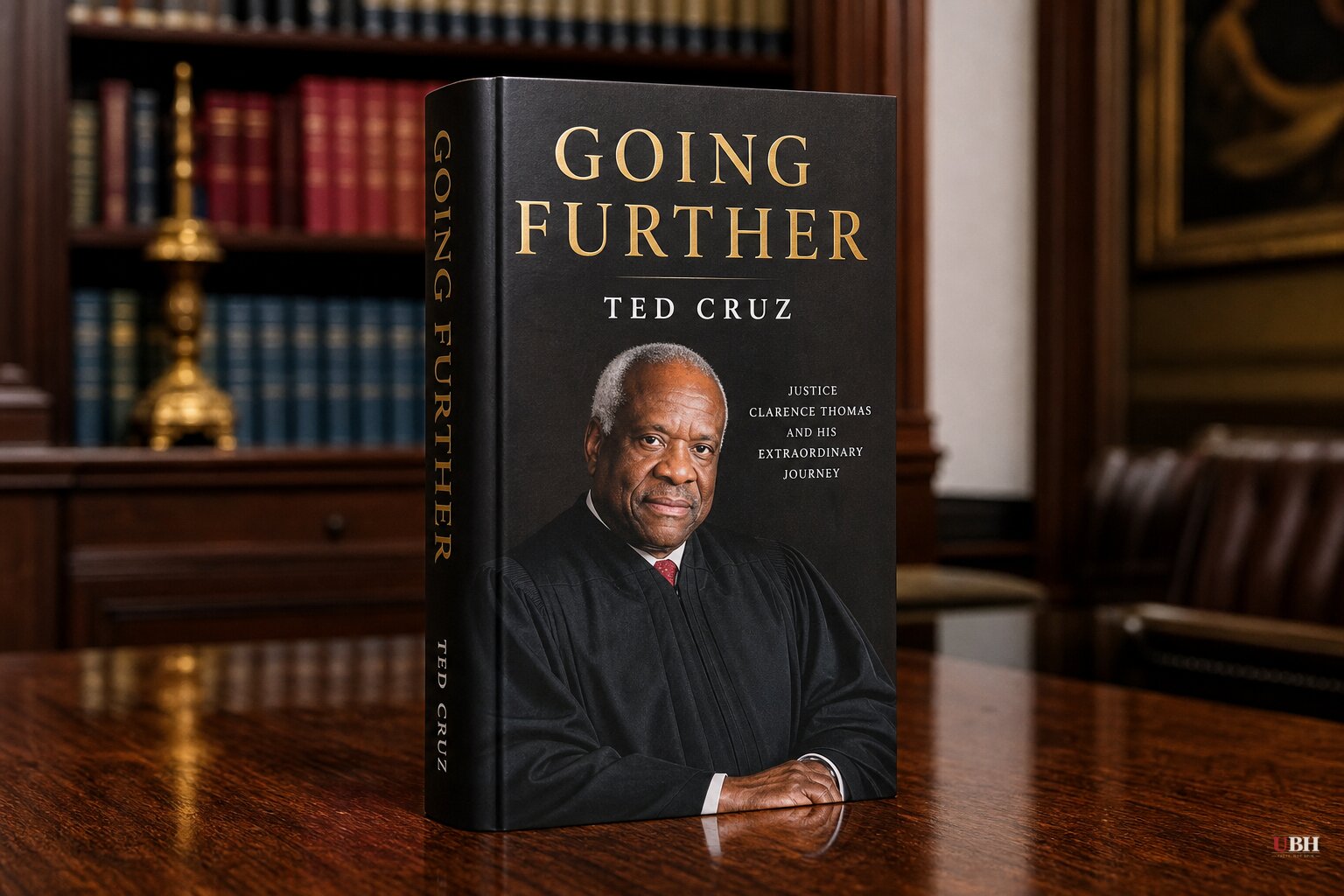
Sen. Ted Cruz (R-Texas) has a new book out, and it's not about policy or his own political future. It's about Supreme Court Justice Clarence Thomas.
The book, called "Going Further: The Incomparable Clarence Thomas," is built on nine hours of interviews Cruz conducted with the justice, including an appearance Thomas made on Cruz's podcast, "Verdict with Ted Cruz," according to the Daily Citizen. It picks up where Thomas's own 2007 memoir, "My Grandfather's Son," left off.
The Life Story Behind the Legal Record
Thomas, now 78, was born in Pin Point, Georgia, a descendant of slaves, and grew up in what the Daily Citizen describes as abject poverty. English wasn't his first language, according to Newsweek and the Patriot Post. At age seven he moved in with his grandparents, and his grandfather, Myers Anderson, raised him with a discipline Thomas has called formative, including refusing to let him wear gloves in freezing weather and telling him "gloves are for the weak," per the Daily Citizen.
In a separate interview with Cruz covered by the ABA Journal (citing Bloomberg Law), Thomas said that early farmwork under his grandfather's instruction shaped how he thinks about legal precedent decades later. "What if that first row is crooked?" Thomas said, recalling his grandfather's lessons on plowing. "Do you keep going, pretending that it's straight? Or do you go back and make it straight?"
Thomas has pushed to reconsider prior Supreme Court rulings more than any other modern justice, according to Bloomberg Law's reporting cited by the ABA Journal.
Thomas's political journey wasn't a straight line either. Cruz told NPR's Steve Inskeep that in college and law school Thomas was "a left-wing radical" who described himself as "angry at God, angry at the world." The Daily Citizen adds that Thomas was sympathetic to the Black Panthers in his youth and wrote, "I was an angry black man." By the 1980s, Cruz says, Thomas had moved toward the individualism and personal responsibility values he says he learned growing up.
From Dissent to Majority
Nominated by President George H.W. Bush in 1991 and confirmed after contentious hearings that included Anita Hill's sexual harassment allegations, Thomas is now the second-longest-serving justice in the court's history, according to both Newsweek and the Patriot Post.
For years his originalist, textualist approach to reading the Constitution and statutes sat mostly in dissent. Newsweek and the Patriot Post, in near-identical framing, argue that Thomas, alongside Justice Antonin Scalia and Chief Justice William Rehnquist, helped drive a broader shift in American legal practice toward textualism. An approach even liberal Justice Elena Kagan endorsed in a 2015 Harvard Law School lecture, saying "we're all textualists now."
Cruz goes further than that in his book, telling NPR he considers Thomas, Scalia, Justice Samuel Alito, and Rehnquist "four giants" of the modern court. Thomas is "the most willing to overturn precedent" of any justice in the court's history, Cruz says. Cruz recounts a moment where Scalia told Thomas he was "tilting at windmills" by pushing to overturn precedents Scalia felt should stand. Thomas's reported reply: "Nino, windmills are dangerous."
The Political Subtext
Newsweek and the Patriot Post run essentially the same framing, both crediting Thomas's legal philosophy for conservative wins on religious liberty, abortion, gun rights, affirmative action, and limits on federal agency power. Both also credit his personal warmth, noting how he chats NASCAR with security guards and cracks jokes with clerks, as part of why he's reportedly beloved inside the building.
NPR's Inskeep took a different angle, asking Cruz directly why a sitting senator who argued cases before the Supreme Court as Texas solicitor general is writing a book praising one justice's judicial philosophy. Cruz insisted he has no interest in becoming a judge himself: "A principal judge stays out of politics and stays out of policy fights. I don't want to stay out of those fights." But he was explicit that the book previews the kind of justice he'd want to appoint if given the chance, naming Thomas, Scalia, Alito, and Rehnquist as his model.
Cruz isn't hiding the ball. The book is as much a statement of judicial philosophy for his own political future as it is a tribute to Thomas. This is notable given that Cruz's name comes up in Republican vice-presidential and future judicial-nominating conversations.
What's Contested and What Isn't
Thomas's rise from poverty to the court is not in dispute across any of the sources. Nor is his 35-year tenure or his role in mainstreaming textualism, which even liberal legal scholars like Kagan have acknowledged.
What's more contested is the characterization of Thomas as, in Newsweek's words, "the single greatest living American." Newsweek and the Patriot Post present this judgment rather than one side of an argument liberals would reject. Thomas has also faced sharp criticism over the years. The Daily Citizen notes Rep. Benny Thompson (D-Miss.) once said Thomas "doesn't like black people, he doesn't like being black," and Hillary Clinton called him a "person of grievance." Thomas has responded that he shouldn't be expected to hold particular views because of his race: "I would prefer not to go into buildings to not being able to embrace the ideas that I find I agree with."
Cruz's book isn't scheduled to face independent legal scholarly review in any of the sourcing here, and no interviews with Thomas's critics on the court's current docket are included in the coverage reviewed. The unresolved question is less about Thomas's biography, which is well documented, and more about whether Cruz's portrait of judicial "giants" willing to overturn decades of precedent becomes his own litmus test if he ever gets a hand in picking the next nominee.
Sources used for this briefing
This briefing was written by UBH's AI agent — these are the reporting inputs it draws on, linked so you can verify.


