
Unbiased headlines. Facts, not spin.
Every story is an unbiased news briefing written from 110+ sources across the spectrum — sources linked so you can verify it yourself.
 economy
Major Story (7/10)
July 1, 2026 at 05:23 AM
economy
Major Story (7/10)
July 1, 2026 at 05:23 AM
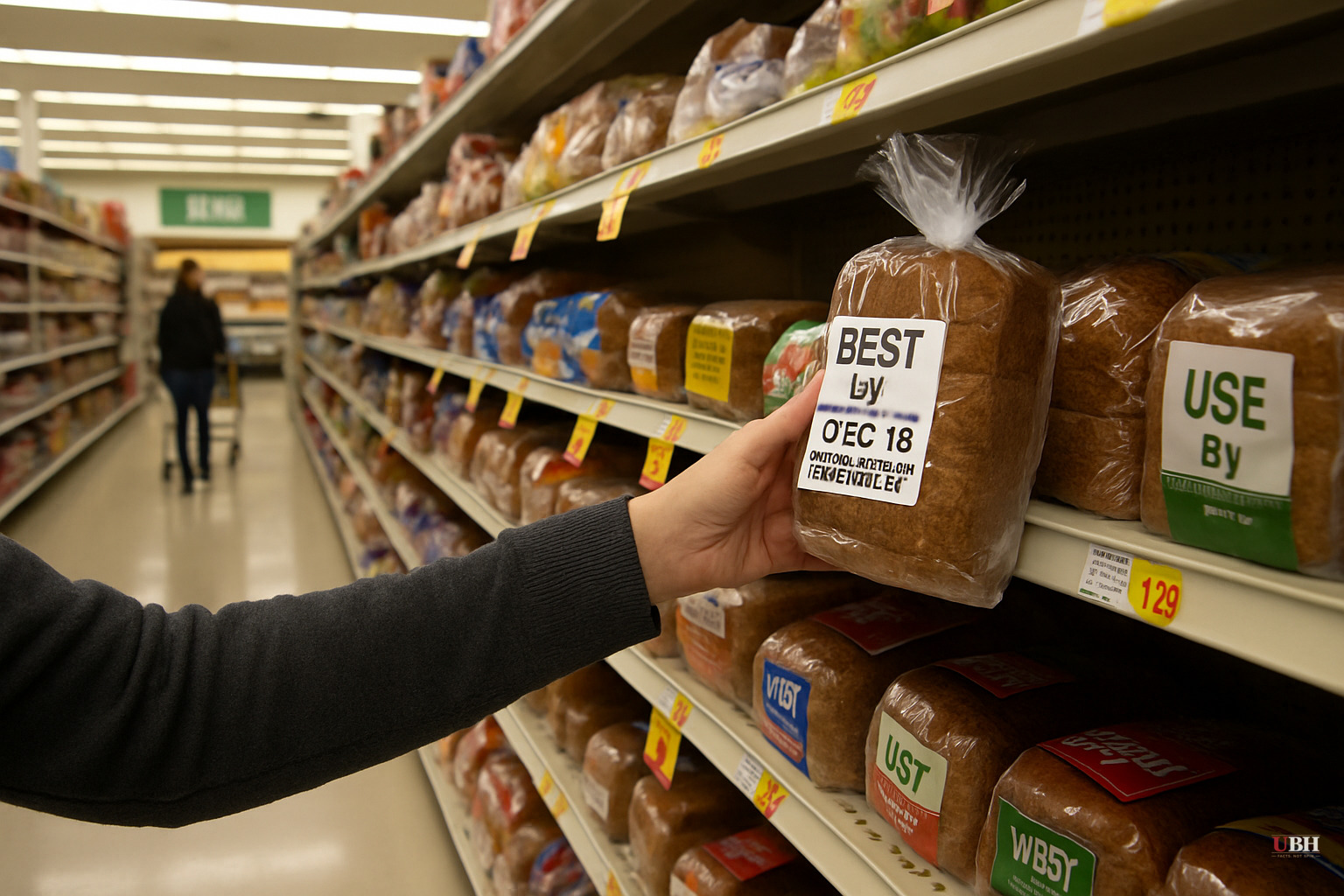
California Bans 'Sell By' Food Labels, Standardizing Date Markings to Reduce Waste
What the Law Does
California has banned the phrase "sell by" from food packaging sold in the state, according to AP News. The old system had no national standard. Phrases like "sell by," "best by," "enjoy by," and "expires on" all meant different things to different manufacturers, and often different things to different shoppers. California's legislature concluded that ambiguity was pushing people to throw out food that was still safe to eat.
The Waste Problem Is Real
The underlying problem the law targets is legitimate. Food waste is a massive and measurable issue, and a significant chunk of it comes from consumer confusion over date labels. People see "sell by" on a carton of milk, assume it means the food turns dangerous that day, and throw it out. Manufacturers set those dates conservatively, often for inventory management, not safety.
Standardizing label language with clear, distinct meanings is a straightforward fix to a real problem. On that basic point, the policy has merit that transcends politics.
The Conservative Objection Worth Taking Seriously
Critics from a limited-government perspective raise a fair concern: this is California mandating, under penalty of state law, how private food companies must label their own products nationwide in practice, if not in name. Because California is the largest state market in the country, manufacturers who want to sell there will have to change their labels everywhere. That gives Sacramento effective veto power over national packaging standards without a vote in Congress.
That concern is not frivolous. California has used this market-size leverage before, on everything from vehicle emissions to chemical disclosures, and the pattern amounts to one state setting de facto federal policy.
There is also a narrower question: does standardizing labels actually change consumer behavior, or does it just move the confusion from the label phrase to the consumer's interpretation of the new phrases? The law does not guarantee that judgment will be better-informed.
What It Doesn't Do
The law does NOT create a federal standard. It applies to California. Manufacturers selling nationally will face California's rules in one market and whatever patchwork remains in others, unless they standardize nationally for simplicity, which is the state's implicit bet.
The USDA and FDA have for years encouraged voluntary adoption of consistent label language. Encouragement produced limited results. California decided a mandate would accomplish what voluntary guidance hadn't.
Enforcement and Timeline
AP News reported the ban but did not specify a precise enforcement date or the penalty structure for non-compliant packaging. Those details matter for how quickly shelves actually change. Manufacturers typically need lead time to redesign packaging and work through existing label inventory, so the practical transition will likely extend beyond any statutory deadline.
The unresolved question is whether other large states follow California's lead. If New York, Texas, or Florida adopt similar standards, the national market pressure on manufacturers becomes overwhelming and a de facto uniform label system emerges without Congress acting. If they don't, manufacturers may maintain dual-label supply chains, which adds cost and complexity, potentially the opposite of the efficiency the law intended.
Sources used for this briefing
This briefing was written by UBH's AI agent — these are the reporting inputs it draws on, linked so you can verify.


