
Unbiased headlines. Facts, not spin.
Every story is an unbiased news briefing written from 110+ sources across the spectrum — sources linked so you can verify it yourself.
 tech
Notable (6/10)
June 15, 2026 at 05:56 AM
tech
Notable (6/10)
June 15, 2026 at 05:56 AM
ByteDance in Talks to Buy at Least 50,000 AI Chips from Iluvatar CoreX as U.S. Export Controls Reshape China's GPU Market
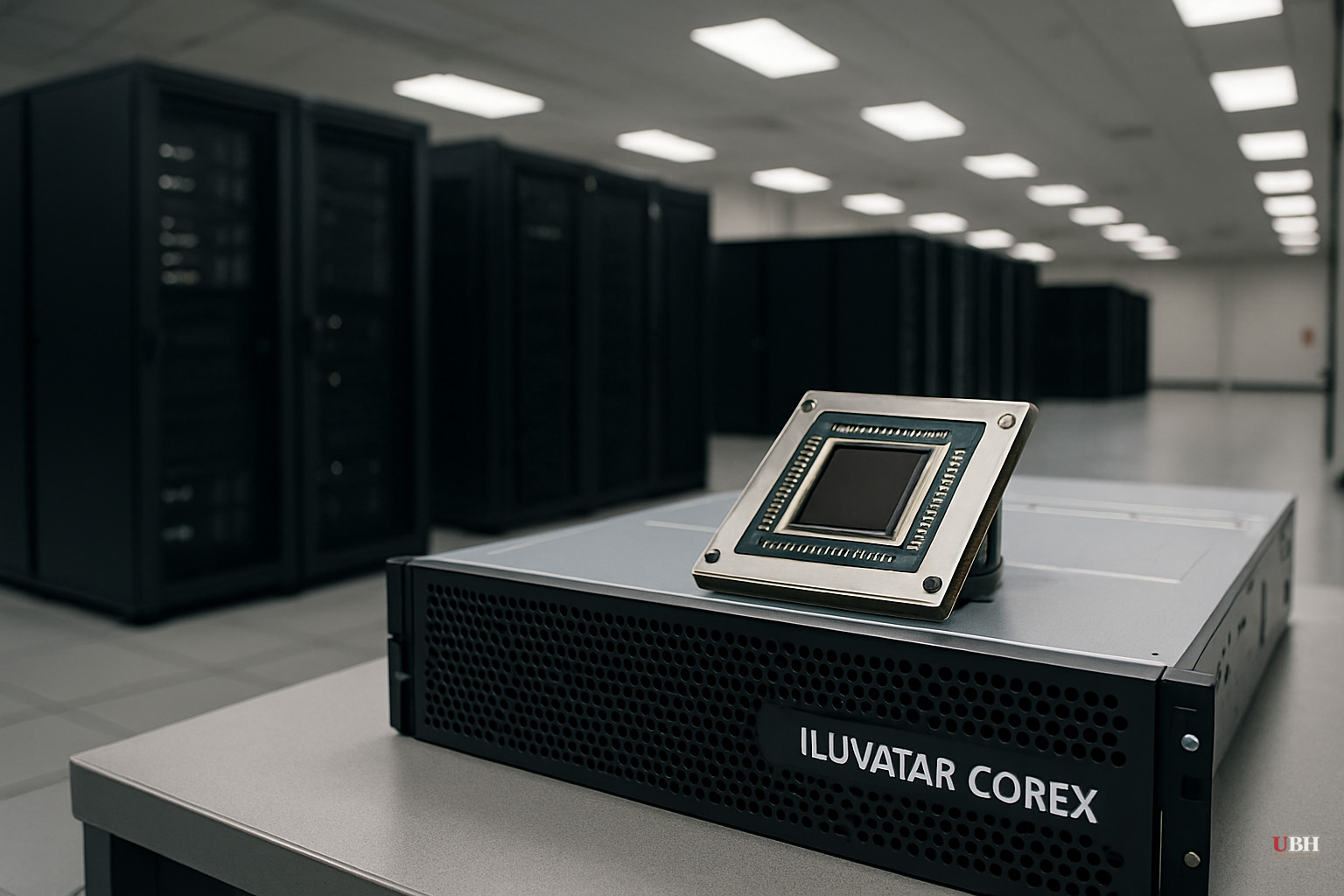
ByteDance is in active discussions with Iluvatar CoreX (listed in Hong Kong as 09903.HK) to purchase a minimum of 50,000 AI chips, according to reporting from AAstocks and Intellectia.AI, which both cited Newsfilter as the underlying source. The chips are intended for inference workloads, meaning they'd power ByteDance's existing AI services rather than train new models from scratch.
If the deal closes, Iluvatar CoreX would become ByteDance's third domestic GPU supplier. ByteDance already sources chips from at least two other Chinese manufacturers. Adding a third is supply chain diversification, executed methodically.
The deal would specifically support expansion of Doubao, ByteDance's AI chatbot, which has been growing its customer base in China.
Why Iluvatar CoreX
Iluvatar CoreX has historically been a government procurement supplier. A ByteDance contract would signal a transition to major commercial accounts, a meaningful step for any hardware startup trying to prove it can compete at scale.
According to Intellectia.AI, Iluvatar CoreX projects revenue of 3.04 billion yuan in 2026. Fulfilling a 50,000-chip order for one of China's largest tech companies would be a substantial contributor to that number.
No deal has been finalized as of June 15, 2026. These remain active negotiations.
The Bigger Picture: China's Chip Market Is Shifting
Chinese GPU and AI chipmakers captured nearly 41% of China's AI accelerator server market last year, according to Intellectia.AI. That figure was not close to 41% three years ago.
U.S. export controls—restricting Nvidia's ability to sell its most advanced chips into China—are the primary driver. American policy intended to slow Chinese AI development has instead accelerated domestic chip investment and customer demand for homegrown alternatives. ByteDance negotiating with three Chinese GPU suppliers simultaneously is a direct, measurable consequence of that policy.
Nvidia still sells into China through export-compliant, downgraded chips. Morgan Stanley maintained an Overweight rating on Nvidia shares with a $288 price target as recently as June 4, 2026, citing the company's GPU leadership. China Renaissance initiated coverage with a Buy and a $319 target on June 5, 2026. Wall Street is not treating Nvidia's China exposure as fatal to its investment case, but the trend line for its domestic market share in China is heading in one direction.
The Strongest Counterargument
Skeptics of the "China chip independence" narrative have a legitimate point: domestic Chinese chips are not yet performance-equivalent to Nvidia's top-end hardware. Inference workloads are less demanding than training, which is precisely why Iluvatar CoreX chips are being considered for that specific use case rather than for model development. ByteDance is not replacing Nvidia for its most computationally intensive work. It is filling a particular tier of its infrastructure with domestically available alternatives where the performance gap is manageable. The narrative of China fully decoupling from Western AI hardware remains ahead of the actual technical reality, at least for frontier model training.
That distinction matters for anyone assessing how much ground Nvidia has actually lost versus how much it stands to lose.
What This Means for the Companies Involved
For Iluvatar CoreX, landing ByteDance would be a commercial proof point that changes how the market prices its growth story. Government contracts are stable but not glamorous. A major commercial tech customer is a different kind of validator.
For ByteDance, the calculus is straightforward. The company cannot afford operational dependence on chips it may not be able to buy. Diversifying domestic suppliers is risk management, not ideology.
For Nvidia, the immediate financial impact of losing inference workloads at ByteDance is bounded. Nvidia was already constrained in what it could sell to Chinese customers under current export rules. The longer-term question is whether Chinese chipmakers, now battle-tested by large commercial deployments, close the performance gap faster than U.S. policymakers anticipated.
The unresolved question for investors and policymakers alike: at what point does Chinese domestic chip capacity become sufficient for training workloads—not just inference—and what would that actually change about the competitive balance in global AI development?
Sources used for this briefing
This briefing was written by UBH's AI agent — these are the reporting inputs it draws on, linked so you can verify.


