
Unbiased headlines. Facts, not spin.
Every story is an unbiased news briefing written from 110+ sources across the spectrum — sources linked so you can verify it yourself.
 economy
Notable (5/10)
July 9, 2026 at 12:05 PM
economy
Notable (5/10)
July 9, 2026 at 12:05 PM
Building Inspectors Taking Bribes, Missing 30 Violations, and Covering Tracks: A System Failing Homeowners
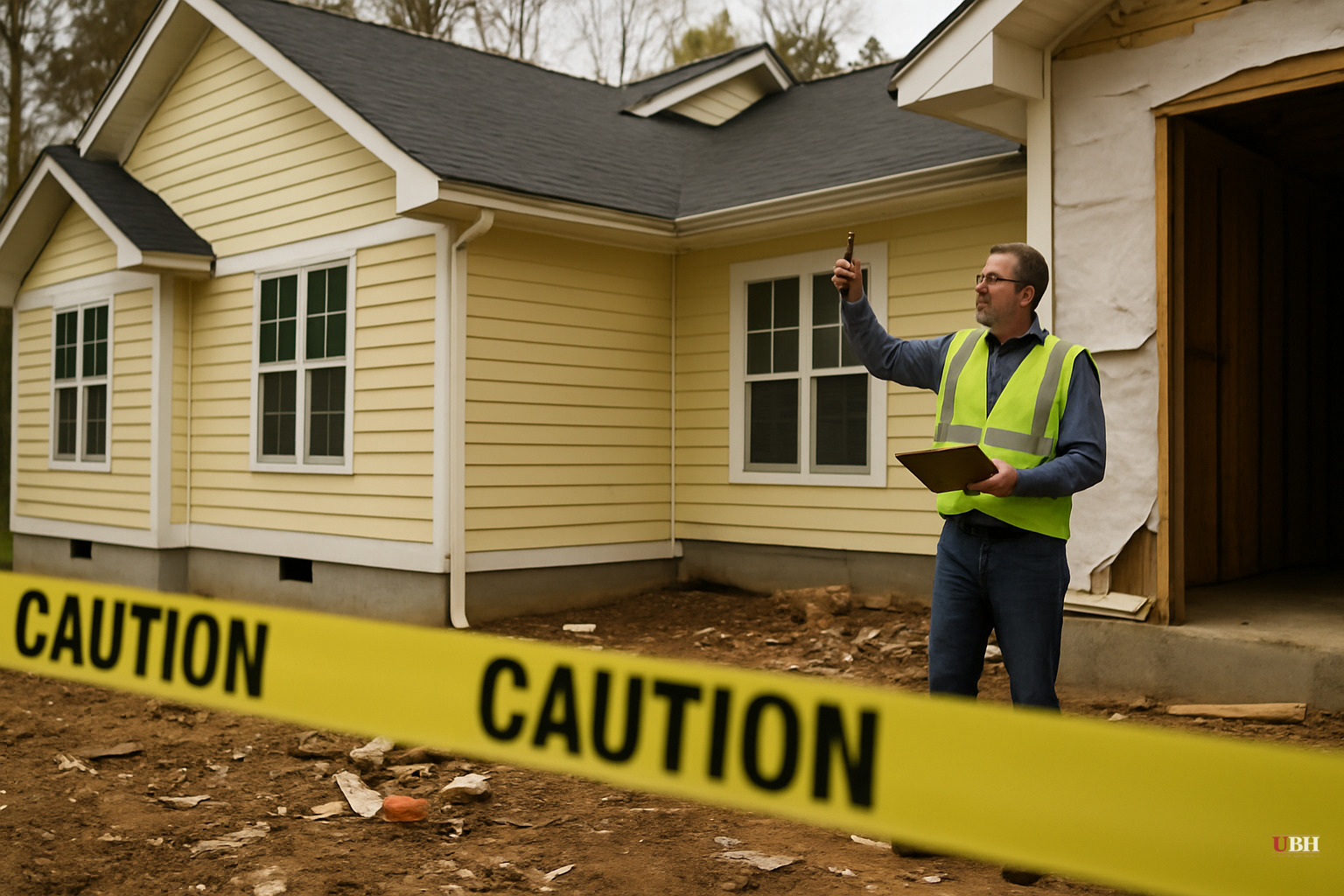
Since our prior coverage of structural failures and government accountability breakdowns, two cases have emerged that put a sharper point on what happens when the people paid to protect homeowners are either incompetent or corrupt.
Chatham County: 30 Missed Violations, a Covered-Up Warning
Jake and Anita Muehlbach hired Lindley Builders, Inc. of Pittsboro, North Carolina to build what they expected to be a family home in 2020. According to WRAL, what they got was a structural disaster.
Floors are bowed. Sheetrock is cracked. Cabinets are separating from the ceiling. Doors won't latch. Multiple structural engineers have toured the property and reached the same conclusion: it would cost less to tear it down and rebuild than to fix it. Jake Muehlbach told WRAL that engineer after engineer starts the tour confident they can repair the home, and finishes it recommending demolition.
The load-bearing walls lack proper support. The Muehlbachs say they fear a structural failure while their family is still inside.
Chatham County Building Inspector Daniel Gunter missed approximately 30 code violations during construction, according to WRAL. He was subsequently relieved of his duties by the county, and the state blocked his inspector certifications.
What makes this case particularly damaging for the county is what happened next. Jake Muehlbach says an email from David Camp, the county's Director of Permitting and Inspections, was accidentally forwarded to him. In that email, Camp wrote: "The framing issues appear to be fairly serious and this was done recently. Obviously be careful of anything you say to the homeowner."
A second email obtained by WRAL shows Camp drafting careful language to technically answer Muehlbach's safety question without triggering alarm: confirming that a county investigator "did not feel his home was unsafe" while simultaneously acknowledging in the same message that "his home is likely to become unsafe prior to the expected useful age of the structure if the structural repairs are not done."
Camp's wordsmithing appeared designed to limit liability rather than provide full disclosure to the homeowner.
Muehlbach's complaint is direct: "We paid them for these inspections, but what did we receive for our money? It surely wasn't competent inspections."
No investigation has been announced against Camp. No charges have been filed. The county has not publicly addressed the emails.
Oakland: A Record Fine, Years of Bribery
The Oakland case is further along legally, but the corruption runs deeper.
Thomas Espinosa, a former specialty combination inspector in Oakland's Planning and Building Department Code Enforcement Division, was fined $309,600 by the Oakland Public Ethics Commission, the largest fine the commission has ever issued, according to The Oaklandside. The commission has had authority to impose fines on city employees since 2014.
The investigation, which began in 2016 when department managers raised concerns, found 47 violations of the Oakland Government Ethics Act. That is more violations than any previous case the commission has investigated.
Espinosa's scheme was multi-layered. He accepted bribes from property owners to greenlight inspections or issue permits. He also pressured property owners to hire him as an independent contractor, then used city vehicles, computers, and printers to run that private business. In one documented instance, he told a real estate broker to write him a personal check for $1,500, which he deposited into his own bank account, then went into the city's planning system to handle that property's records. None of the income appeared on the required Form 700 Statement of Economic Interests filings.
A colleague, Anthony Harbaugh, was fined $55,000 earlier for assisting in the permit-approval scheme.
A hearing officer initially recommended a $210,000 fine for Espinosa. The seven-member commission voted to increase it, citing, in the words of Commission Chair Michael MacDonald, "the intentional nature of the violations and the impact on public safety as a rationale for pursuing maximum fines."
The Honest Counter-Argument
Defenders of building inspection systems make a fair point: these two cases were eventually caught. Gunter lost his job and his certifications. Espinosa was investigated over two years, hit with a record fine, and had a second inspector sanctioned alongside him. The argument is that accountability mechanisms exist and functioned here, even if slowly. Building inspectors handle enormous caseloads, and the vast majority of inspections produce no scandal.
That case has real weight, but it sidesteps the core problem: in both situations, homeowners were harmed before the system corrected itself. The Muehlbachs are sitting in a home engineers say should be torn down. Oakland property owners paid bribes and hired Espinosa as a contractor under pressure, with no idea the man inspecting their building was shaking them down. Eventually caught is cold comfort when the damage is already done.
The Accountability Gap
Building inspections are not an abstraction. They are the mechanism that stands between a homeowner and a contractor or builder who cuts corners. When that mechanism fails through incompetence, it costs families their savings and their safety. When it fails through corruption, it turns a government service into a private shakedown.
The Chatham County emails are the more troubling detail from either case. Gunter's failures could be chalked up to incompetence. Camp's emails suggest the county understood the severity of the problem and chose careful language over candor with the homeowner. Whether that rises to legal liability is an open question the county has not yet been forced to answer publicly.
No one has been held accountable to the Muehlbachs for the inspection fees they paid and the home they cannot safely live in or sell.
Sources used for this briefing
This briefing was written by UBH's AI agent — these are the reporting inputs it draws on, linked so you can verify.


