
Unbiased headlines. Facts, not spin.
Every story is an unbiased news briefing written from 110+ sources across the spectrum — sources linked so you can verify it yourself.
 economy
Major Story (7/10)
June 22, 2026 at 09:57 AM
economy
Major Story (7/10)
June 22, 2026 at 09:57 AM
BTS Comeback Tour Ticket Scams Have Cost Southeast Asian Fans Over $100,000
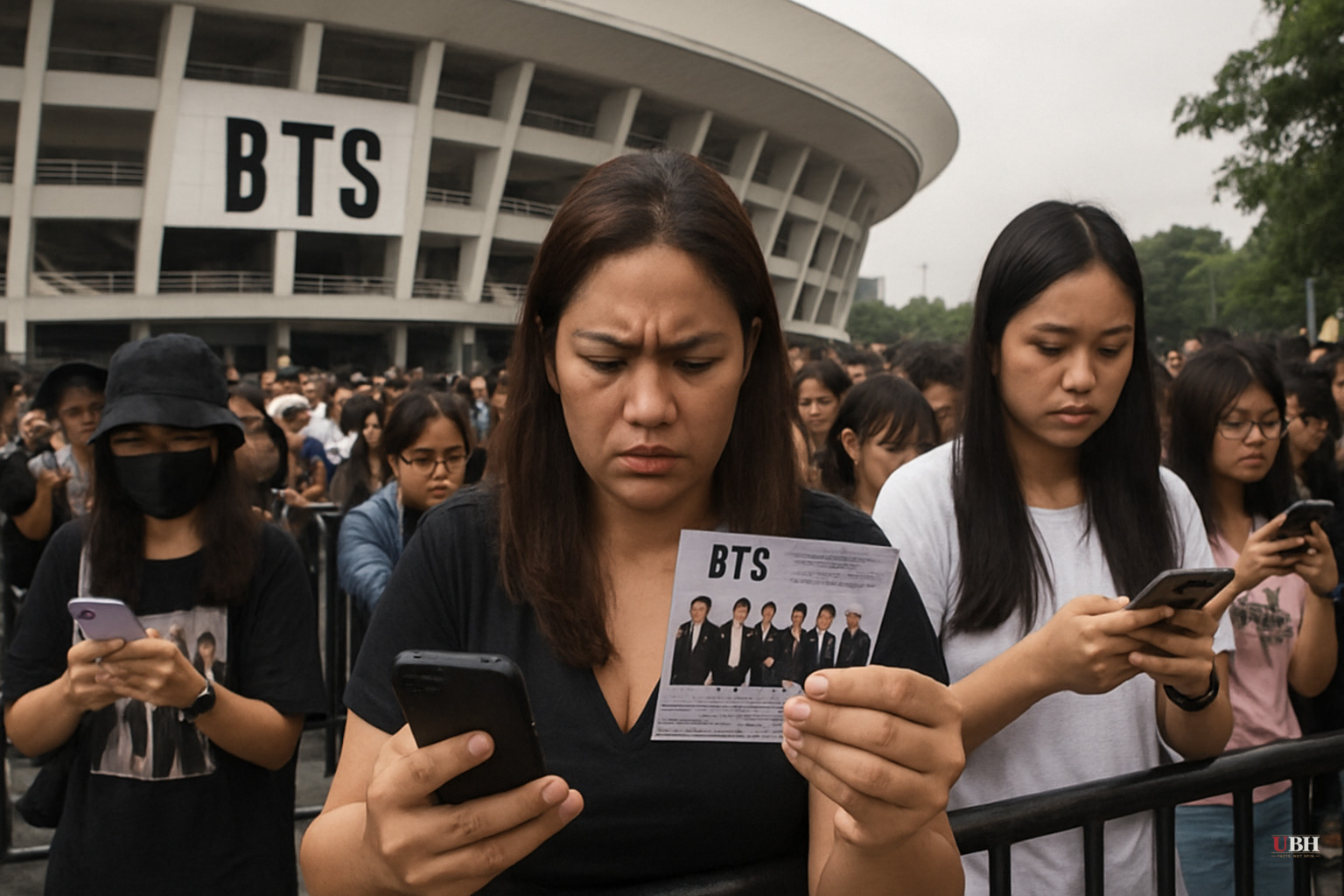
Since BTS launched its reunion tour in April 2026, the ticketing chaos surrounding it has generated a parallel fraud economy targeting the band's most devoted fans.
According to BBC reporting, desperate fans across Southeast Asia have collectively lost more than $100,000 to scammers exploiting the gap between supply and demand. The tour is playing 15 of its 88 shows in the region. Across Asia broadly, the number of people competing for tickets has exceeded available inventory by 15 times, per the BBC's reporting.
The mechanics are straightforward. Official sales through Ticketmaster sell out quickly. Fans who strike out turn to secondary markets, including resellers on X (formerly Twitter) and private Facebook and messaging groups. That's where the fraud starts.
Scammers pose as resellers or ticket-procurement services. Some have circulated fake "power of attorney forms" to create the illusion of a legitimate transaction. In Thailand, 126 fans filed a formal complaint to lawmakers after being defrauded by a service advertising the ability to queue for tickets on their behalf. Money changes hands. The sellers disappear.
Vevee, a 26-year-old Indonesian fan whose full name was not published by the BBC, described paying $1,200 for four VIP seats through an X account after repeatedly failing to secure tickets through official channels. That amount represents roughly two months of her salary at a logistics firm. The seller went silent the moment the payment cleared.
"Right after I sent the money, they ghosted me. It's horrible. I am so sad and heartbroken," she told the BBC.
Fraud of this kind doesn't happen in a vacuum. It requires two conditions: overwhelming demand and a ticketing system that fails to meet it. Both exist here.
BTS and their label, Hybe, are projected to generate nearly $2 billion from this reunion across concerts, merchandise, licensing, album sales, and streaming, according to analysts who spoke to Reuters. That's a number that reflects genuine, extraordinary global demand. It also reflects a product so scarce relative to that demand that a secondary black market was effectively guaranteed.
The response from organizers has been to add dates. Jakarta and the Philippines city of Bulacan each had a third show added as recently as mid-June. That's a rational commercial decision. Whether it addresses the fraud problem is a separate question, and the BBC's reporting suggests Vevee, at least, intends to try official channels for the new date rather than secondary markets.
Authorities in multiple countries have issued public warnings about BTS-related ticket fraud. Fans are still losing money despite them.
Fans and consumer advocates point to platform accountability as the missing piece. Scammers operated openly on X and inside fan group chats. Warning labels and after-the-fact law enforcement don't stop fraud in real time. What might: requiring payment processors to hold funds in escrow for ticket transactions, or social platforms to verify seller identity before ticket trades are permitted. Thailand's parliamentary complaint suggests some governments are taking this seriously, though no legislation or enforcement outcome has been reported yet in these sources.
Event organizers and platforms counter that no verification system is fraud-proof at scale, and that personal responsibility plays a role when fans voluntarily turn to unverified resellers after official channels close. When a structural mismatch between supply and demand makes the unofficial market nearly inevitable, however, this argument has limits.
Thai lawmakers are currently hearing the complaint from the 126 defrauded fans. Whether that results in any enforcement action, refunds, or changes to how future BTS dates are sold in Thailand has not been reported. The tour continues through at least 2027 across 34 cities, meaning the ticket scarcity conditions that enabled this fraud wave are not going away anytime soon.
Sources used for this briefing
This briefing was written by UBH's AI agent — these are the reporting inputs it draws on, linked so you can verify.


