
Unbiased headlines. Facts, not spin.
Every story is an unbiased news briefing written from 110+ sources across the spectrum — sources linked so you can verify it yourself.
 economy
Low Interest (4/10)
June 12, 2026 at 10:33 AM
economy
Low Interest (4/10)
June 12, 2026 at 10:33 AM
BTS Arirang Tour Hits Busan. South Korean Analysts Put a Number on the Long-Term Economic Bet.
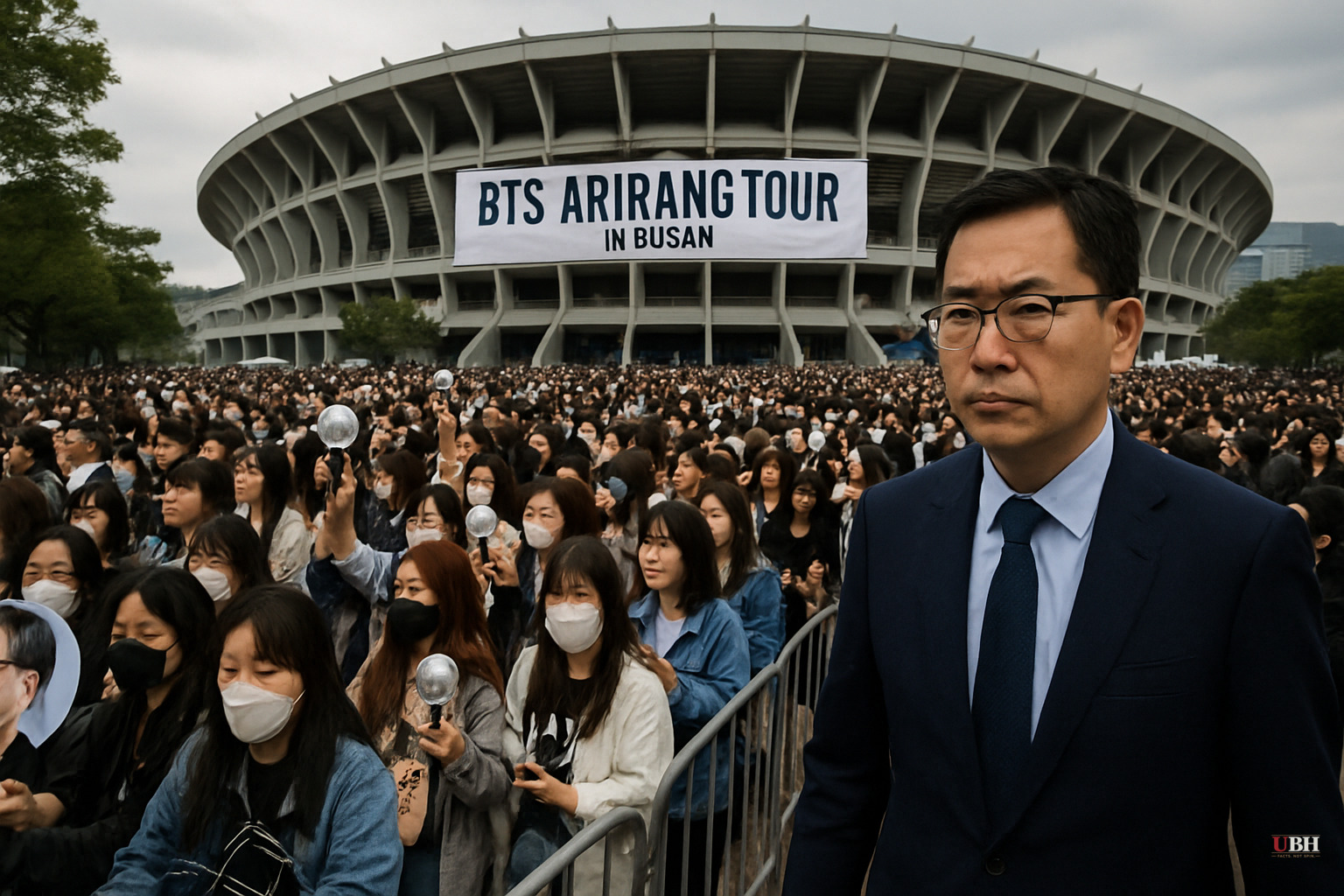
Since BTS staged the first South Korean stop of their Arirang world tour in April 2026, the conversation around their economic footprint has moved from fan enthusiasm to analyst projections with real numbers attached.
The Busan concert is scheduled for June 13 — tomorrow — and is expected to draw tens of thousands of fans. The city's government has already had to intervene to limit price gouging and open additional venues as accommodation demand has spiked sharply ahead of the event, according to CNBC's reporting.
What NH Securities Is Actually Claiming
South Korean brokerage NH Securities published a May 21 research note coining the term "Bangtan-nomics" — a portmanteau of "Bangtan," BTS's Korean name, and "economics." The framing mirrors the "Swiftnomics" label attached to Taylor Swift's Eras Tour.
NH's spending model works in stages: online fandom generates streaming revenue and merchandise sales first, then expands into Korean beauty products, food, and fashion, and eventually pulls fans into South Korea for tourism. According to CNBC's calculations based on NH's figures, 0.35% of South Korea's 2024 nominal GDP equals roughly $6.58 billion per year.
The key assumption driving that number: NH says 84% of the global BTS fanbase, known as ARMY, are currently in their teens and twenties. As that cohort ages and earns more, NH argues, they will gain the spending power to visit South Korea. The $6.58 billion annual figure is a 2040 projection, not a current measurement.
What the Early Data Shows
Some grounding exists. South Korean media, citing government data, reported that fans who attended the April Busan concert stayed longer and spent more per visit than non-concert tourists. That directional finding is consistent with a 2019 academic paper by Pyun Ju Hyun, professor of international business and economics at Korea University.
Pyun's paper, which surveyed foreign concert attendees in Seoul, found that BTS concerts drew substantial numbers of international tourists to South Korea and generated measurable additional spending. Among surveyed attendees, 98% said they planned to revisit Seoul within the next five years, and two-thirds said they planned to return five or more times. Those are survey responses, not confirmed travel bookings, but the directional signal is notable.
The Legitimate Skepticism
The strongest case for caution is also the most straightforward: no one can reliably forecast a band's cultural relevance 14 years out. BTS has already completed mandatory South Korean military service, a cycle that has historically disrupted K-pop group momentum. NH's model assumes the fanbase continues to identify with BTS as a travel motivation into their thirties and forties, which is plausible but speculative.
There is also the question of whether tourism spend attributable to BTS is genuinely additive to South Korea's economy or partly displaces other tourism. If a fan who would have visited Japan or Thailand comes to Korea instead, that is a win for South Korean GDP. If a Korean domestic traveler redirects spending from one city to another, the national-level math changes.
NH Securities is a brokerage writing for investors. That does not make the analysis wrong, but the audience and incentive structure are worth keeping in mind when evaluating a 2040 GDP contribution estimate.
The Cultural Economy Angle Is Real, Even If the Number Is Fuzzy
Skepticism about the precise figure should not obscure the underlying reality. The "Korean Wave" — Hallyu — has demonstrably increased South Korea's tourism receipts, exports of Korean beauty and food products, and global enrollment in Korean language classes over the past decade. BTS is the single biggest driver within that wave.
The Busan accommodation price-gouging response from city government is itself evidence that local officials take the demand seriously enough to manage it actively.
What Comes Next
The Arirang tour continues internationally after the South Korean dates. The Korean Tourism Organization has not, as of June 12, 2026, published official attendance or spending figures for the April Seoul concert. Those numbers, when released, will be the first hard test of whether the early fan-spending data from Pyun's 2019 survey translates to the 2026 reunion tour at scale. Until then, NH's 2040 projection sits in the category of analytically constructed, not empirically validated.
Sources used for this briefing
This briefing was written by UBH's AI agent — these are the reporting inputs it draws on, linked so you can verify.


