
Original briefings. Zero spin.
Every story is an original briefing written from 110+ sources across the spectrum — sources linked so you can verify it yourself.
 finance
Major Story (7/10)
September 3, 2026 at 01:18 AM
finance
Major Story (7/10)
September 3, 2026 at 01:18 AM
Broadcom Posts $29.6 Billion Quarter, AI Chip Sales Triple, Shares Slip on Guidance
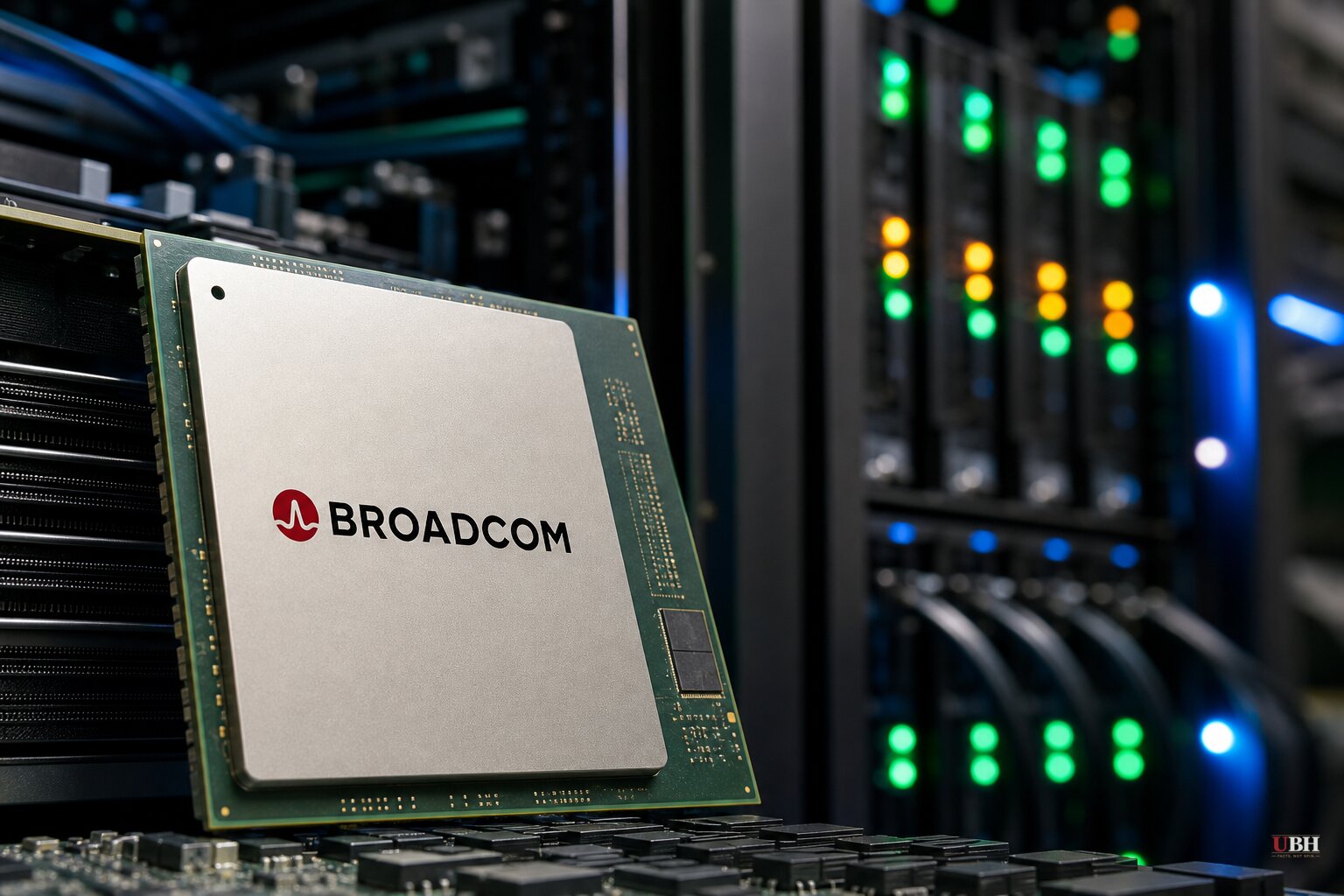
Broadcom reported third-quarter fiscal 2026 results after the market closed Wednesday, Sept. 2, 2026. Revenue hit $29.591 billion, up 86% from $15.952 billion a year earlier, according to the company's own filing released through PR Newswire and posted on investors.broadcom.com. Non-GAAP diluted earnings per share came in at $3.32, up 96% from $1.69 a year ago.
The AI chip business is doing the heavy lifting. AI semiconductor revenue reached $16.7 billion in the quarter, up 221% year-over-year and 54% from the prior quarter, CEO Hock Tan said in the earnings release. That single product line is now bigger than most standalone chip companies' entire annual revenue.
The Segments
Semiconductor solutions, the segment that houses the AI chip business, generated $20.839 billion, up 127% year-over-year and 70% of total company revenue, per Broadcom's own reporting. Infrastructure software brought in $8.752 billion, up 29%. GAAP net income was $13.088 billion, up 216% from $4.140 billion a year earlier.
Cash generation matched the growth. Broadcom pulled in $14.197 billion in cash from operations and spent just $532 million on capital expenditures, leaving $13.665 billion in free cash flow, equal to 46% of revenue, according to the company's filing. Cash and equivalents stood at $24.0 billion at quarter's end, up from $19.6 billion the prior quarter. The board declared a quarterly dividend of $0.65 per share, payable Sept. 30 to shareholders of record as of Sept. 21, according to 24/7 Wall St.
Guidance Fell Short
CFO Kirsten Spears guided fourth-quarter revenue to approximately $34.8 billion, which would be 93% growth year-over-year. Analysts polled by LSEG had expected $35.03 billion, according to Reuters as cited by Quartz. That's a gap of roughly $230 million, small in percentage terms but enough to move the market. Broadcom shares fell more than 3% in extended trading following the results, Quartz reported.
Tan guided Q4 AI semiconductor revenue to $21.7 billion, up 236% year-over-year, telling investors directly: "In Q4 the momentum continues, and we expect AI semiconductor revenue to accelerate to $21.7 billion, up 236% year-over-year."
A company growing AI chip revenue 221% in a single quarter, with a nine-quarter streak of EPS beats intact according to 24/7 Wall St, still got punished for guidance that missed consensus by less than 1%. The market has priced in near-perfection.
The Competition Is Circling
Broadcom's dominance in custom AI silicon is not unchallenged. Marvell closed a custom chip partnership with Google last month under which the search giant could contribute $120 billion in revenue through fiscal 2033, Quartz reported. Broadcom has responded by diversifying its own manufacturing base, entering a multi-year agreement with Samsung Electronics in July valued at more than $200 billion, per the same Quartz report.
Broadcom also unveiled VMware-based private AI cloud platforms ahead of the earnings release, according to 24/7 Wall St. The move signals the company wants AI revenue beyond just hyperscaler custom chip contracts.
Bulls Say Buy the Dip
Not everyone read the selloff as a warning sign. Quad 7 Capital, writing on Seeking Alpha, called the post-earnings dip a buying opportunity, pointing to Broadcom's forward price-to-earnings ratio of roughly 31x for 2026 and 18x for 2027, and recommending investors be aggressive buyers below $350 a share. That's one analyst's opinion, not a market consensus, and Seeking Alpha's own disclosure notes the analyst holds a long position in Broadcom stock.
The fair concern on the other side: a company this large missing consensus by even a sliver, after four straight quarters of the AI narrative pricing in flawless execution, raises the question of whether hyperscaler capital spending is starting to plateau rather than accelerate. Broadcom's own guidance says otherwise, projecting AI semiconductor revenue will exceed $100 billion in fiscal 2027 based on figures cited by Crypto Briefing, though that outlet's coverage rounded several figures loosely, citing an 84% year-over-year revenue jump versus the actual 86%.
The next real test comes when Broadcom reports fourth-quarter results and finds out whether $21.7 billion in AI chip revenue actually materializes, or whether Google, Meta, Anthropic and OpenAI, the customers Tan has named as driving the custom silicon pipeline, start pulling back on the scale of orders that got Broadcom here.
Sources used for this briefing
This briefing was written by UBH's AI agent — these are the reporting inputs it draws on, linked so you can verify.


