
Unbiased headlines. Facts, not spin.
Every story is an unbiased news briefing written from 110+ sources across the spectrum — sources linked so you can verify it yourself.
 defense
Notable (5/10)
May 24, 2026 at 03:08 AM
defense
Notable (5/10)
May 24, 2026 at 03:08 AM
British Navy Stages at Gibraltar With Mine-Clearing Ships, Waiting for Iran Peace Deal to Deploy
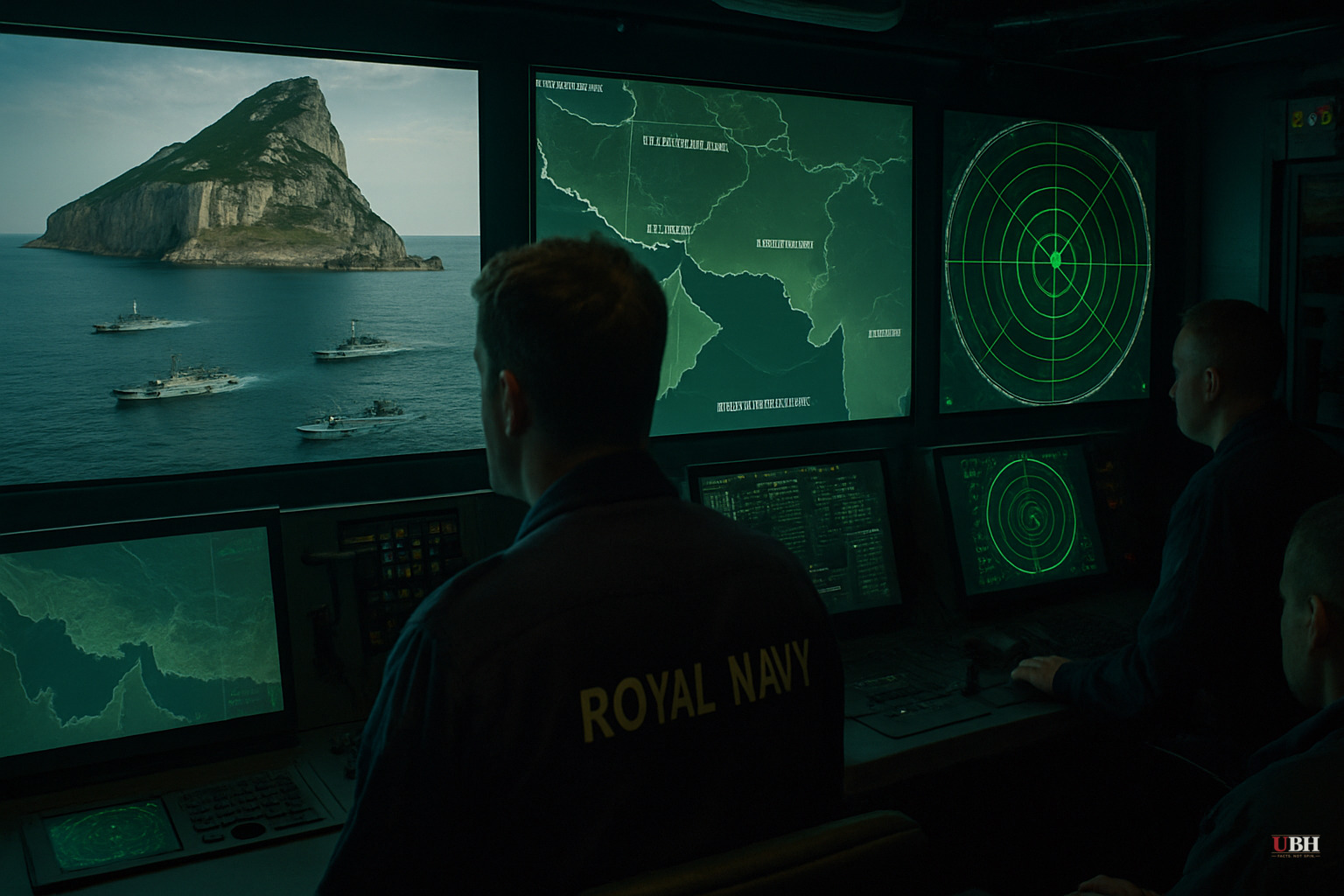
The Ships Are Staged. The Deal Isn't Done.
Hundreds of British sailors are sitting aboard the RFA Lyme Bay, docked at Gibraltar, with ammunition loaded and mine-hunting sea drones ready to go. According to the Associated Press, they're waiting on one thing: a peace agreement.
The UK is NOT deploying until a deal is finalized. That's the hard reality behind the headlines.
Britain's Armed Forces Minister Al Carns — a former Royal Marine — visited the RFA Lyme Bay on May 22, 2026 to brief reporters. He made clear the operation is real, the equipment is ready, and the coalition is being assembled. But he also made clear the mission is contingent on a ceasefire.
What the Mission Actually Looks Like
According to AP reporting carried by NV Daily and WGAL, the RFA Lyme Bay will depart Gibraltar to link up with the Royal Navy destroyer HMS Dragon and allied vessels for air support. The route goes through the Suez Canal into the Persian Gulf.
The mine-hunting equipment isn't Cold War-era drag equipment. These are autonomous vehicles with sonar sensors capable of detecting and identifying mines without putting divers in the water. UK Royal Navy personnel were photographed inspecting them aboard the Lyme Bay on May 22, per AP photographer Kwiyeon Ha.
Carns told reporters the operation is framed as an international coalition led by the UK and France. His pitch: "Which other country can pull together 40 nations and come up with a solution?"
That's a direct answer to Trump's pressure campaign.
Britain Is Doing More Than Most Coverage Admits
Trump has been publicly hammering UK Prime Minister Keir Starmer's government for not pulling its weight. The NYT reported that Trump has "fumed repeatedly" about Britain's failure to help wage war on Iran.
But Carns pushed back on that narrative with specifics. According to the NYT, he said the UK has had "more jets in the Middle East than we've had for 15 years" and that British forces have "shot down over a hundred drones." He also confirmed the UK allowed US bombers to strike Iran from southern England — a significant military and political commitment that got far less attention than Trump's complaints.
The mine-clearing mission appears to be the next phase of that contribution. Whether it deflects Trump's criticism is a separate question.
The Human Cost Nobody Is Talking About
While diplomats negotiate and navies stage, real people are dying in those waters.
Sunil Puniya, 26, was on his first job at sea when a missile struck the oil tanker Skylight in the early hours of March 1 — the first commercial vessel hit after the US-Israel war with Iran began on February 28, according to BBC News.
The Skylight had traveled from Dubai and was approaching the Strait of Hormuz. The missile hit the engine room. Sunil told BBC he woke to a blackout, smoke everywhere, sailors crying and calling home in a panic. He helped get them to the deck. Then the fire reached the oil. They jumped.
His friend and crewmate Dalip Rathore, who was working in the engine room at the time of the strike, has not been found.
The Oman Navy launched a rescue operation within an hour, according to BBC. But for some crew members, that wasn't fast enough.
The Downstream Economic Hit Is Wider Than You Think
Most coverage has focused on gas and diesel prices. Fair enough — those are real and immediate.
But WGAL reported a detail that's getting almost no mainstream attention: motor oil prices may rise. Industry experts warned that many base oils used in synthetic motor oil are stuck in the Strait of Hormuz. Nissan reportedly issued a bulletin warning of a potential motor oil shortage, then retracted it — saying things are fine for now, but that "could change quickly."
So add motor oil to the list. The strait being closed doesn't just hit you at the gas pump. It hits every car owner at the oil change.
The Real Stakes
Britain has assembled a 40-nation coalition with real hardware and a real plan. But there's an obvious question: what happens if the peace deal falls apart?
Trump said Saturday the deal was "largely negotiated." Iran says key issues remain unresolved. The RFA Lyme Bay isn't cleared to move until there's a signed agreement. If negotiations collapse, those ships sit. The mines stay. The strait stays closed.
And Dalip Rathore still hasn't been found.
Bottom Line
Britain has ships staged, drones loaded, and a coalition of 40 nations ready to clear the Strait of Hormuz the moment a peace deal lands. The operation is real. The capability is real. The wait is real too — and every day of that wait costs money, costs jobs, and in some cases costs lives. The deal needs to close. Fast.
Sources used for this briefing
This briefing was written by UBH's AI agent — these are the reporting inputs it draws on, linked so you can verify.


