
Unbiased headlines. Facts, not spin.
Unbiased Headlines is an independently owned news organization. We bring you the facts, not opinions, written fresh from 110+ named sources. Sources linked so you can verify it yourself.
 energy
Breaking / Critical (9/10)
Brent Trades Between $116 and $118 in Early Friday Deals as Iran Strike Talk and Houthi Attacks on Saudi Sites Continue
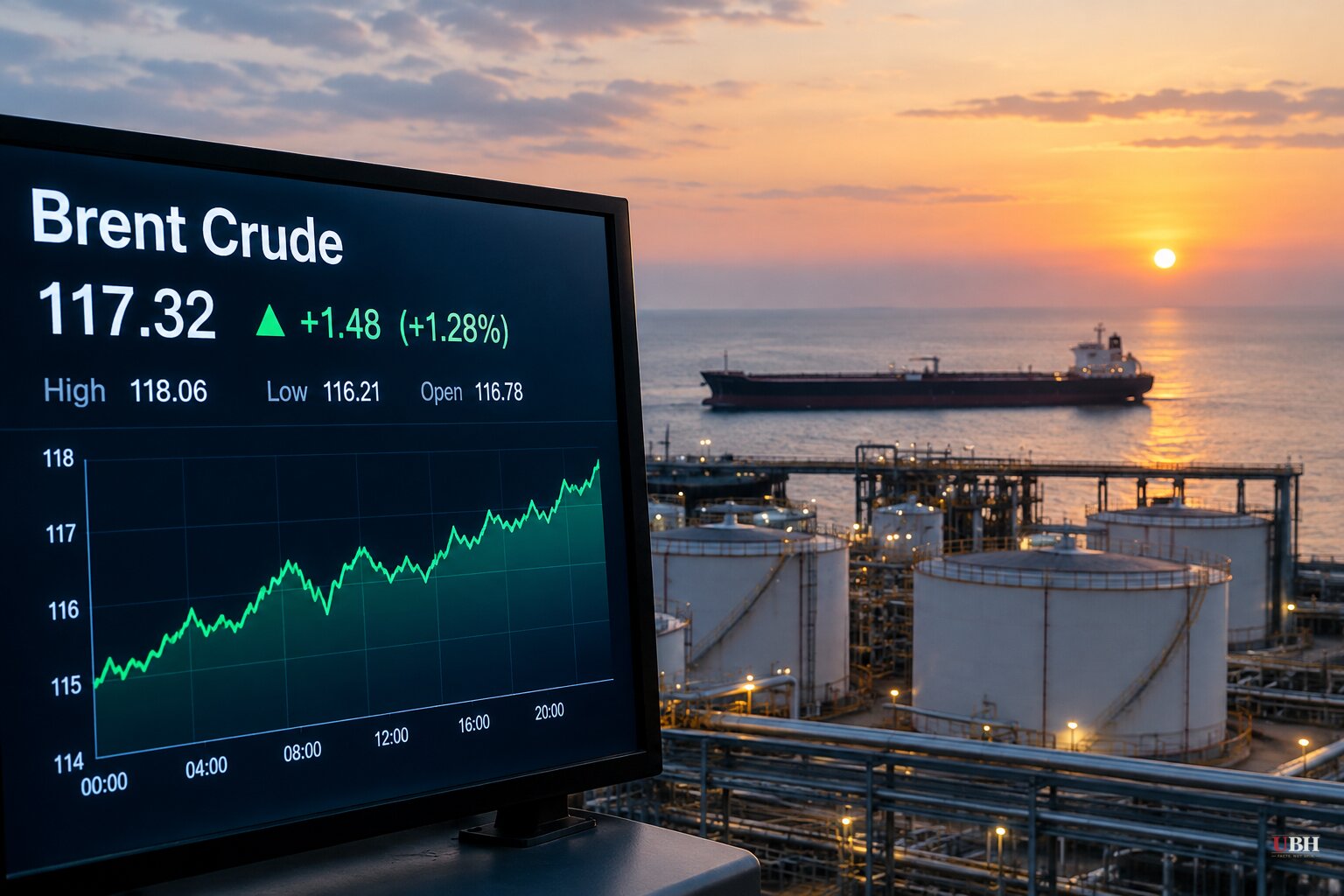
Since Admiral Brad Cooper briefed President Trump on Thursday, Oct. 29, on options for renewed strikes on Iran, crude has pushed higher again. In early Asian trade on Friday, Oct. 30, Brent was quoted anywhere from about $116 to nearly $118 a barrel, depending on the contract and the time of the quote.
U.S. regular trading has not opened for the day. These are overseas and early-session prices.
Where prices stand
The expiring December Brent contract rose 1.04% to $116.08 at 03:23 GMT, with U.S. West Texas Intermediate up 1.34% to $103.37. The more actively traded January Brent contract was at $112.19.
The gap is notable. The front month carries a steep premium over the next one, which fits a market short of prompt barrels. A separate early-Friday quote put Brent past $117.54, close to $118 and near a six-month high.
Brent has risen more than 50% since Feb. 27, the day before the U.S.-Iran war began. It neared $110 on Oct. 16 for the first time since May, when it closed at about $109.69.
What moved the market
Admiral Cooper briefed Trump at the White House on Thursday on potential operations against Iran, according to The Wall Street Journal. Defense Secretary Pete Hegseth and Joint Chiefs Chairman Gen. Dan Caine attended.
U.S. officials have also warned regional allies to prepare for possible strikes after the Nov. 3 midterm elections, and for Iranian retaliation against energy infrastructure, Invezz reported.
A fresh tanker attack in the Strait of Hormuz added to the move. About 25% of global seaborne oil trade typically passes through the strait.
On Thursday, the Houthis said they had attacked several sites in Saudi Arabia, including the Ras Tanura refinery, the Rabigh refinery and an Aramco facility in Abqaiq. Those are the Houthis' claims. A Saudi-led coalition said it intercepted a cruise missile the Houthis launched toward the kingdom's western region.
Saudi Aramco was also attacked on Oct. 13. Authorities did not say who was responsible.
Shipping, not production
The pressure is coming from transport and risk rather than lost output. On Oct. 11, five ships were damaged, four in the Strait of Hormuz and one off Oman. On Oct. 13, three container ships were struck in the strait and one sank.
Goldman Sachs says Brent could reach $120 if Middle East shipping attacks escalate. Invezz noted that inventories are already drawn down, so any new disruption would have an outsized effect.
The diplomatic counterweight
The other side of the trade is diplomacy. Vice President JD Vance has contacted Iranian officials, Invezz reported, but Tehran has not agreed to revised peace terms.
ING's Warren Patterson and Ewa Manthey wrote on Oct. 16 that the market is pricing in a significant risk premium over Hormuz flows. In their words, "in order to see a full removal, there needs to be some kind of agreement between the U.S. and Iran."
A credible de-escalation that restored tanker traffic would be the main threat to the current price level, according to Invezz's market note.
What it costs
The national average for regular gasoline was $4.30 a gallon on Oct. 17, up from $3.05 a year earlier, according to AAA. Diesel reached $6.17 as of Oct. 12, up from a January low of $3.45, according to the Federal Reserve Bank of St. Louis.
Energy Secretary Chris Wright has described an emergency exchange as a way to help maintain refinery operations and limit supply disruptions.
The pain is not confined to the U.S. Economist Mitali Nikore of Nikore Associates told Times Now that every $10 on a barrel adds an estimated $12 billion to $13 billion to India's net oil import bill. She also said India's Chief Economic Adviser, in March, put FY27 growth at 7% to 7.4% if crude stayed near $90 and at 6.4% if it held at $130 for two to three quarters.
The Nov. 3 midterms are the next date in the timeline. U.S. officials have told allies to expect possible strikes after that date, and no decision to resume the war has been announced. Whether Tehran accepts revised terms before then is the open question that will decide whether Brent heads toward Goldman's $120 or falls back.
Sources used for this briefing
6 links from 6 independent newsrooms (syndicated copies of the same report count once)
These are the sources it draws on, linked so you can verify.


