
Unbiased headlines. Facts, not spin.
Unbiased Headlines is an independently owned news organization. We bring you the facts, not opinions, written fresh from 110+ named sources. Sources linked so you can verify it yourself.
 energy
Major Story (7/10)
Event date: October 23, 2026 ·
Finland Grants Posiva Operating License for World's First Permanent Spent-Fuel Repository
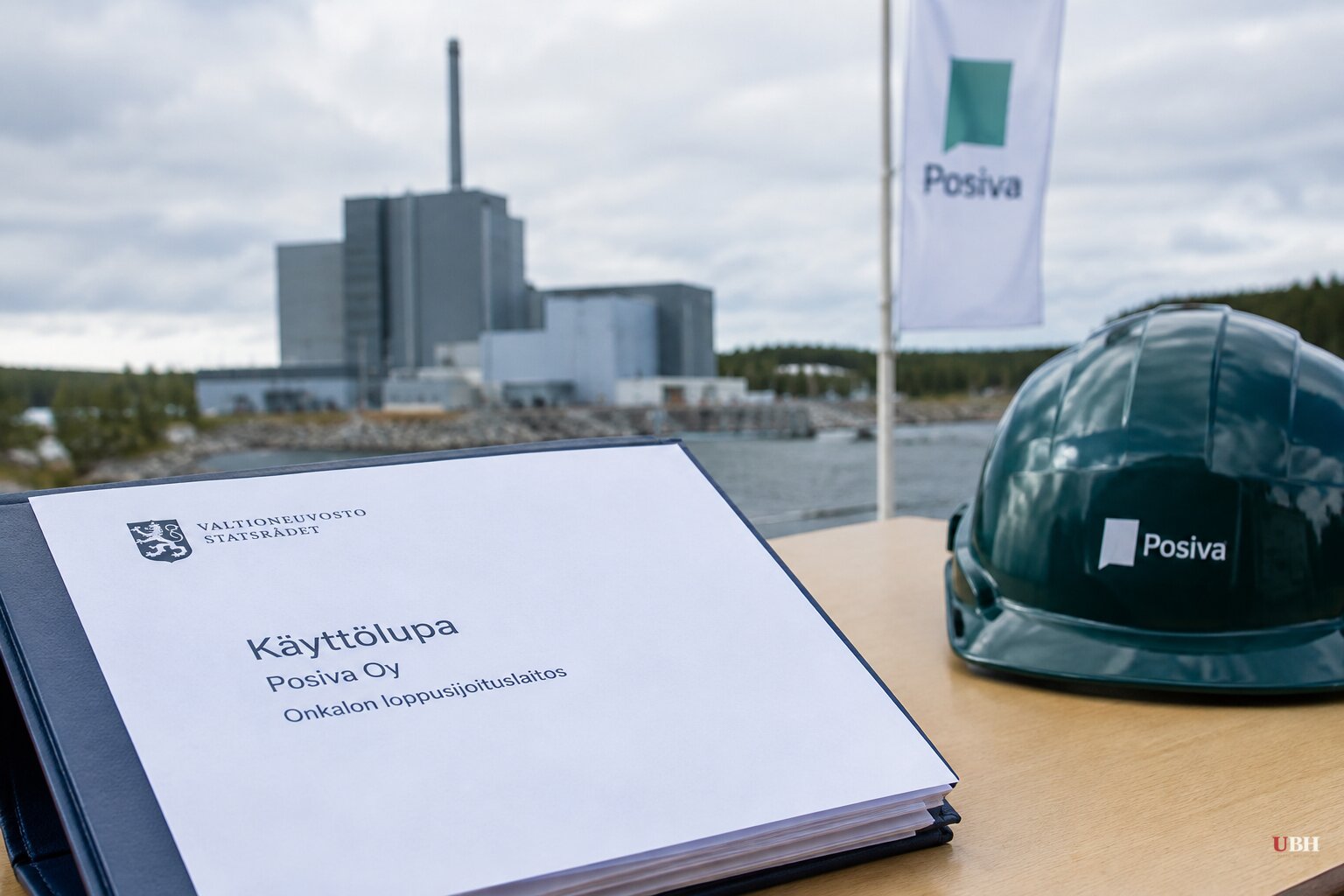
A week ago, on Oct. 22, the Finnish government gave Posiva the operating license for its encapsulation plant and final disposal facility at Olkiluoto, in the municipality of Eurajoki. Posiva calls it the first operating license anywhere in the world for the final disposal of spent nuclear fuel.
The license does not mean burial starts tomorrow. Posiva still has to finish commissioning tests, and STUK, Finland's Radiation and Nuclear Safety Authority, must verify them and approve in a separate decision. "No detailed schedule is given at this point," the company said.
What the license allows
The license runs until the end of 2070. It caps the repository at 6,500 metric tons of uranium, equal to roughly 3,300 canisters, and limits disposal to 60 canisters a year. Posiva applied on Dec. 30, 2021.
The underground part is called Onkalo, Finnish for "cave." Excavation began in 2004. It sits more than 400 meters (about 1,300 feet) down in crystalline bedrock about 1.9 billion years old.
Posiva is owned by Finland's two nuclear operators, TVO with 60% and Fortum with 40%. The finished site is to be backfilled and sealed in the 2120s, then handed to the state for permanent management.
Satakunnan Sanomat reports the license covers fuel from Olkiluoto 1 and 2 and Loviisa 1 and 2, but not the newer Olkiluoto 3. Covering that reactor would require an extension.
How the fuel gets locked away
The design stacks barriers. Spent fuel goes into copper canisters with an iron insert. Each canister is lowered into a hole drilled in the bedrock and packed in swellable bentonite clay, which absorbs moisture and blocks movement. The tunnels are then backfilled and plugged with steel-reinforced concrete.
STUK gave its favorable safety assessment on Aug. 4. Jaakko Leino, a department head at the regulator, said the safety of final disposal "does not rest on a single structure or material." The approval carries conditions, including a first periodic safety assessment within ten years.
The American Nuclear Society's Nuclear Newswire reported in August that STUK assessed long-term safety over "at least 100,000 years and as long as 1 million years."
Finland's argument
Posiva CEO Ilkka Poikolainen called it "a great and historic day for both Posiva and Finland." He added that "this solution has not been built because it was easy. It was built despite not being easy."
Climate and Environment Minister Sari Multala credited "more than 40 years of systematic efforts." Posiva communications manager Pasi Tuohimaa said the repository is "the missing point for sustainable use of nuclear energy."
That is the company's pitch. The proof comes when canisters actually go underground and STUK confirms the commissioning tests passed.
The American contrast
The United States runs the world's largest fleet of commercial nuclear reactors. A Washington Post opinion piece titled "Finland's nuclear waste repository puts U.S. to shame" notes that investors are putting billions into reviving the industry amid a bipartisan shift toward nuclear power. It says one political headache remains unresolved: where to put the waste.
OilPrice.com reports that temporary spent-fuel storage in the U.S. is growing by about 2,000 metric tons a year, at a cost approaching $10 billion. Whatever the exact figure, the principle is simple. Taxpayers keep paying to babysit material that has no permanent home.
Finland took 22 years from the start of construction to a license, and more than four decades from the start of the program. Government projects in Washington rarely beat that pace, and the nuclear waste file has gone unresolved for generations.
Sweden is next in line. Its nuclear waste company began building a repository at Forsmark on Jan. 15, 2025, aiming to start disposal in the 2030s. Company head Stefan Engdahl called that day "a historic day for the Swedish nuclear waste programme."
What comes next
The open question is timing. Posiva has to complete its tests and win STUK's separate go-ahead before the first canister is lowered. Neither Posiva nor the Finnish government has said when that will happen.
Sources used for this briefing
6 links from 5 independent newsrooms (syndicated copies of the same report count once)
These are the sources it draws on, linked so you can verify.


