
Unbiased headlines. Facts, not spin.
Unbiased Headlines is an independently owned news organization. We bring you the facts, not opinions, written fresh from 110+ named sources. Sources linked so you can verify it yourself.
 energy
Notable (6/10)
Finnish Police Open Criminal Investigation Into Google Subsidiary Over 815 Acres Cleared for Data Center
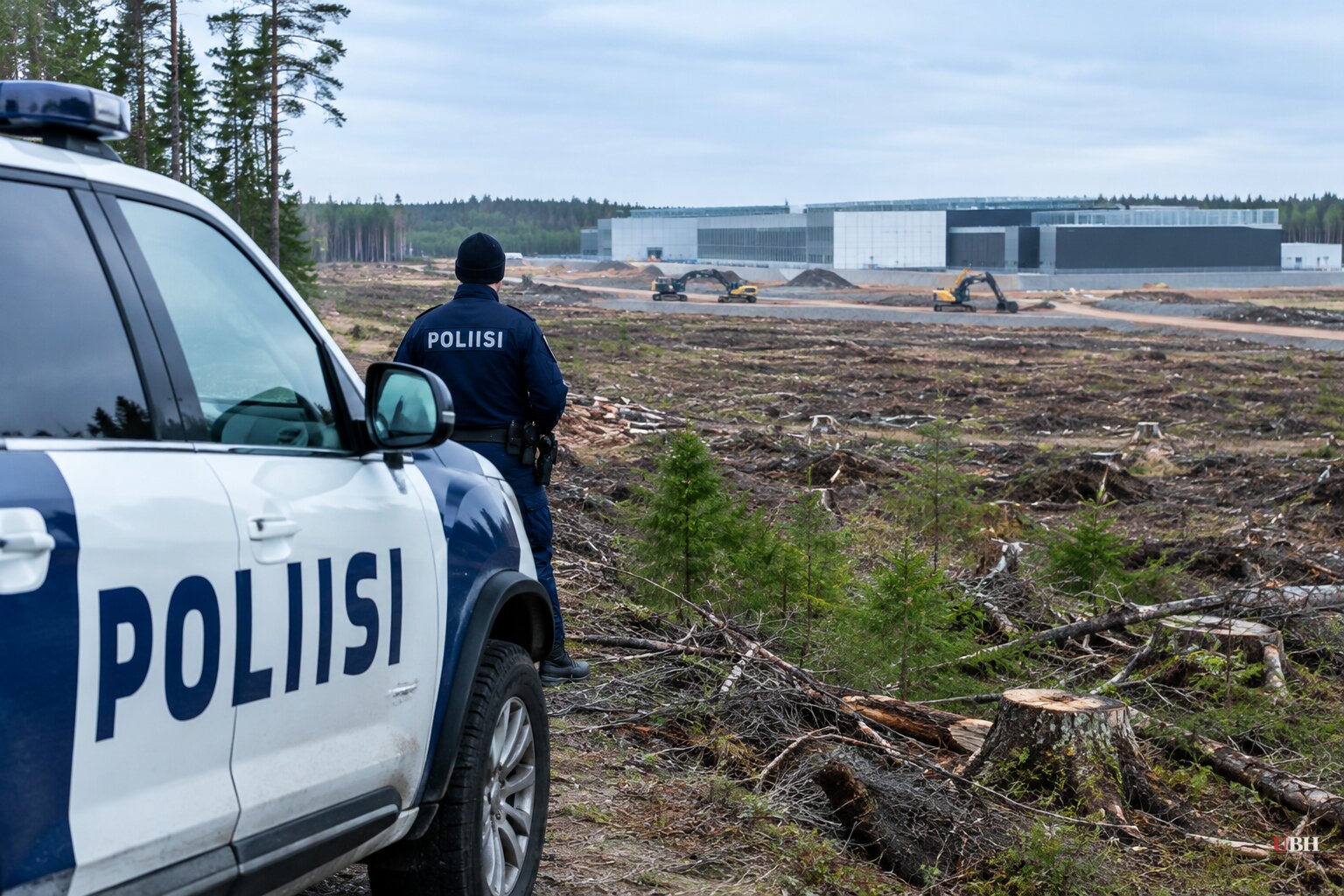
Three weeks after Finland's environmental regulator ordered Google to stop work at two planned data center sites, police have opened a criminal investigation. They announced it Thursday, Oct. 29.
The target is Tuike Finland, a Google subsidiary. Authorities say it cleared and drained about 330 hectares (815 acres) of forest near the northern town of Muhos before the environmental impact assessments required under Finnish law were finished.
"Based on preliminary information, there have been ambiguities and shortcomings in the drainage and water management at the construction site," Finnish police said in a statement.
Detective Superintendent Kari Pakanen said investigators are examining "whether the company's operations have breached the Water Act and resulted in environmental damage." A guilty finding could lead to a corporate fine. Pakanen declined to say whether any individuals could become targets. No charges have been filed.
What Google says
A Google spokesperson said the company will cooperate and is "actively responding to enquiries" from the Finnish Supervisory Agency and other authorities. The company also said it will keep focusing on compliance at its sites.
Google's Finland country manager, Antti Järvinen, has already apologized for the clearing. He has maintained that the company acted on "the best understanding we had of the legislation at the time."
Google has not said which part of the law it misread.
The order to stop
The Supervisory Agency, which oversees environmental permits and assessments, ordered Google to halt "preparatory measures altering the environment" at Muhos and at Otanmäki, about 100 km to the south-east. Campaigners estimate 250,000 trees were felled at Muhos and 150,000 at Otanmäki, roughly 400,000 in total.
Those tree counts come from environmental groups. The police case so far concerns the Muhos site and its drainage and water management.
A national political fight
The site is part of a roughly $15 billion (€13 billion) AI infrastructure plan that Google announced last month and called its largest investment in Europe. Prime Minister Petteri Orpo said at the time that attracting investment was a "top priority" and that the deal would "deliver lasting benefits."
Public reaction has turned sharply critical. More than 93,000 people have signed a petition demanding tougher data center regulation and compensation for environmental damage. The issue could play into parliamentary elections due in April.
Green MP Oras Tynkkynen told Al Jazeera there is "just no excuse." He said a company valued as the third-largest in the world "can afford to hire the best legal experts to help you navigate the local legal requirements."
Jussi Kangasharju, a computer science professor at the University of Helsinki, questions the payoff. "Really, for Finland, there are no benefits," he said.
The government's position is the opposite. Orpo's office has framed the investment as a long-term gain for the country.
The core issue is simple. Finland wrote the rule that assessments come before bulldozers, and a trillion-dollar company either missed it or ignored it. A small Finnish firm clearing 815 acres without sign-off would not get an apology and a statement about cooperation. It would get the same police investigation, and the same standard should apply here.
Google's other big bet, in a storm's path
Google has another $15 billion data center project in India. It is a gigawatt-scale hub in Visakhapatnam, Andhra Pradesh, built with AdaniConneX and Nxtra by Airtel across three campuses. Groundbreaking took place April 28, and commissioning is targeted for July 2028.
Cyclone Arnab struck that coast Wednesday, Oct. 28. State authorities say it killed three people, damaged homes and infrastructure, and inundated roughly 200,000 acres of cropland. The storm weakened as it moved inland, and heavy rainfall was the biggest threat there.
No source has reported damage to the Google sites. Full damage estimates are expected to take days or weeks. Climate experts say the storm shows how extreme weather threatens infrastructure on a coastline where data centers are in early construction. K.J. Ramesh, a former director general of the Indian Meteorological Department, said unusually warm Bay of Bengal waters helped fuel the cyclone.
The community-benefit pitch
In the U.S., developers are making a different argument. Compass Datacenters CEO Chris Crosby, in a Fox News Digital interview, said communities should demand local investment from builders. At his Red Oak, Texas, campus, Compass donated $15 million for an animal shelter and partnered on a $12.6 million technical training facility. He also described a water-free cooling system.
Next up in Finland is the investigation itself. Police have not set a timeline, and Google's work at Muhos and Otanmäki remains suspended. Meanwhile, Finnish authorities are reviewing applications for 145 more data centers at various stages of planning.
Sources used for this briefing
8 links from 8 independent newsrooms (syndicated copies of the same report count once)
These are the sources it draws on, linked so you can verify.


