
Unbiased headlines. Facts, not spin.
Unbiased Headlines is an independently owned news organization. We bring you the facts, not opinions, written fresh from 110+ named sources. Sources linked so you can verify it yourself.
 energy
Major Story (7/10)
Event date: October 20, 2026 ·
Senate Sets Nov. 9 Vote on Bipartisan Permitting and Transmission Bill as Utilities and Green Groups Resist
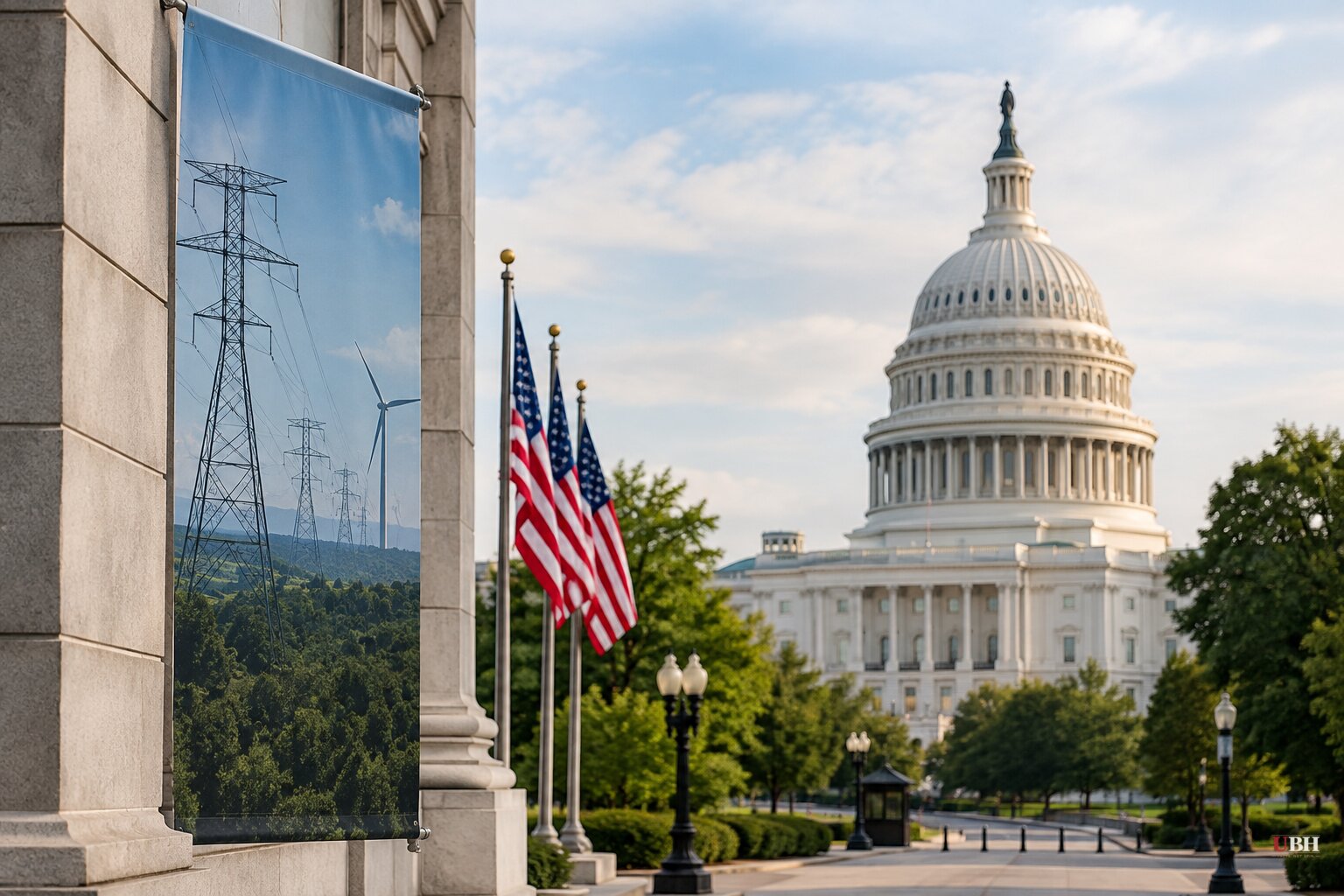
The Senate is scheduled to hold a cloture vote on Nov. 9 on the motion to proceed to the Bipartisan American Affordability and Jobs Act, known as BAAJA, according to the Bipartisan Policy Center.
Four senators wrote the bill and introduced it Sept. 30: Republicans Shelley Moore Capito and Mike Lee, and Democrats Martin Heinrich and Sheldon Whitehouse. The Institute for Progress calls it the most comprehensive permitting bill yet. A Columbia University Center on Global Energy Policy white paper, published Oct. 27, describes it as "fundamentally a speed-and-certainty bill." The paper says it changes how quickly infrastructure gets approved and built, not what gets built.
What the bill does
BAAJA covers a lot of ground. It clarifies the scope of the National Environmental Policy Act and limits litigation. It restricts agencies' ability to pull permits already granted. It also changes Clean Water Act, Endangered Species Act, historic preservation, hydropower, geothermal and mining rules.
One provision targets a gap left by the 2023 Fiscal Responsibility Act. That law set a one-year deadline for environmental assessments and a two-year deadline for environmental impact statements. It set no deadline for categorical exclusions, the fast lane for projects agencies expect to have little environmental effect. BAAJA would impose a one-year deadline on those decisions for certain energy and infrastructure projects.
The Pacific Legal Foundation looked at 133 geothermal exploration projects, 88 of them approved through categorical exclusions. It found 18 percent of those exclusions took more than 200 days, and 8 percent took more than a year. The group found virtually no relationship between delay and project size.
The bill also includes a data center provision. The Institute for Progress says it makes data centers pay for every cost they create, so ratepayers are not stuck with the bill.
The transmission fight
The transmission section is the most contested. It would end the federal right of first refusal that lets incumbent utilities claim new regional lines automatically. It would also require FERC to issue a rule making each planning region file a consolidated interconnection and regional transmission planning process.
FERC could require public utilities to make cost-effective grid upgrades. It could penalize those that miss FERC's timeline, including by cutting their return on equity. Costs would be allocated to the customers who benefit.
The bill would also expand FERC's backstop siting authority. Today FERC can permit a line a state has rejected, or hasn't decided on within a year, only inside a DOE-designated national interest corridor. BAAJA would drop the corridor requirement for lines of 230 kilovolts or more.
Rep. Josh Harder, D-Calif., told Utility Dive the cost-sharing provisions are "by far probably the most important part of this bill." He said FERC has seen "essentially no new interregional transmission built in a long, long time." He added: "I think it's going to make some folks uncomfortable, but it's absolutely necessary."
Oklahoma Gas & Electric is pushing back. The Energy and Policy Institute obtained a lobbying document the utility is using with congressional offices. It asks for "substantial revisions" to the transmission sections and calls the matters at issue "traditionally reserved to the states." OG&E did not respond to the institute's request for comment.
American Electric Power and Berkshire Hathaway Energy have voiced support. Most other large utilities have taken no public position, and the Edison Electric Institute says it is "reviewing" the transmission provisions. Punchbowl News has reported that utilities are gearing up for a last round of lobbying against the transmission reforms.
The Energy and Policy Institute points to the economics. A 2025 paper by Catherine Hausman found that better grid integration would have cut net revenues for two Entergy subsidiaries by a combined $850 million in 2022 alone. A new long-distance line can profit one utility while undercutting another's power plants.
Green groups hold out
The Natural Resources Defense Council and the Sierra Club have not endorsed the bill. Both have praised the transmission provisions. Both object to the "project certainty" language, which aims to stop presidents from targeting specific energy sectors, and to sections limiting how states and courts can block projects. They argue those provisions give the oil and gas industry too much.
"While NRDC is encouraged by the transmission provisions, other elements of the bill are deeply flawed," the group wrote. It said it will seek improvements and take a position before the floor vote.
Climate activist Bill McKibben, whose group Third Act has worked to block fossil fuel projects, wrote to his Substack subscribers that the goal is to drive fossil energy "down to zero." Building "lots of both," he wrote, means "we haven't gotten anywhere."
Centrist and pro-growth groups disagree. Third Way and the Searchlight Institute back the bill. They argue that easier building of solar, wind, batteries and transmission is the fastest politically viable route to decarbonization, even with concessions to oil and gas.
Gaps and open questions
Even supporters want changes. Chirag Lala of the Center for Public Enterprise says the bill "gets transmission right" but lacks a "forcing function" if regions fail to submit a planning process. It offers only a six-month extension, after which the outcome is unclear.
His colleague Advait Arun wants more funding for federal transmission finance programs, such as DOE's $2.5 billion revolving Transmission Facilitation Program. "One worry I have here is that there is no money in any of these proposals," he said.
The grid pressure is real. DOE said in an Oct. 12 emergency order for the mid-Atlantic that modeling shows annual outage hours could rise from single digits to more than 800 per year. On Oct. 13 the department announced about $581 million to support 84 transmission and distribution projects with the Tennessee Valley Authority.
An aide to the four sponsoring senators says they are weighing technical changes. Any agreed changes would go into a managers amendment before the final floor vote. Latitude Media reports that the odds such marginal edits would sway green groups may be small.
The open questions are whether NRDC and the Sierra Club take a position before Nov. 9, and whether the transmission lobbying changes the text first.
Sources used for this briefing
7 links from 7 independent newsrooms (syndicated copies of the same report count once)
These are the sources it draws on, linked so you can verify.


