
Unbiased headlines. Facts, not spin.
Every story is an unbiased news briefing written from 110+ sources across the spectrum — sources linked so you can verify it yourself.
 economy
Notable (6/10)
June 12, 2026 at 09:29 PM
economy
Notable (6/10)
June 12, 2026 at 09:29 PM
Brazilian Refineries Sold Over 100 Million Liters of Naphtha to a Firm Tied to the PCC, Now a U.S.-Designated Terrorist Organization
The Transaction
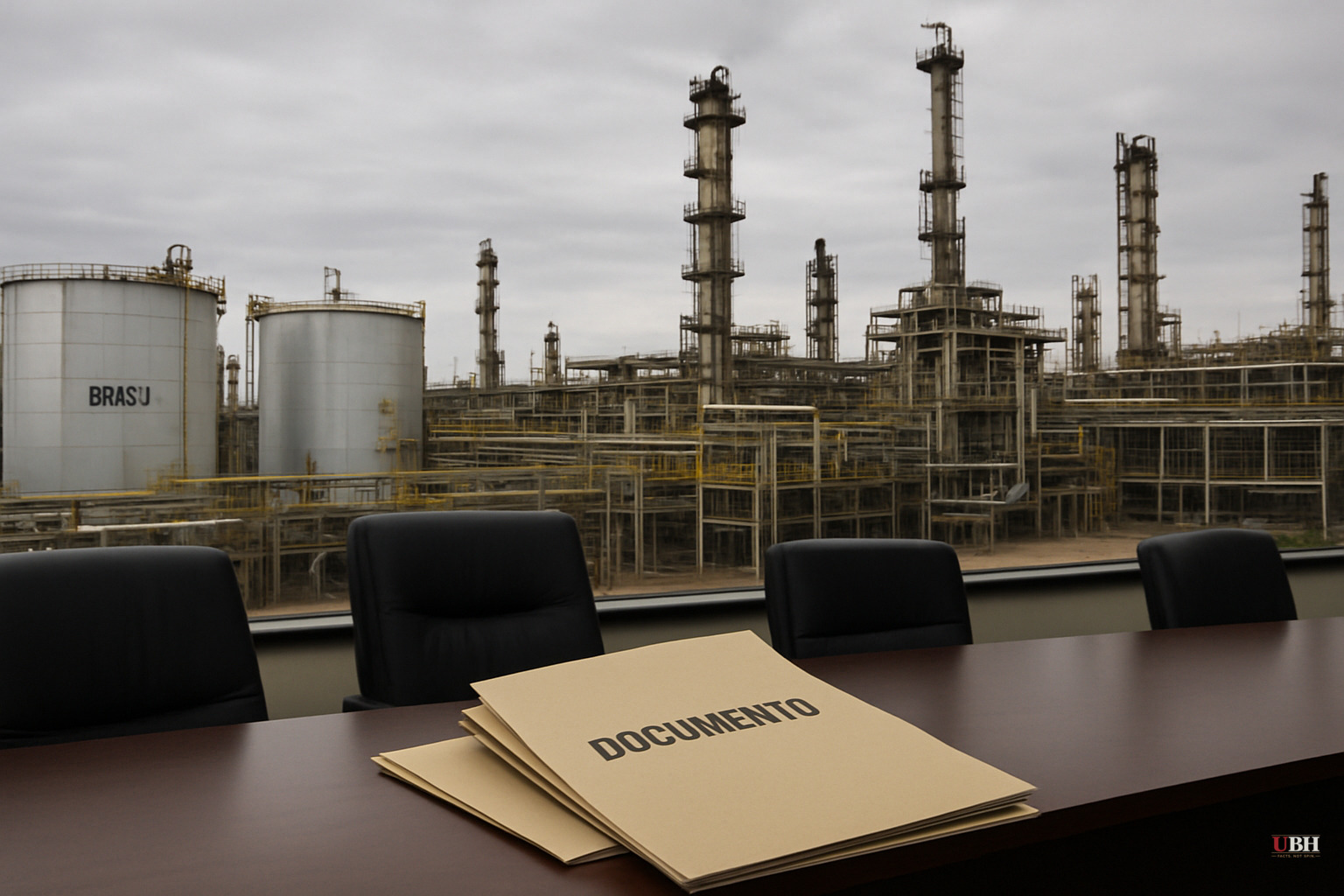
Sometime before June 12, 2026, Brazilian authorities began scrutinizing sales of naphtha, a petroleum derivative used as a solvent and fuel, to a company called Petrodansk. According to documents reviewed by Reuters, the total volume exceeded 100 million liters.
The principal seller was Riograndense refinery. It distributed the shipments without required chemical markers, a tracing mechanism regulators use to track fuel through the supply chain. Riograndense attributed the omission to operational oversight, according to Devdiscourse's report citing the Reuters documents.
The missing markers are central to investigators' theory that Petrodansk diverted the naphtha for illicit fuel smuggling.
Who Is PCC, and Why Does the U.S. Designation Matter
PCC, the Primeiro Comando da Capital, is Brazil's largest criminal organization, built on drug trafficking and prison control. The U.S. government has since designated PCC a terrorist organization, a move that dramatically raises the legal stakes for any business found to have knowingly facilitated its finances.
Once a group carries that designation, American law allows the U.S. Treasury and Justice departments to pursue sanctions and criminal penalties against foreign companies that transact with entities linked to it. The exposure is not theoretical: companies that did business with PCC-connected firms can face asset freezes, correspondent banking cutoffs, and exclusion from U.S. dollar-clearing systems.
Petrodansk is alleged to have been one such conduit, funneling naphtha revenue into PCC's income stream through the fuel-smuggling network, according to the investigation described by Reuters and summarized by Devdiscourse.
What the Big Players Are Saying
Petrobras, Brazil's state-controlled oil giant, and Ultrapar, a major fuel distributor, both said they were unaware of the investigations involving Petrodansk at the time of any relevant transactions, according to Devdiscourse. Neither has been charged. No investigation of Petrobras or Ultrapar specifically has been announced as of June 12, 2026.
That defense has limits. "I didn't know" works better before a designation than after. Going forward, the U.S. designation of PCC means Brazilian energy companies have a legal obligation to screen counterparties more rigorously, regardless of what they knew in the past.
The Strongest Counter-Argument
Critics of aggressive extraterritorial enforcement raise a fair point: Brazilian refineries operate in a fragmented, high-volume commodity market where end-use verification is genuinely difficult. Naphtha changes hands multiple times between a refinery gate and a street-level distribution point. Petrodansk may have presented itself as a legitimate buyer with clean paperwork. The allegation that Riograndense or others knew they were feeding a PCC supply chain has not been proven in court, and the companies deserve the presumption that they were deceived rather than complicit.
The question is whether "we were deceived" is a defense that survives a U.S. sanctions review, particularly after the designation was public.
The Broader Problem
The Petrodansk case is not isolated. Brazil's energy sector is large, fragmented, and, according to investigators cited by Reuters, increasingly attractive to money laundering operations. Criminal networks have long targeted fuel distribution because the commodity is fungible, high-volume, and difficult to audit end-to-end.
Riograndense's failure to apply chemical markers is the specific lapse investigators are focusing on. Those markers exist precisely to create a paper trail. Without them, tracing diverted fuel back to its source becomes nearly impossible, which is exactly the kind of opacity a smuggling operation needs.
The Sanctions Risk Is Real and Immediate
The U.S. terrorist designation of PCC is not a distant geopolitical signal. Under the International Emergency Economic Powers Act and related statutes, Treasury's Office of Foreign Assets Control can move against foreign entities it determines provided material support to a designated organization. Brazilian energy companies that cannot demonstrate adequate due diligence on counterparties like Petrodansk are at measurable legal risk.
Petrobras shares (PETR4) closed at R$ 41.18, down 1.39% on the São Paulo exchange on June 12, according to Google Finance data. Whether the Petrodansk story contributed to that move cannot be confirmed from available sources, and the decline may reflect broader market conditions.
The unresolved question is whether Brazilian prosecutors will refer evidence to U.S. authorities, or whether OFAC will act independently. If the agency concludes that Petrodansk received material support from Brazilian refineries and that PCC benefited, every counterparty in that supply chain faces a compliance reckoning, whether or not they face charges in Brazil.
Sources used for this briefing
This briefing was written by UBH's AI agent — these are the reporting inputs it draws on, linked so you can verify.


