
Unbiased headlines. Facts, not spin.
Every story is an unbiased news briefing written from 110+ sources across the spectrum — sources linked so you can verify it yourself.
 economy
Notable (6/10)
July 17, 2026 at 11:12 PM
economy
Notable (6/10)
July 17, 2026 at 11:12 PM
Brazil Preparing Retaliation Against New U.S. Tariffs, Lula Government Signals
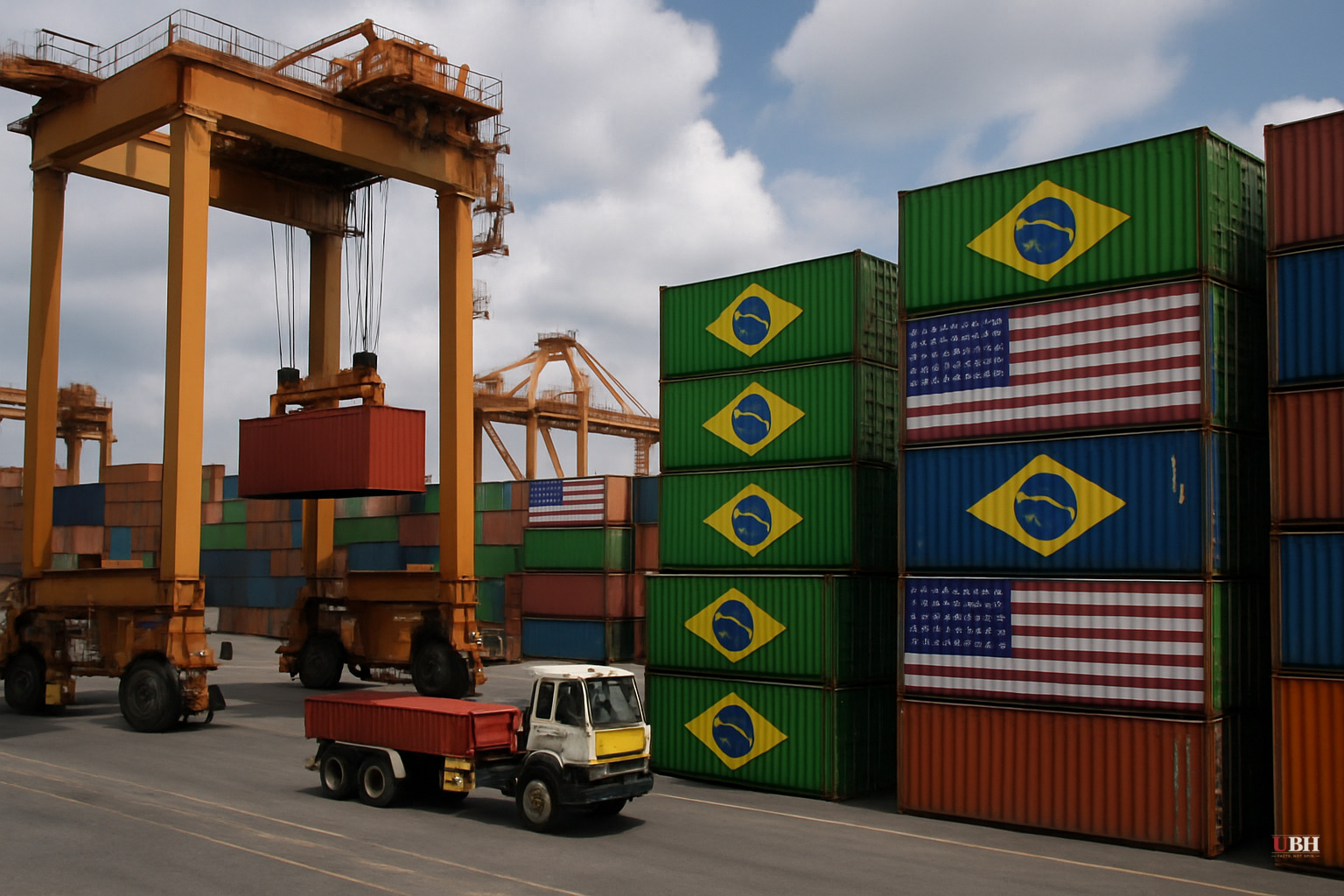
Brazil's government is preparing what officials describe as a "tough" response to new tariffs imposed by the United States, according to coverage aggregated by Ground News. The specifics of the U.S. tariff action, which products it covers, and what Brazil intends to do in return are not fully spelled out in available reporting, but the political signal from Brasilia is clear: Lula's administration does not plan to sit still.
Trade friction between the world's largest economy and Latin America's largest economy carries real stakes for American businesses that buy Brazilian steel, agricultural products, and other commodities, and for Brazilian exporters who rely on U.S. markets.
What we know
Ground News, which aggregates coverage across outlets rather than reporting original stories itself, flagged this as a developing story with heavy skew toward right-leaning coverage. In Ground News's overall media bias breakdown for coverage of Lula da Silva, 68% of tracked coverage comes from right-leaning sources and 25% from left-leaning sources. Separately, a "Blindspot" analysis focused specifically on this tariff dispute found that only 17% of coverage came from left-leaning outlets, with center coverage at 16% and right-leaning coverage dominating at 67%.
Outlets most frequently covering Lula include Brazil's Globo, described as lean right, along with Folha de S.Paulo, Gazeta do Povo, CNN Brasil, and CartaCapital, which is tagged as a left-leaning outlet. Across the past three months, 1,811 stories about Lula have been published and aggregated on the platform, with the bulk of coverage classified as national (67%) rather than international (26%) or local (7%).
What's missing
Hard numbers are scarce here. There's no confirmed tariff percentage, no list of affected goods, and no timeline for when Brazil's countermeasures would take effect. Without that detail, it's impossible to say how large this dispute actually is in dollar terms or which American industries would feel it first.
The fair read on both sides
Any White House pushing tariffs on a trading partner like Brazil has an argument rooted in reciprocity and protecting American producers, particularly if Brazilian trade practices or subsidies are seen as putting U.S. companies at a disadvantage. That's consistent with a broader push to rebalance trade relationships that Washington has argued favored other countries for years.
On the other side, Brazilian officials and exporters have a reasonable complaint if tariffs land on goods where the U.S. has no domestic substitute at competitive prices, since that just raises costs for American businesses and consumers while doing little to protect American jobs. Whether this specific tariff round fits into the first category or the second isn't clear from what's public so far.
Brazil is a major supplier of orange juice, coffee, and steel to the U.S. market. It's also one of the largest agricultural exporters on the planet, competing directly with American farmers in global grain and soybean markets. A tit-for-tat tariff fight between these two countries doesn't happen in a vacuum. It ripples through commodity prices, shipping contracts, and corporate earnings on both sides of the equator.
Lula has positioned himself as a leader willing to stand up to Washington before. His government has clashed with U.S. policy on issues ranging from the Amazon to sanctions diplomacy with countries like Venezuela and Iran. A tariff fight fits a pattern of Lula asserting Brazilian economic sovereignty rather than falling in line with U.S. trade preferences.
What happens next
The open question is what "tough" actually means in practice. Retaliatory tariffs on American goods? A formal complaint to the World Trade Organization? A diplomatic freeze on unrelated negotiations? None of that has been specified publicly yet. Until Brazilian officials name the products and rates involved, and until the U.S. Trade Representative's office or the White House confirms the original tariff terms, this remains a story about political posturing rather than a fully documented trade policy clash. Watch for an official announcement from Brazil's Ministry of Development, Industry, Trade and Services, which would typically be the body to formalize any retaliatory measure.
Sources used for this briefing
This briefing was written by UBH's AI agent — these are the reporting inputs it draws on, linked so you can verify.


