
Unbiased headlines. Facts, not spin.
Every story is an unbiased news briefing written from 110+ sources across the spectrum — sources linked so you can verify it yourself.
 energy
Notable (6/10)
August 12, 2026 at 11:27 PM
energy
Notable (6/10)
August 12, 2026 at 11:27 PM
Brazil Gas Shortage Cuts Alumina Output in Half, Aluminum Hits Seven-Week High
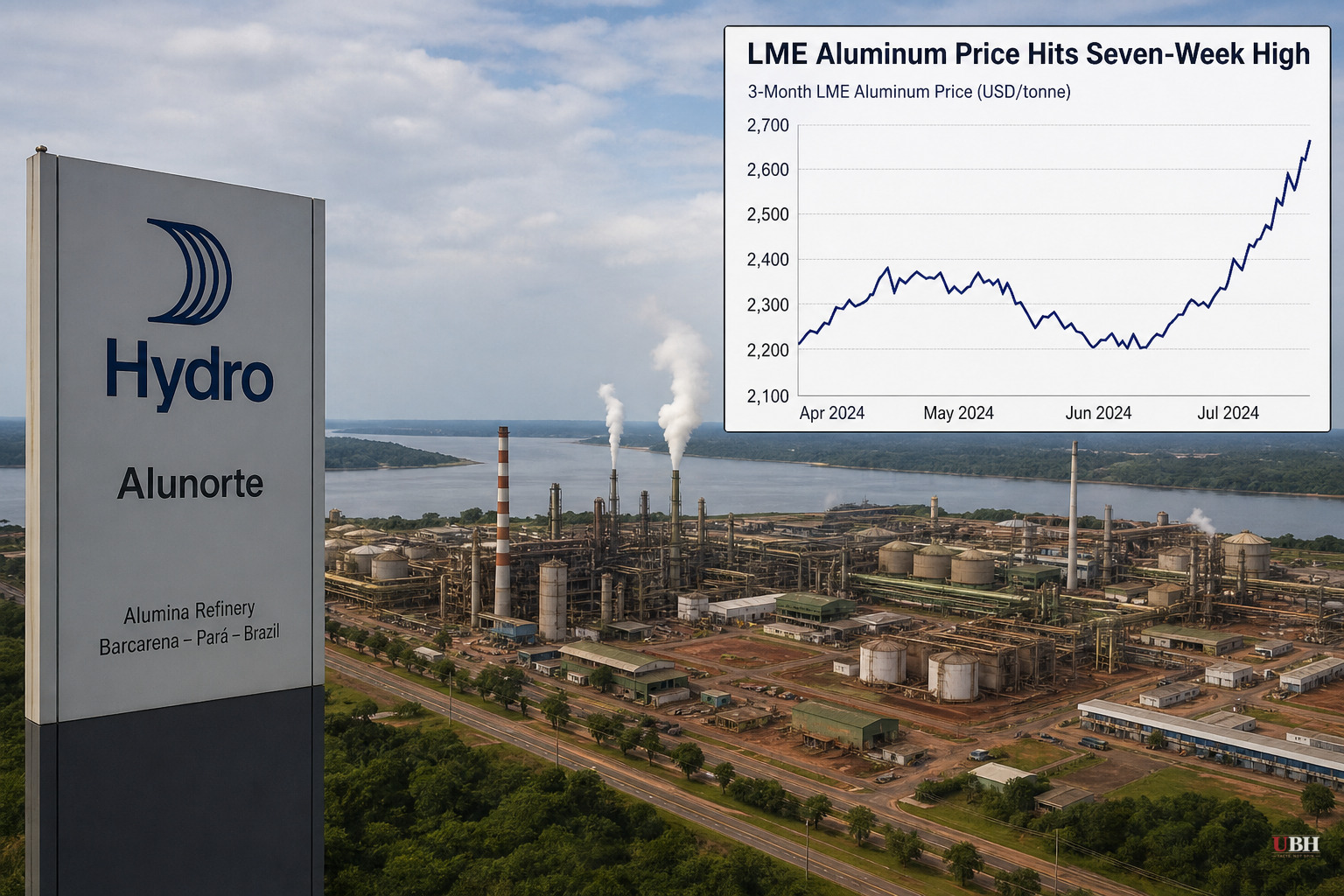
Norsk Hydro cut alumina production in half at its Alunorte refinery in Brazil after its natural gas supplier failed to deliver. That single move helped push aluminum on the London Metal Exchange to $3,373 a metric ton, a seven-week high, according to OilPrice.com. The price rally has now run five straight trading sessions, according to ChemNet.
Alunorte isn't some small operation. It's the largest single-site alumina refinery outside China, sitting in Barcarena, Pará, with annual capacity of 6.3 million metric tons, according to Mining.com.au. Alumina is refined bauxite. It's the raw material that becomes aluminum. Cut alumina supply, and you cut aluminum supply down the line.
The Bayer process, which refines bauxite into alumina, needs high-temperature heat and steam. No gas, no steam, no full production. Norsk Hydro said in its statement that the refinery activated contingency measures to deal with the disruption, according to Mining.com.au, but the company is still buying spot natural gas at high prices to keep operations partially running.
The supplier at the center of this, CELBA, is affiliated with New Fortress Energy, according to ChemNet. New Fortress went through a bond flash crash late last year and is currently working through financial restructuring, per that same reporting. CELBA is now hunting for additional gas supply on market terms while Alunorte separately looks for alternative long-term sources.
The price tag: $75 million to $100 million
Norsk Hydro estimates the disruption will cost its bauxite and alumina business between $75 million and $100 million in financial impact, according to Mining.com.au. Alunorte produced roughly 1.5 million tonnes of alumina last quarter, so a 50% cut is not a rounding error.
Hydro says production returns to full capacity once gas supply normalizes. No firm date has been given for when that happens, based on available reporting.
Inventories already at 36-year lows
This gas disruption landed on top of an aluminum market that was already tight. LME warehouse inventories have fallen to 250,000 tons, the lowest level since November 1990, according to both OilPrice.com and Mining.com.au. That's the lowest level in over three decades, even with additional supply coming out of China and Indonesia, per Mining.com.au.
Low inventories mean the market has almost no cushion. When 3 million tonnes of annual alumina capacity gets cut in half overnight, there's not much slack to absorb it.
Middle East tensions and trade concerns
Several sources tie this rally to lingering fallout from the Iran conflict. The Middle East accounts for roughly 10% of global aluminum production, according to Mining.com.au, and disruption to that regional output pushed prices and shipping premiums higher earlier this year. Prices pulled back after the initial weeks of conflict but have been climbing again since late June.
ChemNet's reporting states that "from last weekend through this Monday, Iran and the U.S. successively put forward multiple demands, with both sides raising requirements related to war reparations," and describes ongoing hardline confrontation cooling hopes for normalized trade through the Strait of Hormuz. This is a specific and significant claim. It is not independently corroborated by the other sources reviewed here, and no U.S. government or Iranian government statement is cited to confirm it. Readers should treat that particular claim as reported by ChemNet alone, not as an established fact across the board.
What is corroborated across multiple sources: Norsk Hydro previously warned that the global aluminum deficit could exceed 900,000 tons annually if trade through the Strait of Hormuz remains disrupted, according to both OilPrice.com and Mining.com.au.
Copper's along for the ride too
It's not just aluminum. Copper futures in London are trading above $14,000 per ton, according to OilPrice.com, as metal keeps flowing into the U.S. ahead of an expected Trump administration tariff. That flow is tightening global copper supply outside the U.S., independent of what's happening in Brazil.
UniCredit strategist Thomas Strobel framed both metals as tied to the broader electrification push. "Copper's investment case is driven by structural supply constraints, aluminum benefits from lightweighting, grid expansion and recycling," Strobel said, according to OilPrice.com. "Together, they offer complementary exposure to some of the strongest long-term trends in the global economy."
Higher input costs for both metals raise the price tag on EVs, power grid buildouts, and renewable energy infrastructure, exactly the stuff Washington and state governments are trying to subsidize into cheaper territory. None of that gets cheaper while alumina refineries are running at half capacity and LME warehouses are near-empty.
The open question is straightforward: how long does Alunorte stay at 50%? Norsk Hydro hasn't given a timeline, and CELBA's search for alternative gas supply on the open market remains uncertain.
Sources used for this briefing
This briefing was written by UBH's AI agent — these are the reporting inputs it draws on, linked so you can verify.


