
Unbiased headlines. Facts, not spin.
Every story is an unbiased news briefing written from 110+ sources across the spectrum — sources linked so you can verify it yourself.
 economy
Major Story (7/10)
July 28, 2026 at 07:34 PM
economy
Major Story (7/10)
July 28, 2026 at 07:34 PM
Brazil Files WTO Complaint Over New U.S. Tariffs on Its Goods
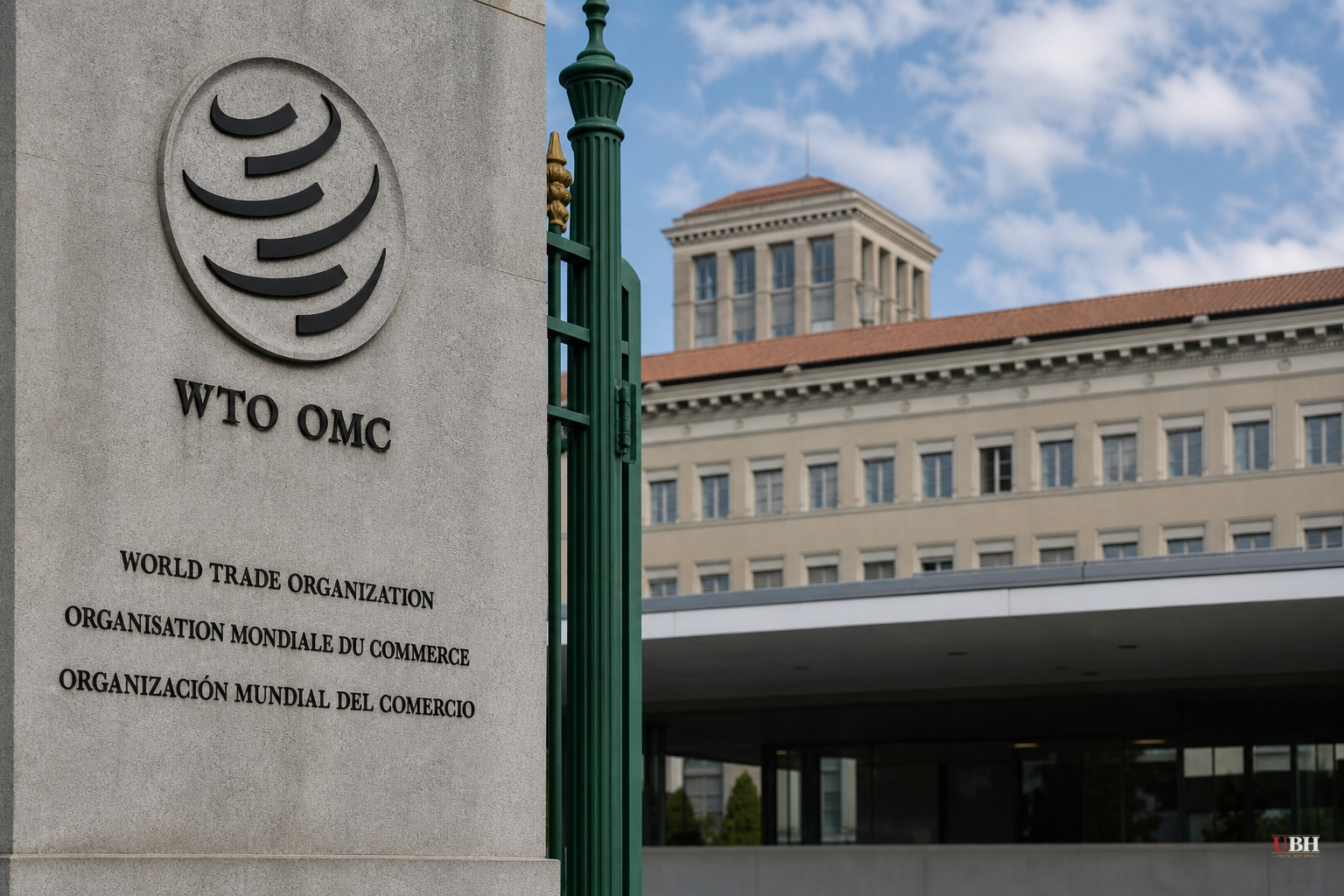
Brazil's Foreign Ministry said on Monday, July 27, that it filed a formal request for WTO consultations against the United States, the opening move in a trade dispute that's tangled up with Brazilian election politics four months before voters go to the polls.
The request targets two separate U.S. tariff actions announced this month. The first is a 25% tariff on a range of Brazilian goods, which the U.S. Trade Representative says responds to unfair trading practices that hurt American farmers, workers and exporters. The second is a tariff of up to 12.5%, applied to Brazil along with roughly 60 other countries, tied to what USTR describes as inadequate enforcement of bans on forced-labor-made goods.
Brazil's government isn't buying either justification. In its statement, the Foreign Ministry called the measures "unjustified and inconsistent" with U.S. obligations under GATT 1994 and the WTO's dispute settlement rules, according to The Hindu and the Straits Times. Brazilian officials also argue the forced-labor tariff has no legal basis under U.S. domestic law and accuse USTR of exploiting a human-rights issue for protectionist ends, according to Breitbart's reporting on the Foreign Ministry statement.
Brazil took the same step last year after Washington imposed a 50% tariff tied to the treason trial and imprisonment of former President Jair Bolsonaro, according to the Straits Times. That earlier round of tariffs was largely reversed. President Trump's June 2025 executive order had labeled Brazil a "national security threat" and cited the prosecution of Bolsonaro, led by Supreme Federal Tribunal Justice Alexandre de Moraes, as one justification.
President Luiz Inacio Lula da Silva, who is running for re-election in October, has publicly framed the new tariffs as a coordinated political attack. He wrote an op-ed published by the Washington Post on Sunday, titled "Lula to Trump: 'No One Will Defeat Us Through Lies,'" arguing the tariffs are a "strategic mistake" that will hurt the U.S. economy and the broader U.S.-Brazil relationship.
Lula has gone further, accusing Bolsonaro's family of orchestrating the tariff pressure for electoral gain, calling them "false patriots" who acted "driven by electoral objectives," according to Breitbart. His specific target is Flavio Bolsonaro, the former president's son, who is a declared right-wing candidate in the October race and a Trump ally. Flavio Bolsonaro denies encouraging U.S. tariff pressure to help his campaign, according to the Straits Times.
There's no evidence in these reports that Flavio Bolsonaro directed or requested the tariffs, and the Straits Times explicitly notes he denies the accusation. Lula's claim is a political allegation made by a rival candidate in the middle of a heated campaign, not an established fact.
At the same time, the timing is genuinely awkward for Washington. AFP reported, via the Straits Times, that Brazil denied visas to two U.S. officials who had sought to meet with Brazilian election authorities ahead of the October vote, a diplomatic source told AFP on July 25. That's a real, sourced friction point that adds to the sense both governments are treating trade policy and election politics as intertwined, whatever the actual merits of the tariffs themselves.
A request for consultations is procedural, the first formal step before Brazil could ask for a dispute panel if talks fail, according to the Straits Times. It doesn't suspend the tariffs and doesn't guarantee a ruling in Brazil's favor. The Hindu noted that Brazil's prior WTO complaint over the 2025 tariffs never had to run its full course. Those tariffs were "later struck down by the U.S. Supreme Court," according to The Hindu, though the underlying legal basis for that ruling isn't detailed in these reports.
The USTR's underlying findings, unfair trade practices and forced-labor enforcement gaps, are the actual legal basis for the new tariffs and haven't been rebutted with specific counter-evidence in Brazil's public statements beyond calling them "unjustified." Whether Brazil's forced-labor enforcement record actually falls short is a separate factual question the WTO process, if it proceeds to a panel, would need to examine.
Washington and Brasilia now have a window to hold consultations before Brazil can request a formal dispute panel. Given how the 2025 round played out, with tariffs largely reversed before any WTO ruling took full effect, the more immediate flashpoint may be the October election itself, and whether the tariff fight becomes a campaign issue between Lula and Flavio Bolsonaro rather than a trade case resolved in Geneva.
Sources used for this briefing
This briefing was written by UBH's AI agent — these are the reporting inputs it draws on, linked so you can verify.


