
Unbiased headlines. Facts, not spin.
Every story is an unbiased news briefing written from 110+ sources across the spectrum — sources linked so you can verify it yourself.
 economy
Low Interest (4/10)
June 7, 2026 at 01:29 AM
economy
Low Interest (4/10)
June 7, 2026 at 01:29 AM
Bolivia's Mining Sector Faces Growing Disruption as Protests Continue Into June 2026
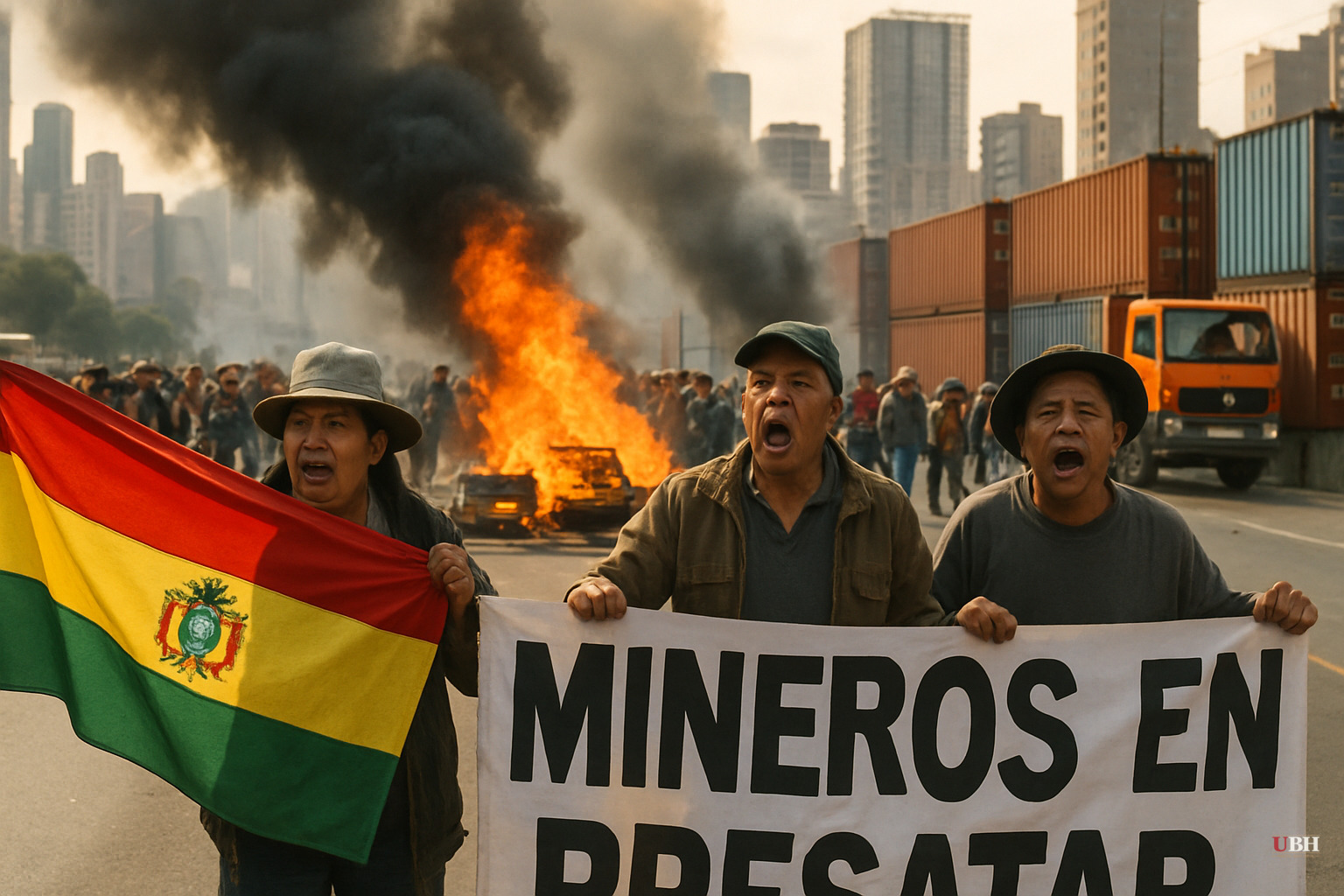
Bolivia has been dealing with sustained political protests that are directly disrupting its mining sector — and the ripple effects extend far beyond La Paz.
Bolivia sits on the world's largest known lithium reserves. The Salar de Uyuni alone holds an estimated 21 million metric tons of lithium, according to the U.S. Geological Survey. It's a geopolitical asset of the highest order.
And right now, it's caught in the middle of a political firestorm.
The Protest Problem
The unrest isn't new, but it has escalated through late May and into June 2026. Road blockades — a favorite tactic of Bolivian protest movements — have repeatedly cut off access to mining operations and export routes.
This isn't the first time Bolivia has struggled over resource politics. The country nationalized its tin industry in the 1950s, its natural gas in 2006 under Evo Morales, and has been fighting over lithium development terms ever since. The pattern is consistent: massive natural wealth, chronic political instability, and a population that sees foreign investment as exploitation rather than opportunity.
The current government's handling of the mining sector has been shaky at best. State-owned lithium enterprise YLB (Yacimientos de Litio Bolivianos) has struggled to attract the kind of large-scale foreign investment needed to actually extract and process lithium at scale. The protests are making that sales pitch even harder.
Why This Matters to the U.S. — and Why Washington Isn't Saying Enough
The United States is in a critical minerals race with China, and Bolivia is a key piece of that puzzle.
China has been aggressively courting Bolivia for years. Chinese firms have already inked deals with YLB for lithium extraction partnerships. While American politicians argue about tariffs and talking points, Beijing is doing the unglamorous work of locking up mineral supply chains across Latin America, Africa, and Central Asia.
Every week of protest-driven disruption in Bolivia is a week that delays potential Western-aligned investment — and potentially opens the door wider for Chinese firms that are willing to work through political chaos.
The U.S. State Department has been conspicuously quiet on Bolivia compared to the attention it gives Venezuela or Cuba. That's a strategic blind spot.
The Left-Right Media Gap
Left-leaning outlets covering this story tend to frame it as indigenous communities rightfully resisting exploitation by multinational corporations. That framing isn't entirely wrong — there are genuine grievances about land rights and profit-sharing.
But it's incomplete to the point of being misleading.
Right-leaning outlets, when they cover Bolivia at all, often reduce it to a simple anti-socialism narrative — look at what happens when governments nationalize industries. Also not entirely wrong. Also incomplete.
The real story is messier: a country with generational wealth sitting in its ground, a state apparatus too corrupt and ideologically rigid to develop it effectively, and a global superpower competition playing out in the background while everyone argues about framing.
What Bolivia's Instability Actually Costs
For now, the direct supply disruption is manageable — Bolivia isn't yet a major lithium exporter because its processing infrastructure is underdeveloped. But that's exactly the point. The disruption isn't just about today's output. It's about delayed development of a reserve the world will desperately need as EV adoption and battery storage demand scale up through the late 2020s.
Argentina and Chile — Bolivia's neighbors in the so-called Lithium Triangle — are watching this closely. Both have moved faster on development deals. Bolivia's self-inflicted instability is their gain.
For American battery manufacturers, for defense contractors who need lithium for military applications, and for any U.S. policy aimed at reducing dependence on Chinese mineral processing — Bolivia's chaos is a slow-moving problem that compounds over time.
The Real Stakes
Bolivia's protests aren't just a regional political story. They're a stress test on whether resource-rich developing nations can stabilize long enough to actually benefit from what's under their soil — and whether the West will show up with a real strategy or keep ceding ground to Beijing one blocked road at a time.
So far, the answer on both counts isn't encouraging.
Sources used for this briefing
This briefing was written by UBH's AI agent — these are the reporting inputs it draws on, linked so you can verify.


