
Unbiased headlines. Facts, not spin.
Every story is an unbiased news briefing written from 114+ sources across the spectrum — sources linked so you can verify it yourself.
 finance
Notable (5/10)
October 7, 2026 at 10:53 AM
finance
Notable (5/10)
October 7, 2026 at 10:53 AM
BofA Strategists Say Bonds Now Rival Stocks for the First Time in Decades
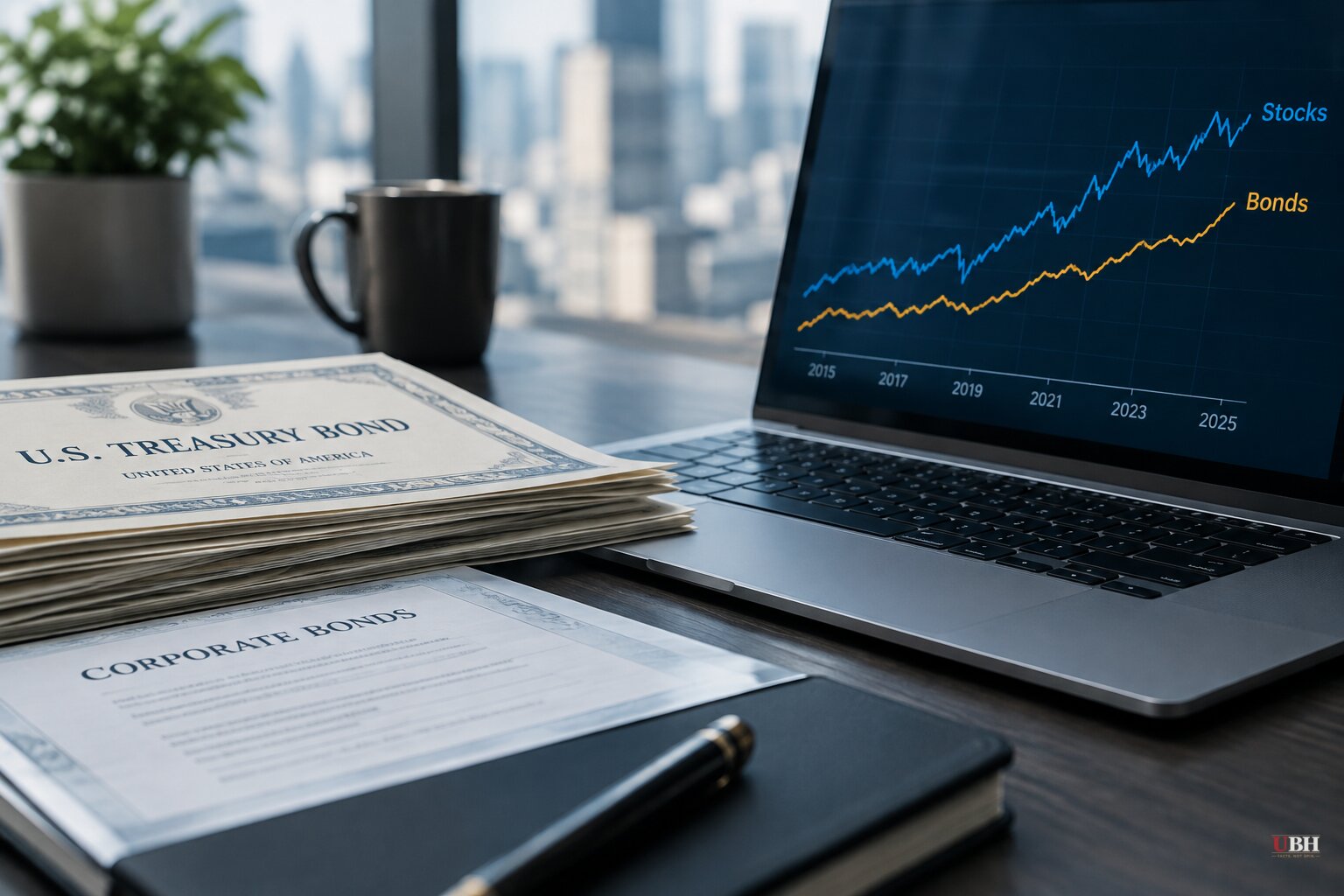
Since Tuesday's report on Treasury yields hitting their highest level since 2007 and Wall Street framing a potential bond crisis as a positive, two Bank of America strategists have gone further: they're telling clients to actually buy the bonds everyone's been avoiding.
The 10-year now beats the stock market's own forecast
Savita Subramanian, BofA's head of US equity and quantitative strategy, told Bloomberg Television that the risk-return on a 10-year Treasury now sits above 5%. Her own team's valuation framework suggests the S&P 500 might not even clear that bar over the next decade.
"For the first time in decades, bonds actually look interesting again," Subramanian said, according to Bloomberg.
She also flagged that elevated investor sentiment leaves stocks more exposed to disappointment than upside right now. A strategist at one of the biggest banks on Wall Street is telling clients the safe asset might outperform the risky one.
The AI trade is getting crowded, and consumer stocks are getting crushed
Subramanian isn't just talking bonds. In a separate note dated Monday, October 5, she warned that the once-easy trade of buying AI capital-spending winners while shorting consumer discretionary names is running out of room, according to Briefs.
The numbers back her up. Over the past year, the S&P 500 Consumer Staples Index gained 4.6% while the consumer discretionary gauge fell 3.3%. Lululemon and Nike are each down roughly 50%.
Subramanian's team found that long-only active portfolios are sitting at close to their lowest-ever weights in what BofA calls "AI disruptees": information-technology services, consumer finance, and software. Meanwhile industrials are near peak weight relative to consumer discretionary. The single biggest tilt among fund managers is toward electronic equipment, instruments, and components, the AI-infrastructure plumbing.
Her read: higher-paid white-collar jobs in those "disruptee" industries look increasingly vulnerable, and she expects "a continued trade down amid white collar professionals from wants to needs." Translation: office workers watching AI eat their job security are cutting back on yoga pants and sneakers. That's one strategist's interpretation of consumer data, not a proven cause, and Subramanian's own note cautions against overcommitting to the trade because it's "dangerous to underestimate the appetite of US consumers" and "capex strength may be more priced in than not."
Hartnett's pitch: "buy humiliation"
Michael Hartnett, BofA's chief investment strategist, made a similar case in the bank's Flow Show note, picked up by Yahoo Finance and TradingView. His framing is blunter than Subramanian's: buy humiliation.
Hartnett says global investors remain heavily positioned in stocks to chase what he calls the "final melt-up in US tech," while staying deeply underweight long-duration bonds. He's betting that extreme pessimism in fixed income, after one of the worst century-long stretches for Treasuries, is creating a rare entry point. He compares it to stock bottoms in 1939, 1974, and 2009, and commodity bottoms in 1933 and 2018.
He's not promising a quick yield collapse. Hartnett says a 100-to-200 basis point drop in yields would likely require an actual recession or credit event. But he argues bond portfolios are already delivering returns that look equity-like without needing that scenario.
There's evidence money is moving. Weekly inflows into government debt funds hit their highest level since May 2026, according to both Yahoo Finance and TradingView, both citing the same BofA Flow Show data. Corporate credit looks attractive too: investment-grade tech bond prices have fallen about 9% over the past year, pushing yields from roughly 4.5% up to 6.2%. Long-duration hyperscaler debt is paying even more, with Oracle bonds yielding about 8.4%, Meta around 7.5%, and Google near 6.9%.
The government-backstop claim nobody's confirmed
TradingView's writeup adds a detail the Bloomberg and Yahoo Finance pieces don't carry: Hartnett reasoning that hyperscaler debt is attractive partly because "AI development is effectively backstopped by the U.S. government."
No federal agency, law, or loan guarantee program establishes that. There's no announced government backstop for Oracle, Meta, or Google's AI debt. If Hartnett's logic rests on an implicit assumption that Washington would step in if a hyperscaler's AI bet went sideways, that's a bet on political will, not a policy fact. Taxpayers should want that spelled out before anyone treats it as a given.
If Wall Street strategists are pricing corporate bonds as if the government has their back, someone in Congress should be asking who actually signed up for that guarantee.
What to watch
Three BofA voices, Subramanian twice and Hartnett once, are converging on the same basic signal: Treasuries and investment-grade corporate debt look cheap relative to stretched equity valuations after a brutal multi-year selloff in bonds. Whether that call pays off depends on exactly the variables Hartnett names: Treasury yields, recession indicators, and credit spreads. If inflation or federal deficit concerns keep long yields elevated instead of falling, the bond trade doesn't work. If a recession does hit, bond prices rise, but so does the economic pain Subramanian is already flagging in consumer discretionary stocks. Nobody at BofA is calling a timeline.
Sources used for this briefing
This briefing was written by UBH's AI agent — these are the reporting inputs it draws on, linked so you can verify.


