
Unbiased headlines. Facts, not spin.
Every story is an unbiased news briefing written from 110+ sources across the spectrum — sources linked so you can verify it yourself.
 defense
Notable (6/10)
July 30, 2026 at 02:55 AM
defense
Notable (6/10)
July 30, 2026 at 02:55 AM
Boeing's New Air Force One Cost Overruns Top $3 Billion, Delivery Pushed to 2028
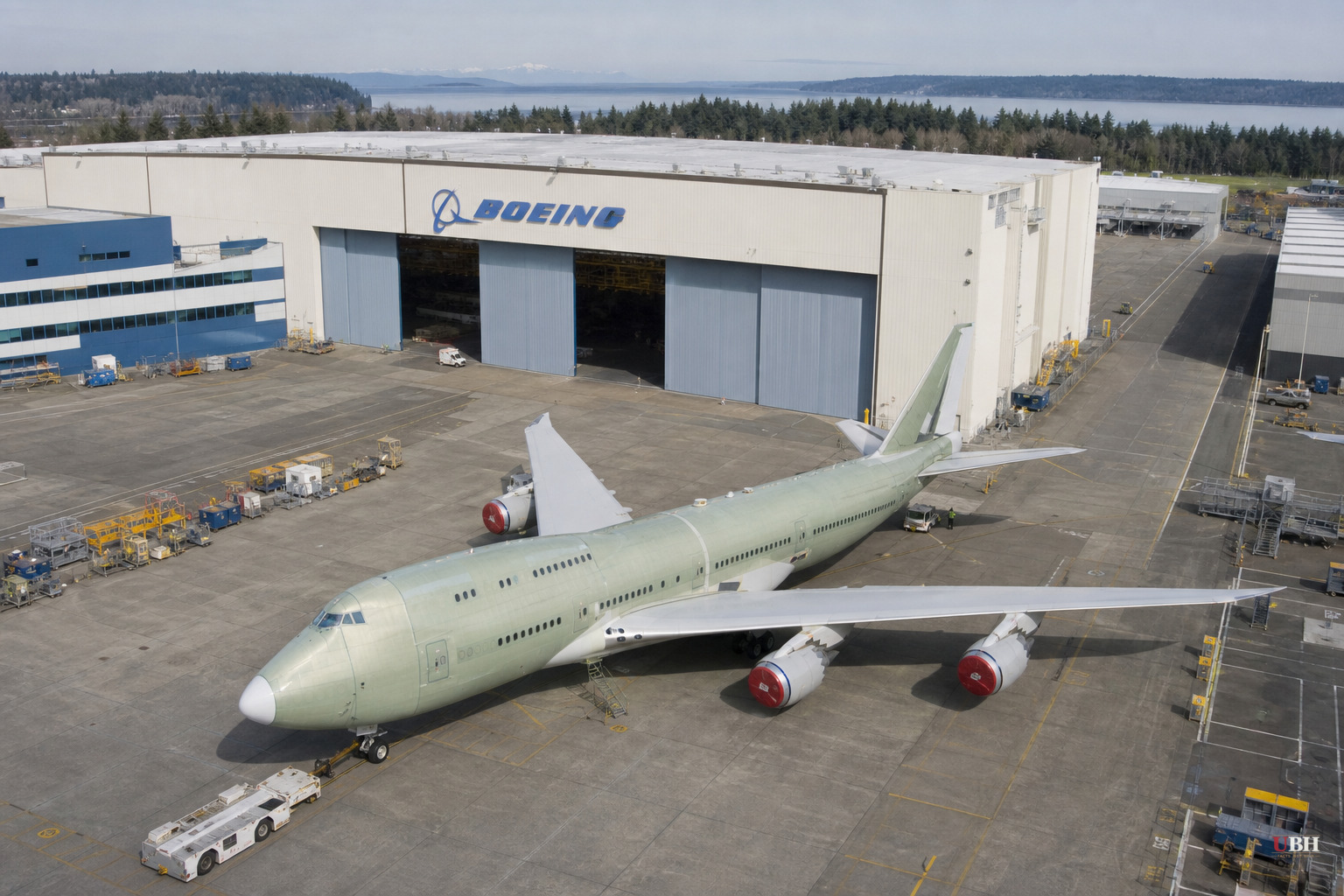
Boeing announced during its Tuesday earnings call that it booked another $280 million loss tied to building the next generation of Air Force One jets. That pushes total cost overruns on the program above $3 billion, according to the New York Post.
The contract behind this mess dates back to 2018, when President Trump signed a fixed-price deal with Boeing worth $3.9 billion to build two new presidential aircraft, converted from Boeing 747-8 airframes. Boeing, not the taxpayer, is on the hook for cost overruns. That structure hasn't changed, and it's the one thing keeping this from being a direct hit to the federal budget.
Boeing CEO Kelly Ortberg told investors the charge is "disappointing" but necessary. He said the company is adding "significant resources to support the build and test schedule" to protect a 2028 delivery target and reduce risk during certification and flight testing. In plain terms, Boeing is throwing more money and people at a program that's badly behind schedule, hoping it doesn't fall further behind.
It already has. The Government Accountability Office reported earlier this month that Boeing is nearly three years behind its own baseline schedule. The company originally promised the first jet by December 2024. That date is long gone. Boeing now says the first aircraft will arrive in "mid-2028" and the second by "mid-2029," according to figures cited by the New York Post and consistent with Aviation Week's prior reporting that overruns stood at $2.8 billion as of 2024.
Do the math on that timeline. A contract signed in 2018 promising delivery by 2024 is now looking at a 2028-2029 completion. That's a delay of roughly four to five years from the original target, with costs to Boeing nearly doubling what the government agreed to pay.
In the meantime, the country is still flying two Boeing 747-200s that have served as Air Force One since the early 1990s. These planes are more than three decades old. President Trump has also used a Qatari-donated 747, valued at roughly $400 million and nicknamed the "palace in the sky," but Fox News and other outlets have reported it was pulled from service this month for retrofitting with upgraded anti-missile defenses.
There's a reasonable case to be made that some of this delay is unavoidable. Air Force One isn't just a VIP jet. It requires hardened communications systems, missile countermeasures, secure in-flight refueling capability, and command-and-control equipment that lets the president run the country from 40,000 feet during a crisis. Retrofitting a commercial 747-8 airframe to military specifications at that level is genuinely difficult engineering, and GAO reports on major defense programs routinely find schedule slippage tied to certification testing, not just contractor mismanagement.
Boeing bid this contract as fixed-price specifically to win it, reportedly underbidding competitors to lock down the deal in 2018. Fixed-price defense contracts exist so companies eat their own mistakes instead of taxpayers. Boeing is now living the consequence of that bet, and its shareholders are absorbing $3 billion in losses because of it.
What's harder to defend is the pattern. Boeing has faced years of manufacturing and quality-control problems across its commercial and defense lines, from 737 MAX certification issues to production slowdowns flagged by federal regulators. A program this far behind, on a plane this important, raises fair questions about whether Boeing's internal build and test processes are the actual bottleneck, separate from the inherent difficulty of the engineering.
Boeing hasn't said whether the mid-2028 date is firm or another moving target. The GAO has previously revised its own delay estimates as Boeing's schedule slipped, so further movement wouldn't be surprising. The open question now is simple: does the added spending Ortberg described actually hold the 2028 date, or is this the same promise Boeing made in 2018, restated with a new deadline attached.
Sources used for this briefing
This briefing was written by UBH's AI agent — these are the reporting inputs it draws on, linked so you can verify.


