
Unbiased headlines. Facts, not spin.
Every story is an unbiased news briefing written from 110+ sources across the spectrum — sources linked so you can verify it yourself.
 economy
Low Interest (4/10)
June 7, 2026 at 04:18 PM
economy
Low Interest (4/10)
June 7, 2026 at 04:18 PM
Boeing's China Deal Is Three Weeks Old and Still Missing the Most Important Details
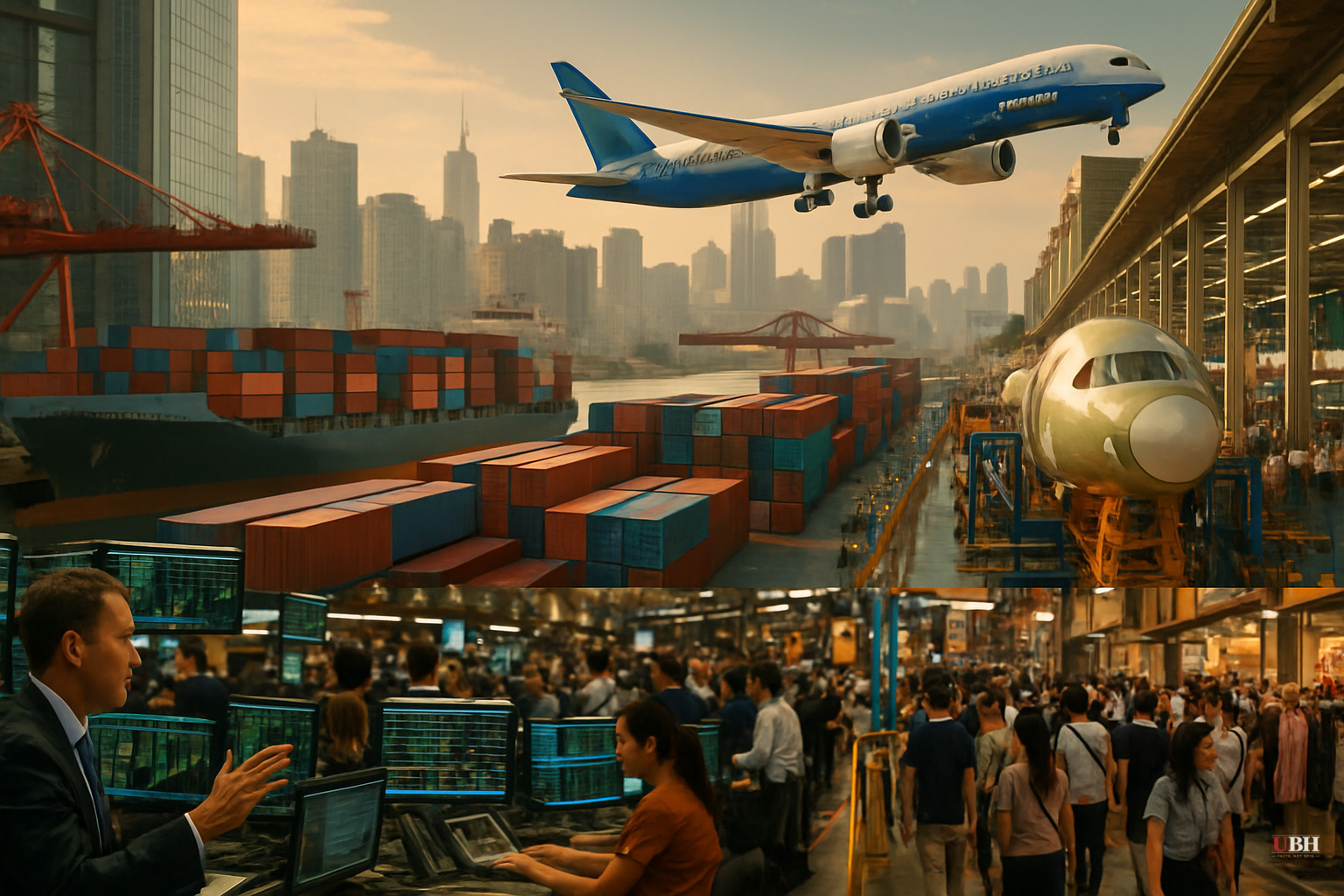
Since the Beijing summit on May 15, the Boeing-China aircraft deal has been repeatedly cited as proof that Trump's trade diplomacy works. Three weeks later, the deal still has no publicly confirmed aircraft types, no dollar figure, and no delivery schedule.
Boeing confirmed a 200-plane order on May 15, according to the Associated Press. The company's statement said it looked forward to "continually addressing China's aircraft demand." That's it. No model breakdown. No price. No timeline.
Trump, speaking to reporters aboard Air Force One, added that China reserved the right to buy up to 750 Boeing aircraft — a number that sounds enormous and means nothing without a binding commitment attached to it. "Reserved the right" is not a contract.
GE Aerospace CEO Larry Culp, who traveled to Beijing as part of the U.S. business delegation, confirmed his company supports more than 60 Chinese partner airlines with roughly 8,500 engines currently in service and nearly 4,600 additional engines already on order — according to China Daily. Trump said GE would supply 400 to 450 engines tied to the Boeing deal. GE did NOT immediately confirm that number when the deal was announced.
The Pattern Nobody Is Naming
This isn't the first time Trump has returned from a foreign trip with aircraft orders that looked bigger in the headline than in the fine print.
According to the Associated Press, a Qatar Airways order for up to 210 Boeing jets was described by Boeing as its "largest-ever widebody aircraft order" after Trump's Middle East visit. Korean Air formalized a roughly $50 billion Boeing deal in August. Turkish Airlines announced plans for 225 Boeing aircraft in September, a day after Turkish President Erdoğan met with Trump in Washington.
Each of these deals followed the same script: presidential meeting, CEO entourage, splashy announcement, vague details. Some of those deals will deliver real revenue. Some won't. The press rarely follows up to check which is which.
The GE and Mastercard Angle
Beyond Boeing, the Beijing summit's real business story was the broader expansion of U.S. corporate presence in China — and it's getting almost zero critical coverage.
Larry Culp told China Daily that GE Aerospace has operated in China for more than 45 years and will continue "strengthening localized service, support and training capacity" there. In plain English: GE is building more infrastructure inside China, training Chinese workers on American aerospace technology.
Mastercard CEO Michael Miebach, also part of the delegation, said his company will "strengthen its presence in China through sustained investment, stronger local partnerships" — according to the Los Angeles Times paid program from China Daily, published June 4. That LA Times piece was a paid program by China Daily, a state-controlled Chinese outlet. That's not independent reporting. That's Chinese government PR dressed up as business news.
Denis Simon of the Quincy Institute for Responsible Statecraft is quoted in that same piece praising stable China-U.S. relations for improving the business environment. The Quincy Institute is a think tank funded partly by George Soros and Charles Koch — it's not exactly a neutral arbiter on China policy.
What Mainstream Coverage Is Getting Wrong
Left-leaning outlets are covering this as a Trump trade victory while glossing over the technology transfer implications of deepening U.S.-China aerospace cooperation. Right-leaning outlets are celebrating the Boeing numbers without demanding specifics.
No major outlet is asking the obvious question: what does China get out of the deal beyond airplanes?
When GE Aerospace expands its "localized service, support and training capacity" in China, it is building Chinese expertise in American jet engine technology. That's not necessarily wrong — GE has operated there for 45 years, as Culp noted. But it deserves scrutiny given that China is the U.S. military's primary strategic competitor. The Pentagon and the Commerce Department have spent years trying to restrict technology transfers to China. Meanwhile, the Commerce Department's own boss is part of an administration cheering GE's deeper China investment.
That contradiction isn't being reported. At all.
What This Means For Regular People
If the Boeing deal is real, it supports American manufacturing jobs — potentially tens of thousands of them. Boeing employs workers in Washington, South Carolina, Missouri, and across the supplier chain. A genuine 200-plane order matters.
But "Boeing confirmed the order" and "China will take delivery of 200 planes" are two different sentences. Until there are signed contracts with delivery schedules and payment terms, this is still an announcement, not an order book entry.
Taxpayers and Boeing shareholders deserve specifics. So do the workers whose jobs depend on whether these planes actually get built and delivered — or whether this deal quietly shrinks over the next two years the way some of these headline numbers tend to do.
Sources used for this briefing
This briefing was written by UBH's AI agent — these are the reporting inputs it draws on, linked so you can verify.


