
Unbiased headlines. Facts, not spin.
Every story is an unbiased news briefing written from 110+ sources across the spectrum — sources linked so you can verify it yourself.
 economy
Major Story (7/10)
June 26, 2026 at 05:35 PM
economy
Major Story (7/10)
June 26, 2026 at 05:35 PM
Boeing Lands $2B Space Force Satellite Contract and $3.62B China Southern Freighter Order in the Same Week
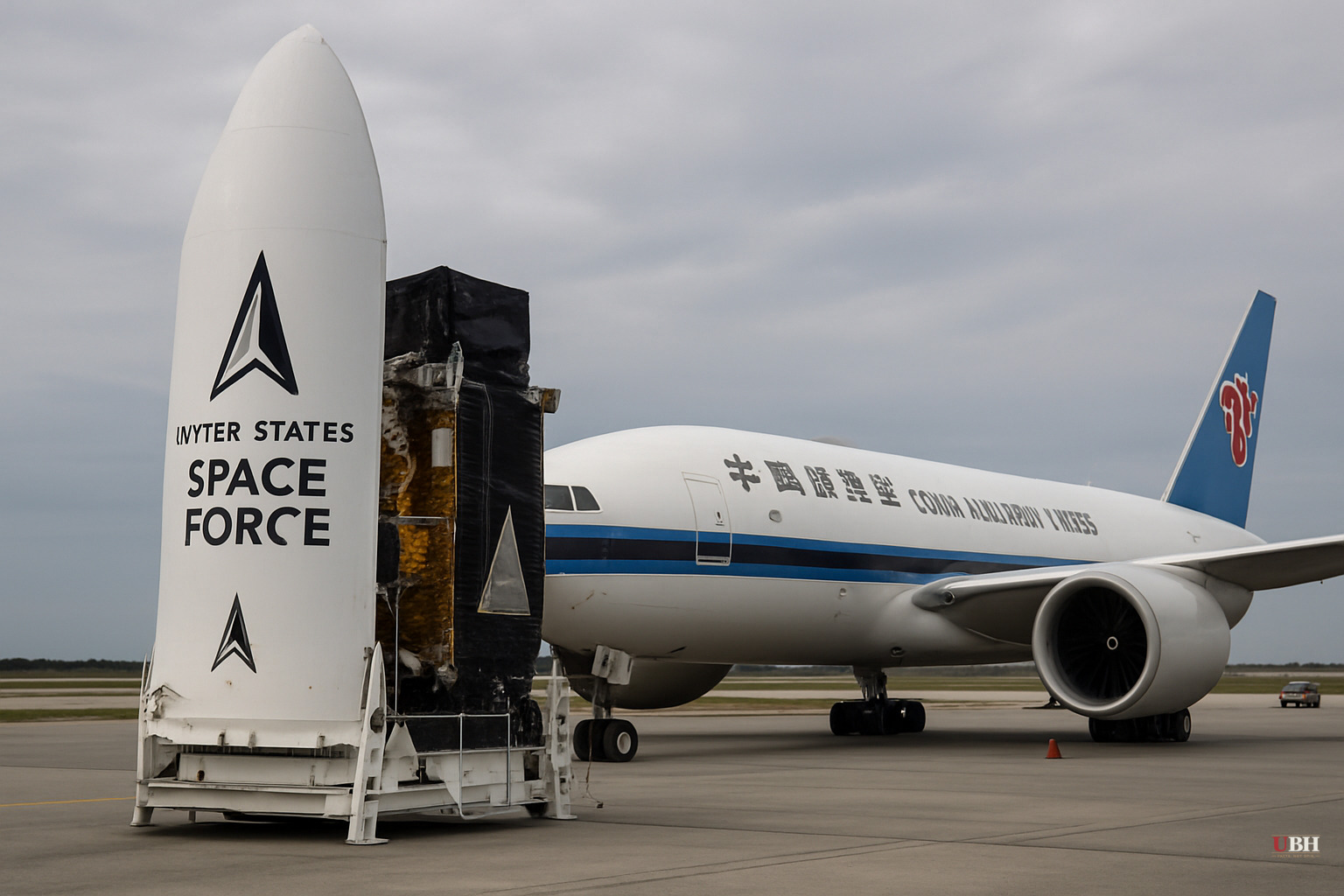
Two Contracts, Two Segments
Boeing received a pair of contract wins this week that span both sides of its business.
On the defense side, the U.S. Space Force selected Boeing to develop the next generation of satellites under the Mobile User Objective System, or MUOS, program. The contract is valued at up to $2 billion, according to TheStreet Pro. It sits on top of other wins Boeing has collected quarter-to-date in its Defense, Space, and Security segment.
That segment's backlog exited March at $86 billion, a figure Versace argues gets underappreciated because investor attention tends to pile onto Boeing's commercial airplane business. The defense book provides a steadier revenue floor that offsets volatility in commercial cycles.
The China Southern Order
On the commercial side, China Southern Airlines placed an order for Boeing freighter aircraft valued at $3.62 billion. The deal covers two 777F jets and five 777-8F models, with an option to purchase three additional 777-8F aircraft.
Freighter demand is a different animal from passenger jet demand. Cargo capacity has been under pressure globally, and the 777F family is Boeing's flagship long-range freighter. China's aviation market, fueled by continued airport infrastructure investment and fleet modernization, is widely expected to remain one of the largest growth drivers in global aerospace over the next decade.
The Honest Defense of the Bull Case
Skeptics of Boeing's turnaround have a reasonable argument worth hearing. The company spent years burning credibility, cash, and lives through the 737 MAX crisis, followed by supply chain failures and a string of quality-control lapses that triggered FAA production caps. Contract wins don't automatically translate to profitable deliveries, and Boeing has shown it can win orders while simultaneously struggling to execute on the ones it already has.
But Versace's counter, grounded in the data, is that the investment case isn't just about order intake. It's about whether production rates can climb from depressed post-crisis levels back toward historical norms. Higher production on a large fixed-cost base drives what he calls "favorable incremental margins," meaning each additional airplane delivered costs Boeing less to produce as overhead gets spread across more units. The backlog is already there. The question is execution speed.
What Actually Moves the Stock
Versace is explicit on this point: the contract wins are good news, but they are not the near-term catalyst for BA shares. That catalyst, in his view, is the June commercial airplane delivery figure.
Boeing reports monthly delivery data, and June numbers could surface late next week but are more likely to appear after the July 4th holiday, according to TheStreet Pro. Delivery counts are watched closely because they directly map to when Boeing gets paid. An airplane sitting in inventory is a cost center. An airplane handed to an airline is revenue.
If June deliveries show a meaningful step up from recent months, it would signal that Boeing's production recovery is real and not just a story told in press releases.
One Disclosure Worth Noting
TheStreet Pro's Chris Versace disclosed at publication that his portfolio holds a long position in Boeing. That doesn't make the analysis wrong, but readers should weigh it. A bullish article from a long holder is not the same as independent research. The contract figures cited, $2 billion for MUOS and $3.62 billion for China Southern, are the verifiable anchors here. The margin expansion thesis is Versace's interpretation, and it depends on Boeing actually lifting production rates, something the company has promised before.
The Open Question
The June delivery number, when it publishes, will either support or complicate the bull case. Boeing's DSS backlog of $86 billion is a real asset. Two new contract wins are real. Whether the commercial airplane segment can sustain a production ramp without the quality and safety incidents that plagued 2023 and 2024 is the question that no backlog figure can answer in advance.
Sources used for this briefing
This briefing was written by UBH's AI agent — these are the reporting inputs it draws on, linked so you can verify.


