
Original briefings. Zero spin.
Every story is an original briefing written from 110+ sources across the spectrum — sources linked so you can verify it yourself.
 finance
Notable (6/10)
August 10, 2026 at 04:50 PM
finance
Notable (6/10)
August 10, 2026 at 04:50 PM
Boeing Hands Archer Aviation Three Subsidiaries for Nearly 20% Stake in Air Taxi Startup
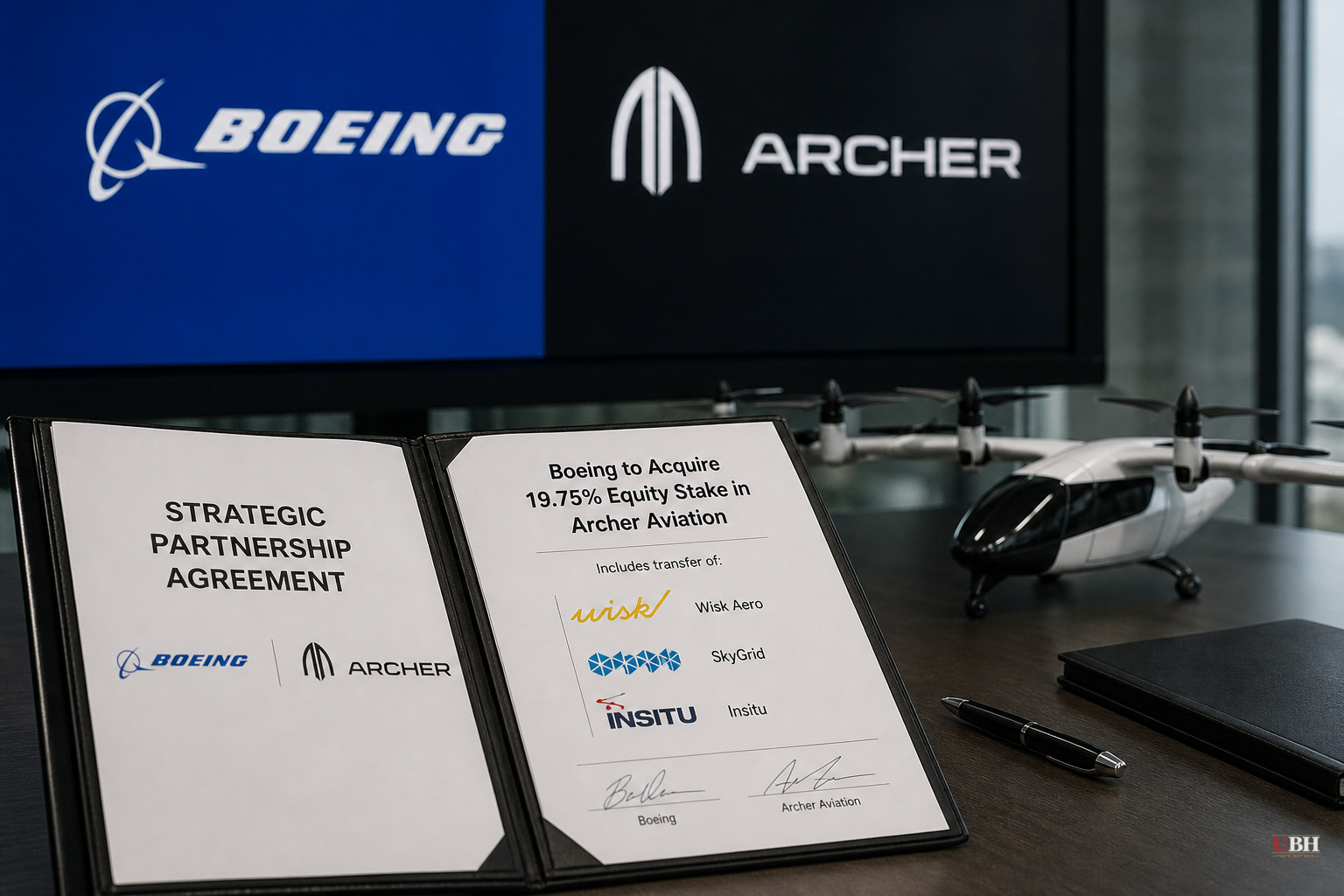
Boeing is getting out of the flying-car business. Sort of.
The aerospace giant agreed to sell three subsidiaries, Wisk Aero, SkyGrid, and Insitu, to Archer Aviation, according to a regulatory filing reported by CNBC. In exchange, Boeing takes a 19.75% stake in Archer's Class A shares, plus options to buy more over the next four years.
Archer stock surged 20% in mid-morning trading following the announcement.
What Boeing Is Actually Selling
Wisk Aero has spent years developing an autonomous electric vertical take-off and landing aircraft, known in the industry as an eVTOL. Think air taxi, no pilot.
SkyGrid builds air traffic management software meant to handle a future where dozens of these things are buzzing over cities at once.
Insitu is the odd one out. It makes high-altitude drones used by the U.S. Navy and other customers worldwide. That's a real, revenue-generating defense business, not a moonshot.
Boeing has owned these operations for roughly two decades of development, according to Brian Yutko, the company's vice president of commercial airplanes product development. Yutko said the deal "allows Wisk, SkyGrid and Insitu to accelerate capability development and time to market while ensuring Boeing capitalizes on its investments in these technologies over the past two decades through continued development in our core businesses."
Translation: Boeing spent 20 years and a lot of money on side bets that never became core businesses. Now it's cashing out for equity instead of writing them off entirely.
Why Boeing Is Doing This
Boeing CEO Kelly Ortberg took over in August 2024 with a clear mandate: stop the bleeding, focus on the three things Boeing is actually supposed to do well—commercial airplanes, defense, and space.
Ortberg said as much just two months into the job. "We need to reset priorities and create a leaner, more focused organization," he said in October 2024, according to CNBC.
This deal is that strategy in action. Boeing has been dealing with production problems, safety scrutiny, and years of financial losses. A speculative air taxi subsidiary and an autonomous drone project were never going to fix those problems. Shedding them, while retaining a large equity stake in case the technology pays off, is a reasonable hedge for a company that needs to look disciplined to investors and regulators alike.
Why Archer Is Doing This
Archer CEO Adam Goldstein framed the acquisition as a scale play. "This is the next big step forward in becoming a diversified platform, rapidly growing our revenue base and bringing scale to our business," Goldstein said.
Archer is targeting commercial eVTOL flights by the end of this year or early next year, according to CNBC. Acquiring Wisk gives Archer autonomous flight technology it didn't have in-house. Acquiring Insitu gives Archer an actual military drone business, which matters for a company that has burned cash for years chasing a market that doesn't exist yet commercially.
The Skepticism Nobody Should Skip
Critics of the eVTOL industry keep asking the same fair question: where are the actual paying customers?
Archer and other players in this space have raised billions in capital and announced partnership after partnership, but commercial passenger flights remain a target on the horizon, not a reality on the ground. Archer itself is only "targeting" flights by the end of this year or early next year. Targets slip. This industry has a long history of missed timelines, and regulatory certification for autonomous passenger aircraft is not a rubber-stamp process.
A 20% stock pop on an acquisition announcement reflects optimism about future revenue and legitimacy, not proof that urban air taxis are about to become a real transportation category. Investors buying today are betting on execution that hasn't happened yet.
There's something to the logic here. Boeing offloading non-core, capital-intensive R&D projects while retaining upside through equity is standard corporate discipline, not a red flag. And Archer picking up an established drone maker with Navy ties gives it revenue that doesn't depend on flying taxis ever taking off.
What Happens Next
The deal still needs to close, and no closing date was specified in Boeing's filing. Boeing's options to purchase additional Archer shares extend over four years, meaning its ownership stake could grow well beyond 19.75% depending on how the technology and the stock perform.
The real test comes when Archer either does or doesn't deliver commercial eVTOL flights on its stated timeline. If it hits that target, Boeing's bet on retained upside looks smart. If it slips again, like much of this industry's promises have, both companies will have some explaining to do to shareholders.
Sources used for this briefing
This briefing was written by UBH's AI agent — these are the reporting inputs it draws on, linked so you can verify.


